
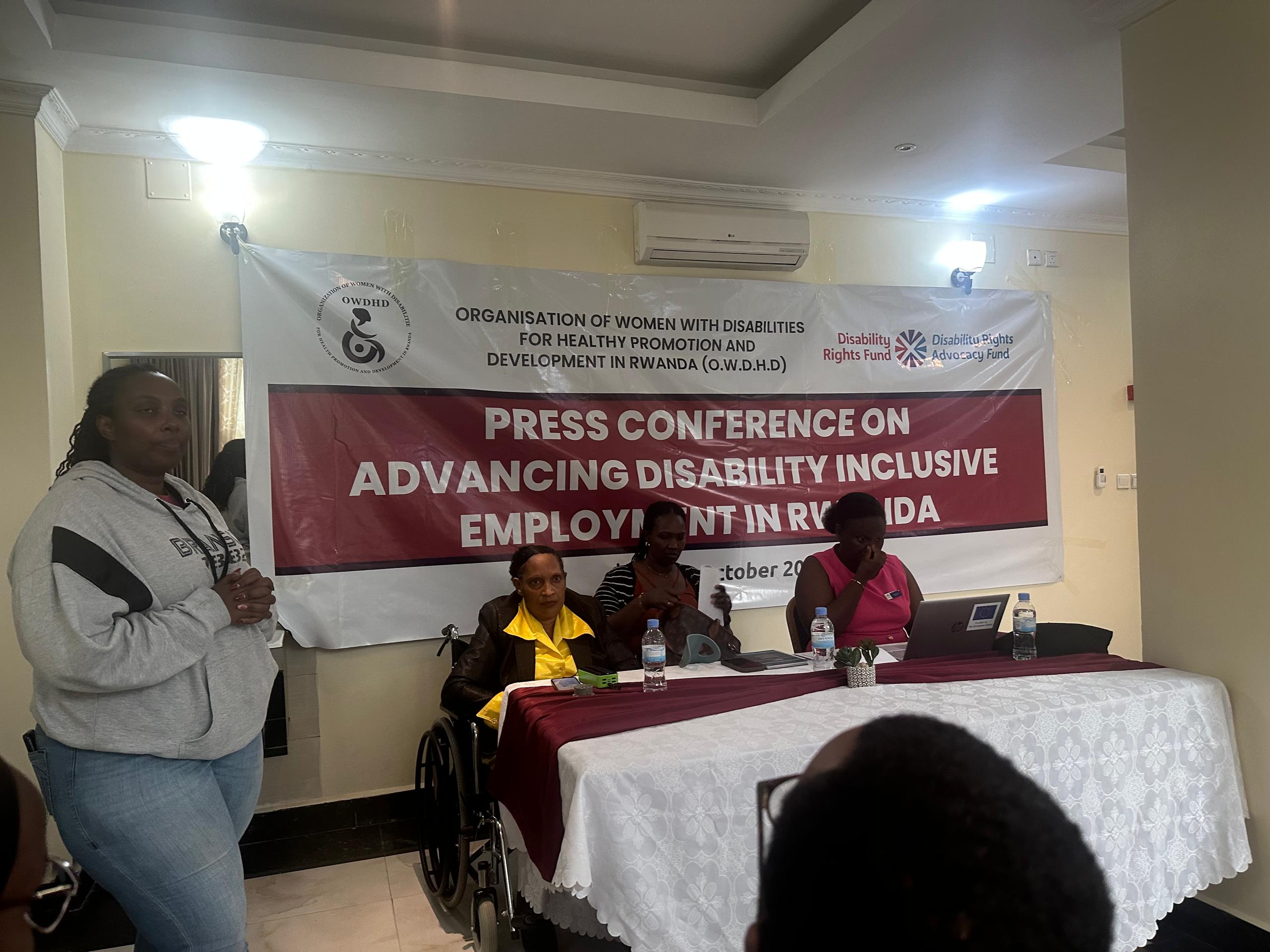
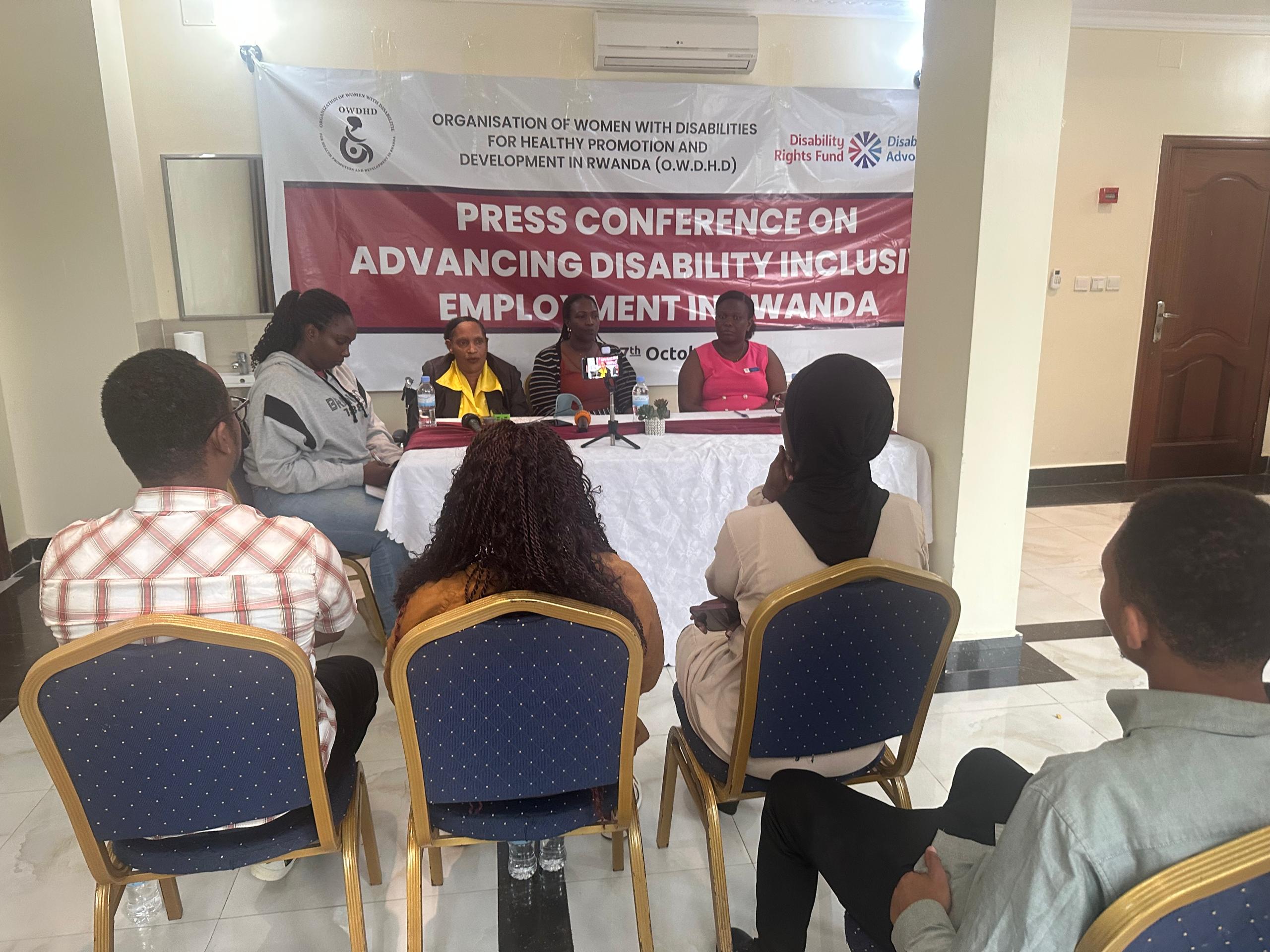
Legal job quotas proposed to increase employment for women and men with disabilities
By Elias HAKIZIMANA.
Kigali, November 2025 — Disability advocacy groups in Rwanda are pushing for legally mandated job quotas to ensure people with disabilities have equal access to employment opportunities. Currently, many disabled individuals remain marginalized in the workforce, with employment rates far below those of the general population.
Annet Bukombe, from the Organization for Women and Girls with Disabilities for Health and Development (OWDHD), highlighted that women and girls with disabilities face the greatest barriers. She noted that low employment is not due to lack of skills or qualifications, but rather employers’ perceptions that people with disabilities cannot perform effectively.
“This leaves disabled individuals at a disadvantage, affecting their confidence and limiting opportunities for personal growth,” Bukombe said. “When given equal opportunities, they excel and make meaningful contributions to both their livelihoods and the nation.”
Rwanda’s 30% gender quota for women in employment demonstrates how targeted policies can enhance inclusion and productivity, providing a potential model for disability-focused quotas.
According to the National Council of Persons with Disabilities (NCPD), Rwanda has 562,184 people with disabilities, with 44.5% men and 55.2% women, and 0.3% unclassified. Only 25.8% (145,362) are employed, while 56.4% (317,360) are unemployed, and 17.7% (99,462) have unknown employment status.
Bukombe recommends introducing a legally backed quota system requiring companies to allocate a minimum number of positions to people with disabilities. Even a modest 2% quota would mark a significant step toward inclusion.
OWDHD launched a one-year inclusive employment project in January, focusing on women and girls with disabilities. In just over ten months, 31 people have secured employment through partnerships with various organizations, with placements based on skills while accommodating disabilities.
Emmanuel Ndayisaba, Executive Secretary of NCPD, confirmed ongoing discussions with the Ministry of Public Service and Labour (MIFOTRA) to implement legally binding quotas.
“We are exploring a quota system to guarantee job opportunities for people with disabilities. Without at least 30% representation for women, many remain excluded from progress,” he said.
Beyond employment, NCPD reports highlight additional challenges. Over 52,000 people with disabilities are not registered in civil records, and access to education is limited. Data shows 17,302 children with disabilities are out of school, while 34,830 youths aged 16 and above remain unregistered, restricting access to services and opportunities.
Advocates argue that legally mandated quotas would not only create fairer access to employment but also boost confidence among people with disabilities, enabling them to fully contribute to Rwanda’s economic and social development.




Leave a Reply