
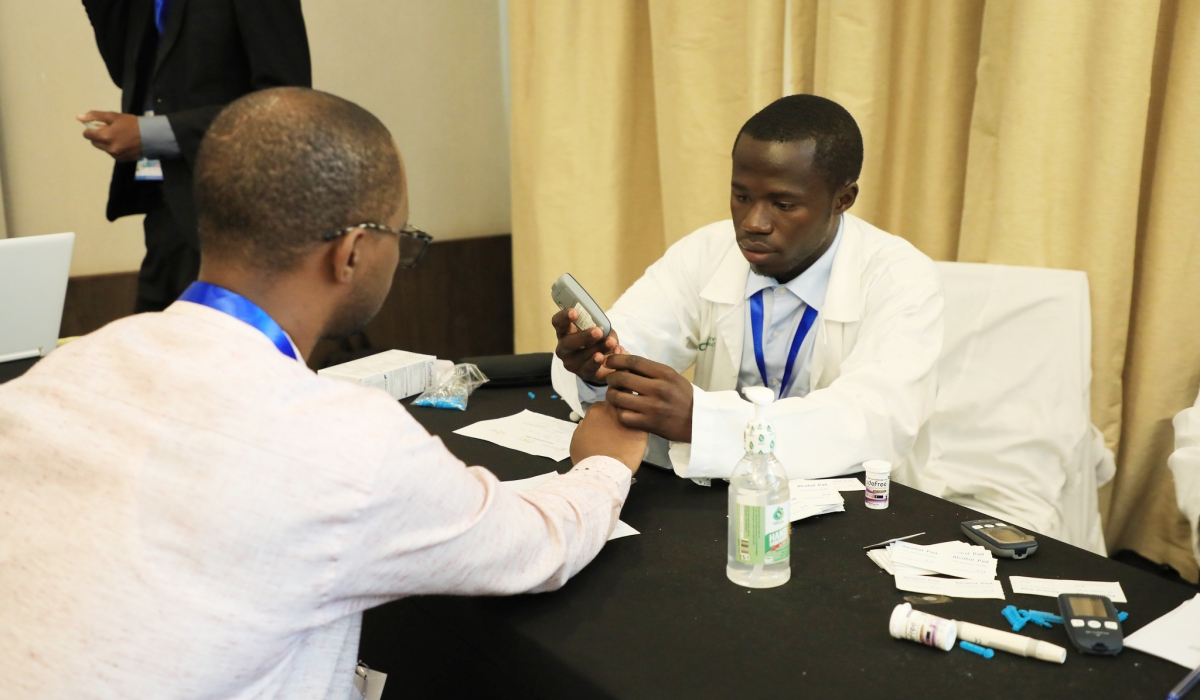
Rwanda NCD Alliance urges EAC leaders to prioritize NCD prevention and care
By Michel Nkurunziza.
Rwanda NCD Alliance has urged EAC leaders to prioritize NCD prevention and care.
Rwanda NCD Alliance is a leading civil society organization in Rwanda dedicated to raising awareness, advocating for policy change, and collaborating with stakeholders to combat Non-Communicable Diseases (NCDs) and promote health and well-being in the country.
The alliance works towards a future where NCDs are effectively prevented and controlled, ensuring a healthier and more prosperous Rwanda.
“We are calling on leaders, particularly in the EAC countries, to prioritize their citizens’ health, including through NCD prevention and care. It is time now to invest in stronger, resilient health systems, for healthier communities” said Dr Francois UWINKINDI, one of the “ #ActOnNCDs Champions” for the 2023 Global Week for Action on NCDs.
On 14 September 2023, the Global Week for Action on NCDs was launched, engaging civil society organisations and individuals around the world to call upon governments to ensure that everyone has access to quality healthcare, regardless of their ability to pay, where they live or who they are. This must include care for noncommunicable diseases (NCDs) like cancer, diabetes and cardiovascular diseases.
Over 25 per cent of the world’s eight billion people live with at least one NCD. Each year NCDs cut short 41 million lives, accounting for 74% of all deaths worldwide. They also cause half of all global disability and drive millions of people into poverty.
This year’s Global Week for Action coincides with the United Nations High-Level Meeting (HLM) on Universal Health Coverage on 21 September, which offers the opportunity for governments to agree on specific actions to achieve Universal Health Coverage (UHC) by 2030, a commitment previously made by all world leaders.
At least half of the world’s population does not currently have full coverage of essential health services.
Most of these people live in low- and middle-income countries (LMICs).
UHC is the most powerful tool we have to reduce health inequities and close the care gap.
For the HLM, the NCD Alliance is calling on governments, Ministers of Finance and Health, donors, international agencies, and the private sector to invest in prevention and care of NCDs, speed up integration of NCDs into UHC benefits packages, align with sustainable development and global health priorities; and engage people living with NCDs in decisions that affect their health.
“The Moment for Caring is now. Governments must seize the opportunity that this HighLevel Meeting offers us to ensure that UHC is achieved for all people, that NCDs are included as a priority within UHC benefit packages, and that affected communities are meaningfully involved within health decision-making and service design and delivery,” said Katie Dain, CEO of the NCD Alliance.
Beyond the human toll of NCDs, they also take a devastating economic toll on households and countries.
Together, the five leading NCDs – cardiovascular disease, chronic respiratory disease, cancer, diabetes, and mental health and neurological conditions – have been estimated to cost more than US$ 2 trillion per year (or US$ 47 trillion between 2011-2030). This burden is most evident in developing countries.
By introducing a realistic and cost-effective package of 21 NCD prevention and treatment interventions, governments could avert these losses – along with 39 million deaths in LMICs.
These interventions could generate an average net economic benefit of $2.7 trillion, or $390 per capita, between 2023 and 2030. NCDs are the world’s biggest opportunity to save lives and money.
Status in Rwanda
Non-communicable diseases (NCDs) account for 44 per cent of all deaths in Rwanda but a big number of them can be prevented.
NCDs when combined with injuries and disabilities account for 58 percent of total annual mortality in Rwanda.



Leave a Reply