

Irish Potato Farmers Decry High Prices of Organic Fertilizers
By Elias Hakizimana.
Irish potato farmers say high prices of organic fertilizers and related expensive transport cost.
They also claim lack of adequate knowledge on the quality and quantity to be used on a particular surface of kind of soil. They recommend experts and researchers from Universities, and other concerned entities to conduct different kinds of research about the broad range of nutrients found in organic fertilizers.
Sylvestre Munyempara, a farmer from Nyanza district sites various reasons that pushed for lack of affordable organic manure, including insufficient livestock, few crop residues as they become animal feeds, extinction of some species that produce biomass and few sites of compost.
“High price of produced organic fertilizers is a big issue, as a farmer, I would request government and partners to train farmers on the use of organic fertilizers and how we can produce it,” he says.
Joseph Gafaranga, president of Imbaraga Farmers Organization reiterates the challenge of insufficient organic fertilizers.
“Even the available ones are not matching the standards because no way to measure the quality produced and quantity to be used on a certain piece of land,” Gafaranga says.
He recommends various actors to establish the demo plots for compost at the village level through public works to help farmers have access to organic fertilizers’ production, use and application.
“The government and its partners who used to mobilize the use of inorganic fertilizers, they have also to prepare the campaign about the use of organic fertilizers continually,” says Eugenie Baziki, a farmer from Duhozanye Association.
Experts show that organic fertilizer compositions (compost and NPK) resulted in a 27.4% increase in potato yield and physical growth and 33.5% increase in potato yield, compared to fertilizer (NPK).
Agriculture plays a crucial role in the economy of Rwanda, employing a majority of the population and contributing significantly to its GDP. However, like many other countries, Rwanda faces challenges in its agricultural sector including climate change, soil degradation, and food security concerns.
In response, Rwanda has recognized the importance of sustainable agricultural practice, and Regenerative Agriculture (RA) is a vital intervention. RA aims to restore and improve soil health, enhance biodiversity, and mitigate climate impacts for sustainability. It is a necessary solution to address the challenges faced by farmers and the environment.
The Rwanda Development Organisation (RDO), Imbaraga Farmer’s Organisation, SNV (Netherlands Development Organisation), and the University of Rwanda’s College of Agriculture and Veterinary Medicine (UR-CAVM) have been actively involved in supporting farmers and advancing research in regenerative agriculture. These efforts have contributed to a greater understanding of the benefits and opportunities of regenerative agriculture practices in Rwanda.
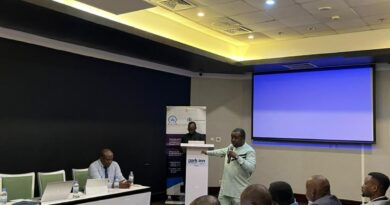
Jean Paul Munyakazi, Legal Representative of IMBARAGA Farmers Organisation Over 4,000 farmers were trained in Regenerative Agriculture to mitigate the impacts of climate change and to restore soil fertility.
“Organic fertilizers distribution channel is still expensive, there is a need to conduct research about soil health to know better the matching organic fertilizer and soil acidity,” says Dative Mukaniyonzima-Value Chain Specialist in the Ministry of Trade (MINICOM).
Mukaniyonzima adds that different institutions have to put their efforts together to produce and distribute a big quantity of organic fertilizers either through agro-dealers or other suppliers.
“Farmers are also encouraged to fight against erosion and climate change for a good harvest,” Mukaniyonzima says.
theinspirerpublications@gmail.com



Leave a Reply