

Access to basic sanitation: Inclusively overcoming the challenges
By The Inspirer Writer.
Thousands of rural households in Rwanda still lack access to sanitation and hygiene services. and for people living with disabilities, the lack of access to hygiene and sanitation services and products is even more complex.
Rwanda aims to reach universal access to basic sanitation and hygiene services by 2024 and safely managed by 2030; presently, the country falls short by nine points of this target according to the 2021 Ministry of Infrastructure’s water, sanitation, and hygiene management information system report. According to the same report, 24.3% of Rwanda’s rural population still lacks access to basic sanitation.
With all the efforts, sanitation and hygiene services and products are not close enough to the community, and where they are, households struggle to afford them. And how the situation is for persons with disabilities?
“Through the efforts, persons with disabilities still have challenges accessing sanitation products specific to us, including sato stools,” says Theophile Gakuru, who is a representative of persons with disabilities in the Kabarondo Sector.

Sato stools are very important for a household to construct an improved latrine and get in the bracket of families the country considers as having basic sanitation. Once installed on the latrine, they block the bad smell and flies from coming out. For elderlies and persons with disabilities, they enable effortless squatting.
Boosting the supply chain
Jean Damascene Harelimana, the Kayonza District Vice Mayor in charge of Social Affairs calls for an enhanced partnership to ensure sanitation and hygiene products are available to members of the community, especially persons with disabilities.
“It’s imperative to increase the availability of products and services needed to improve welfare for persons with disabilities, in households and the community,” the Vice Mayor says.
Isoko y’Ubuzima, a 5-year USAID-funded project implemented by a consortium led by Water For People in Rwanda, collaborates with districts, and private operators to create an environment where communities can easily and affordably access hygiene and sanitation products and services.
For instance, in Kayonza District, the project has established 4 showrooms in Murundi, Rukara, Mukarange, and Kabare sectors. Nationally, 11 districts now have Sanitation Centers, and Isoko y’Ubuzima has now added 41 showrooms, bringing sanitation products and services to the secto rlevel.
To mitigate the affordability issue, the project works with microfinance institutions to create low-cost sanitation loan products available to members of the village savings and loan associations (Ibimina).
Also, District SanitationCenters(DSCs) are connected to retailers of sanitation products, while Isoko y’Ubuzima facilitates negotiations for delivery at a discount, and the DSCs access the capital from microfinance institutions and increase their stores.
The project, whose other members of the consortium are Care International, AEE, VEI, and IRC, works, through community mobilizers, to educate people on the importance of improving sanitation and hygiene practices. The latter obtain sanitation products from the established showrooms and sell them in the community.
” [Isoko y’Ubuzima] helps people to understand what products and services are available and why they are so important. In addition to that, we are looking at the entire trade chain of commodities and how to make sure that those products are brought closer to the community” says Kurt S. Henne, the Isoko y’Ubuzima project Chief of Party.
For persons with disabilities, their participation in the project activities implementation for the entire approach to social and behavior change and demand creation is key to its success.
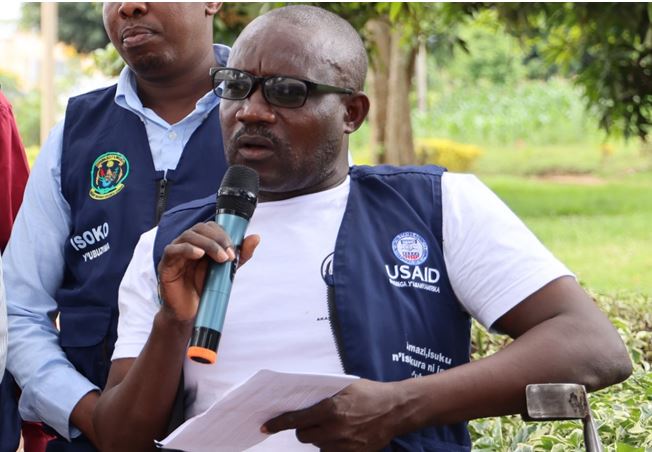
“Isoko y’Ubuzima values the role of persons with disabilities in program implementation, and I am one of them. I conduct advocacy through this project activities implementation to put the spotlight on the plights of persons with disabilities, specific to water, sanitation, and hygiene,” explains Theophile.
He also urges community and civil society members to continue to speak out for the remaining challenges to be addressed.
theinspirerpublications@gmail.com




Leave a Reply