

USD 250,000 Project to boost special need education for Rwandan children
By Elias Hakizimana.
The National Union of Disability Organizations of Rwanda (NUDOR) in partnership with Special Skills Consultancy has launched a new project to build the capacity of teachers on the newly developed teaching and learning curriculum for children with intellectual challenges.
The three year-project dubbed: “Achieving the full potential for every Rwandan child with intellectual Disability” will offer training to teachers, headteachers who offer special need education in seven selected special schools in Rwanda on teaching and learning methodology as well as thorough assessment of child needs and the root causes of their disabilities.
Astrid Herbosch, Managing Director of Special Skills Consultancy who conducted various assessment needs of children with intellectual challenges in various special schools said that teachers are interested but lack skills to deal with the challenging behaviours of children with intellectual disabilities.

“the curriculum is there but teachers have no knowledge to make it of good use, we conducted an assessment of what children need to be happy, safe and independent so that we know what to teach them and how to teach them. We selected seven (7) special schools and we aim to train other 30 schools after having seen the impacts of this project.” Astrid noted.
Dr. Beth Mukarwego Nasiforo , Executive Director of NUDOR and Lecturer at University of Rwanda’s College of Education in Inclusive Education said that the project will be implemented into three phases, where the first phase will focus on training two special schools to enable teachers on how to cater for children with intellectual disabilities, the second phase will focus on refining the curriculum while the third will focus on training teachers on friendly use of the already developed curriculum by Rwanda Education Board (REB).
Dr Mukarwego said that the problem was lack of needed skills among the teachers to adapt to the existing curriculum.
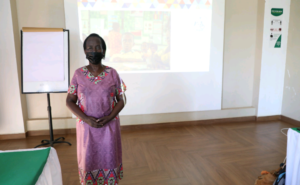
“We aim at supporting all children with disability in Rwanda to have access to education as a common right, NUDOR will work closely with project implementers within three years by providing workers to offer training and we believe that there will be mindset change in the society among Rwandans, communities and parents with children with intellectual disabilities in particular.” She said,
One of the challenges according to Dr Mukarwego include lack of motivation and turnover for teachers in special schools, thus making them shift to other positions with the promise of advanced salaries and private health insurance. “This can affect children’s performance as they keep having new faces, which also affect their mental characters and create a kind of disorder in their performance.” She said,
Zawadi Dusabimana, a teacher from one special school dubbed “Komera” reiterated the challenge of inequality of teacher treatment in public and private special schools as the loopholes towards achieving quality education among the children with intellectual disabilities.
Zawadi could not manage to teach children using the existing REB curriculum before she got training. “Before, I could not efficiently teach children, after being trained, I knew teaching methodology and how to prepare teaching aids and arrangements, so the training uplifted my knowledge in teaching these children.” She said,
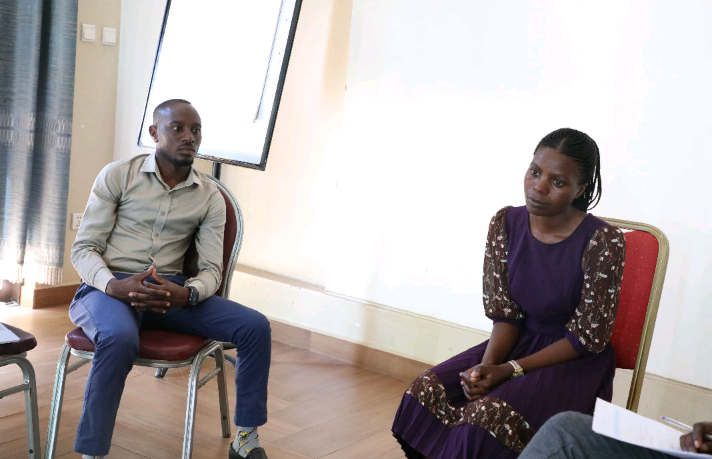
Parent testimony
Bertrand Ishimwe is the father of an Autist child. He narrates the tough journey of how his neighbors used to quarrel against his 7-year-old son due to a negative mindset before he decided to hire a second housemaid to look after him. Fortunately, after crossing many hospitals he revealed later that the child has Autism and took him to a special school and has now made remarkable changes.
“I request the government and Organizations advocating for people with disabilities to increase training for parents and families who have children with intellectual disabilities on what intellectual challenge is and how to help such children.” Ishimwe said, adding that the training is also vital to the entire community to change their mindset on various misconceptions about people with intellectual disabilities.
The three-year project that is set to be implemented from January 2022 until December 2024 will cost $250,000 which is equivalent to over Rwf250Million.
theinspirerpublications@gmail.com




Leave a Reply