
COVID-19: How Gasabo’s women traders are struggling to return to normal
By Elias Hakizimana.
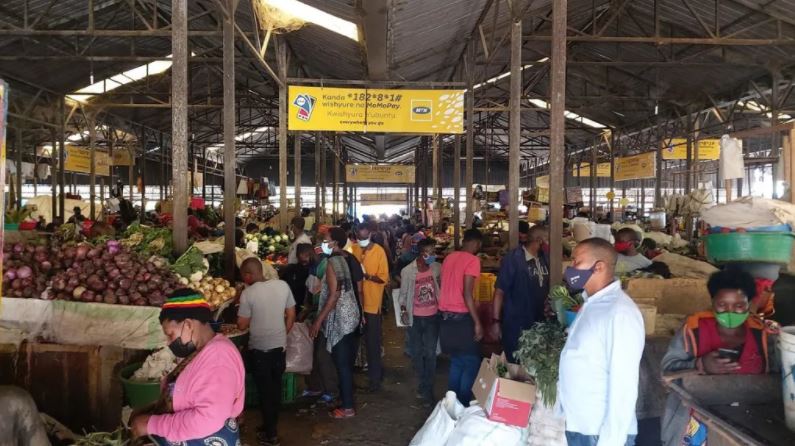
Since the Covid-19 pandemic broke out in Rwanda, most of the businesses were hit including women who run small scale trade.
Amidst the pandemic, Yvonne Mukafati, a young woman from Kimironko sector, Bibare cell opened a business entitled ‘Fiesta fast food’ that supplies food to public servants around the area.
The young lady counted losses in the first March, 2020 Lock down that led many people to lose jobs because the main clients who used to consume her food stuff were the employees working in the institutions around her business.
“I opened business in February 2020 and Covid-19 broke out the following month in March 2020. I experienced various hurdles, and at all costs I had to pay renting fees despite losing clients,” Mukafati narrated.
“The challenges we faced during Covid-19 include continuous renting fees and high taxes without having clients, she said.
The situation made her to lay off some employees as she could not manage to continue paying them.
She told The Inspirer that she is still facing challenges including unpaid arrears for the rent where she operates the business.
Hope to recover
Mukafati said that there is a hope that things will return to normal as she can now work many hours a day.
“Comparing the time when we used to close businesses at 7:00 pm from the current curfew of 10: pm. unless clients are not many, I try to make some amount of money depending on the day compared to the previous,” She said.
Complaints about high taxes
The woman used to pay monthly tax of Rwf5, 000 when she opened the business.
“This was clear but now I am obliged to pay Rwf10, 000. This is a burden for me. We wish the government to ease taxing strategies. It is not easy for every trader to have an –EBM billing machine because, we are still facing financial impacts from the pandemic,” Mukafati claims.
She said that there is a hope that businesses will be back to normal as they try to comply with all the measures of preventing the pandemic, noting that she and all her employees have been vaccinated.
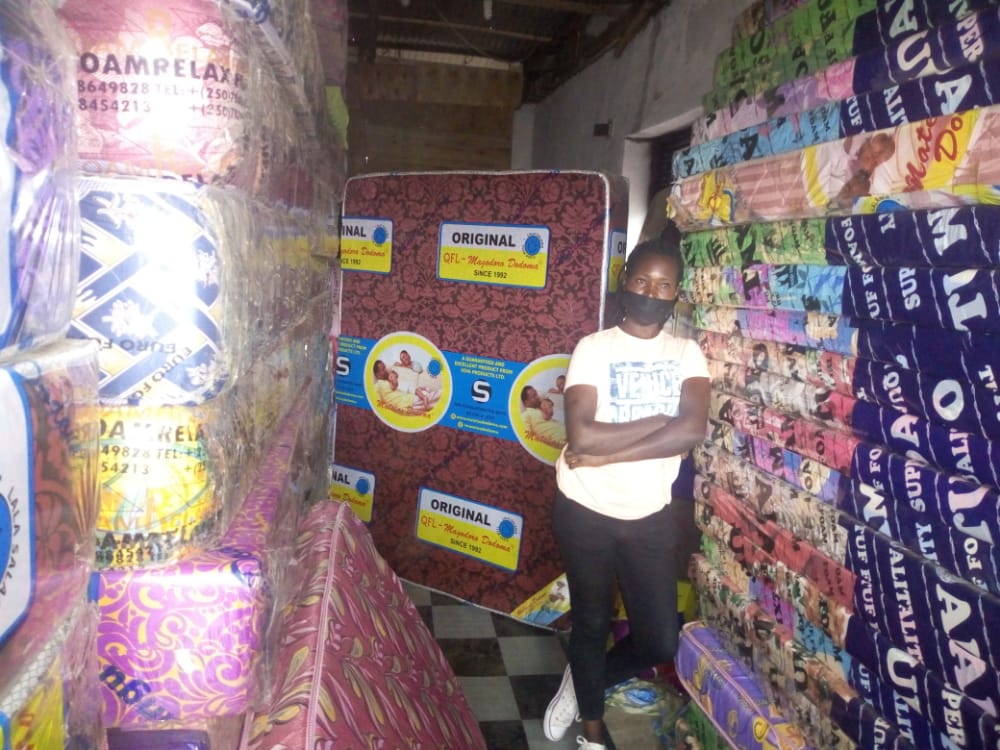
Adeline Muhawenimana sells mattresses in Kimironko, she said that she used to buy new commodities three times a week but the pandemic became an issue.
“Before the pandemic we could buy new mattresses three times a week because we had no financial challenges, with the impacts of the pandemic now, we bring new mattresses once a week. People need to increase efforts in complying with covid-19 prevention measures and; I believe the businesses will return to the normal situation.” She said.
Kobusingye, another woman working for Jessy Trading Limited Shop that sells various food commodities said that the business is gradually recovering.
“We are happy that the working hours have been increased although clients are not coming in a big number,” she said.
Decline in sales
Kobusingye said she could purchase commodities for retailing twice a day before COVID-19 Pandemic because of movements of people.
“However the sales have declined when we compare with the pre-pandemic situation. Clients are not coming in a mass as we used to experience,” She said.
Lessons learnt
She said that business and the population in general have learnt the necessity of saving culture.
“This pandemic taught us a lot of things. We learned to save. We changed the way we spend money and how we consume. In our purchasing strategy, we assessed our clients’ buying routine to know what we can bring for them so as to avoid losses related to wastes,” She said.
Alice Mutoni, another trader who owns a milk shop in Kimironko Sector said the pandemic taught her how to manage her capital.
Milk prices doubled
“I used to buy and sell 100 liters of milk per day but now I cannot exceed 25 liters,” Mutoni said, noting that the milk prices have hiked.
Dorothee Umuhoza sells kitchen equipment in Kimironko Sector.
She said her business is recovering but at slow pace.
“We hope to get clients as we move forward, but the situation is different from the period before the pandemic. I could buy more equipment for sale after every three days but today it can even take the whole week with a full shop without selling. Meanwhile we appreciate as it is better than the lock down. We have a hope that the situation will continue to improve and help us to recover,” Umuhoza said.
District’s contribution
Umwali Pauline, the District Executive Administrator (DEA) of Gasabo district said that the district has engaged with other partners to help women revamp their businesses in order to recover from Covid-19 effects.
“In collaboration with partners, we managed to give some money to women traders as well as youth and others whose small scare businesses were hit by Covid-19 impacts, we have VUP financial services that help traders with small businesses get a loan on low interest rate, I can encourage them to go at SACCO microfinances in their sectors and request these kinds of loans,” Umwali said.
Regarding the doubled prices of milk which women claimed to affect their businesses in the milk shops, DEA Umwali said that the district has conducted an assessment and found that many traders hiked the prices.
“This issue was given a solution and Inyange Milk Industry has announced the clear prices of milk products. We will continue to work with the Ministry of Trade and Rwanda Revenue Authority to see if there is a trader who contravene the set prices and be punished,” Umwali noted.
theinspirerpublications@gmail.com
Follow us @theinspirerpubl





Leave a Reply