
$46million small livestock project tackles poverty, malnutrition in Rwanda
By Elias Hakizimana.
Vulnerable families’ livelihoods are improving, while stunting rates are being tamed thanks to the Project for Inclusive Small Livestock Markets (PRISM), funded at a tune of $45.64 million (about Rwf50 billion) by the entities including the International Fund for Agricultural Development (IFAD), HEIFER International, and ENABEL – a Belgian development agency.
Such funds include $14.9 million IFAD loan, $17.43 million for ENABEL Grant, $4.68 for Heifer International) and $8.63 M for other partners.
The Government of Rwanda, through the Ministry of Agriculture and Animal Resources (MINAGRI) and Rwanda Agriculture Board (RAB) are implementing this five-year project in 15 districts countrywide, 10 of which have the highest stunting rates among children.
In the Northern Province, the project is giving its interventions to the vulnerable citizens of Musanze, Burera, Gicumbi, Gakenke and Rurindo Districts; Western Province in Nyamasheke, Karongi, Rutsiro, Nyabihu and Ngororero; while in Southern Province it provides supports to needy families from Huye, Ruhango Nyaruguru, Gisagara and Nyamagabe.

The project development objective (PDO) is to reduce poverty by empowering poor rural men, women and youth to participate in the transformation of the Rwanda livestock sub-sector and to enhance their resilience, by increasing competitiveness and profitability of the small livestock sub-sector – pigs, poultry and sheep – for the provision of quality products from smallholder producers to domestic and regional consumers.
It targets to reach 26,355 households among whom 23,400 are poor rural families belonging to Ubudehe categories 1 and 2; as well as 1,530 youth and 1,425 farmers under productive alliances.
PRISM Project was initiated on March 27, 2021 and it is expected to run through September 30, 2026.
Small Poultry for income and nutrition improvement
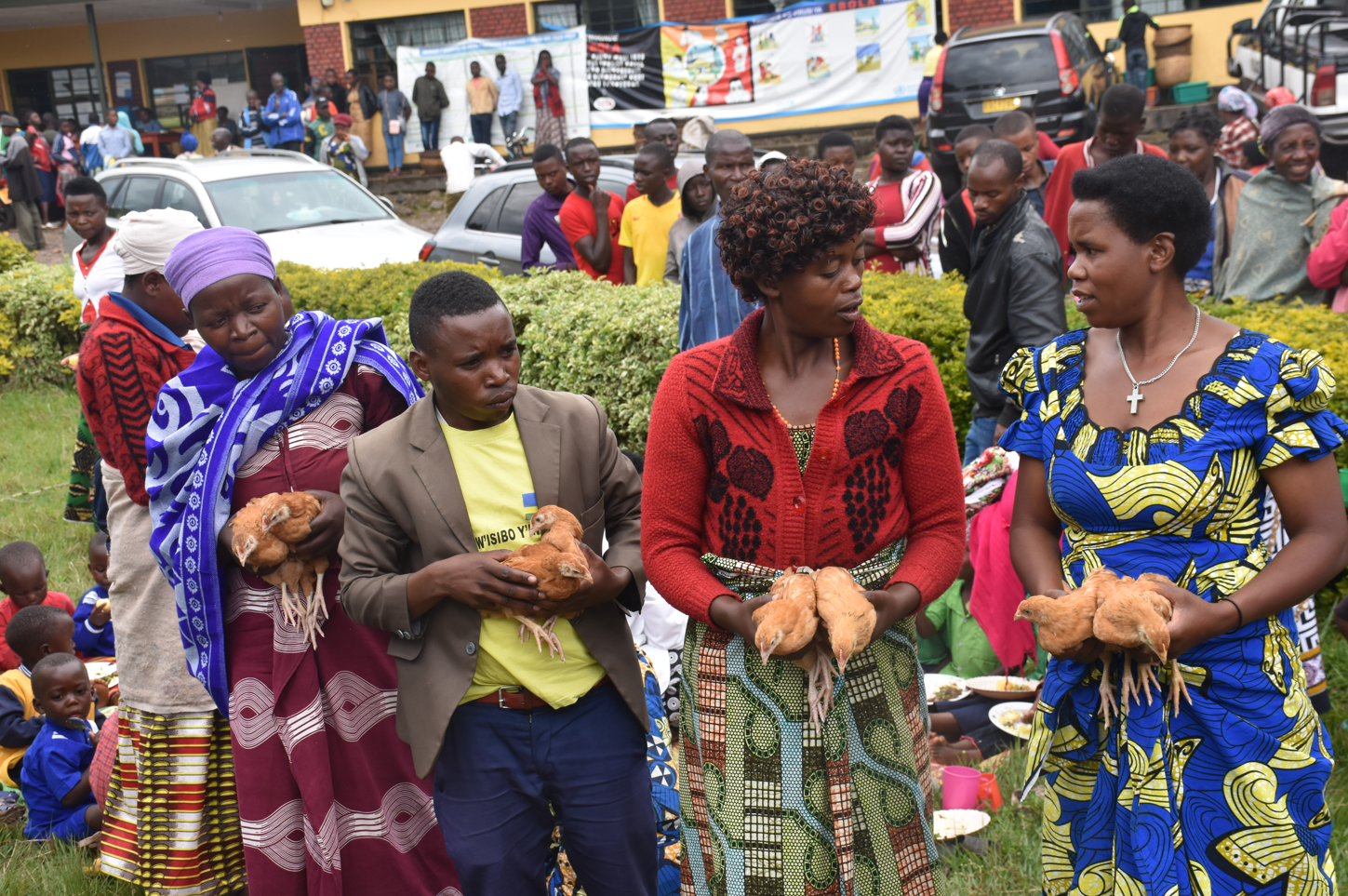
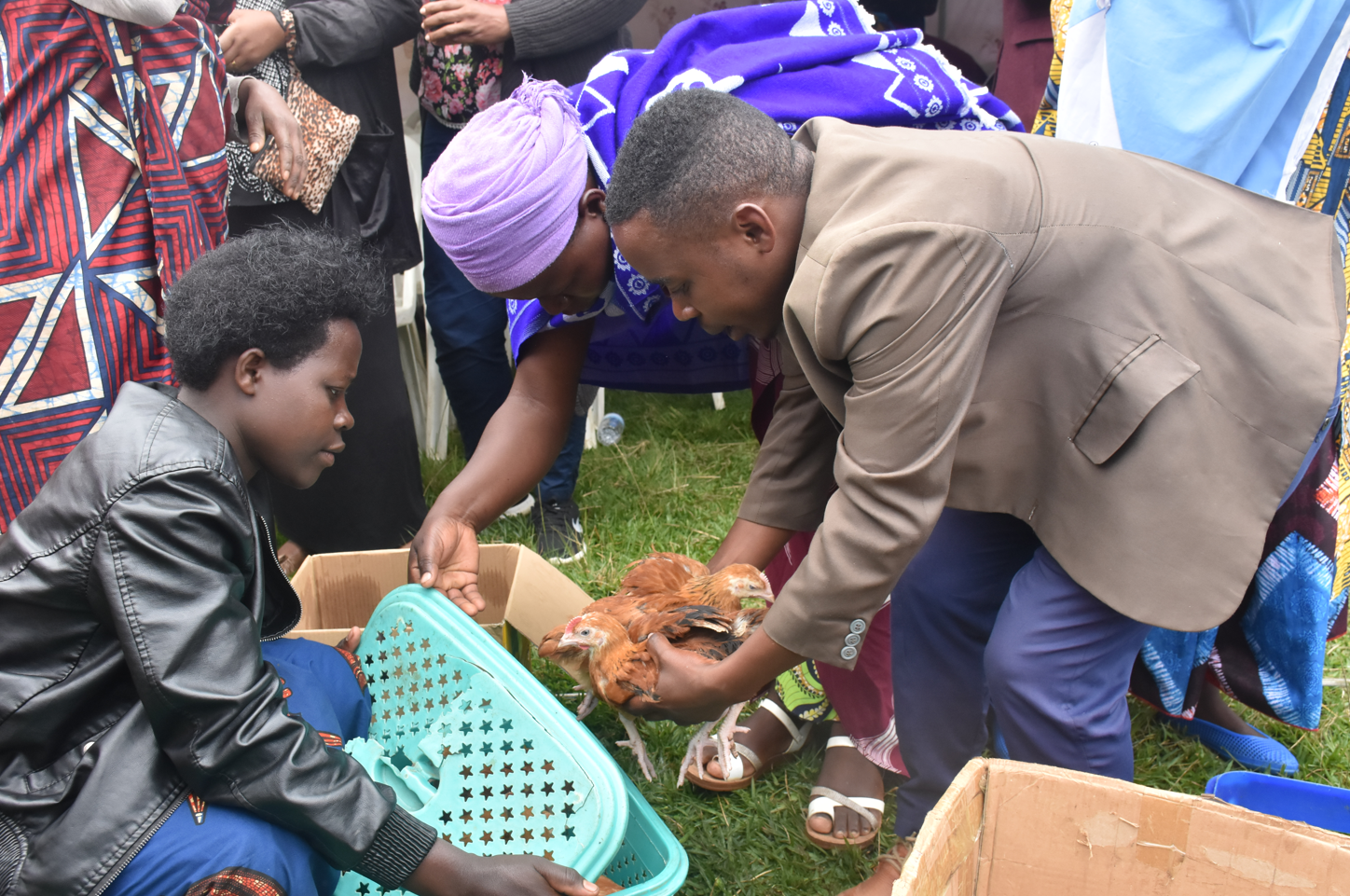
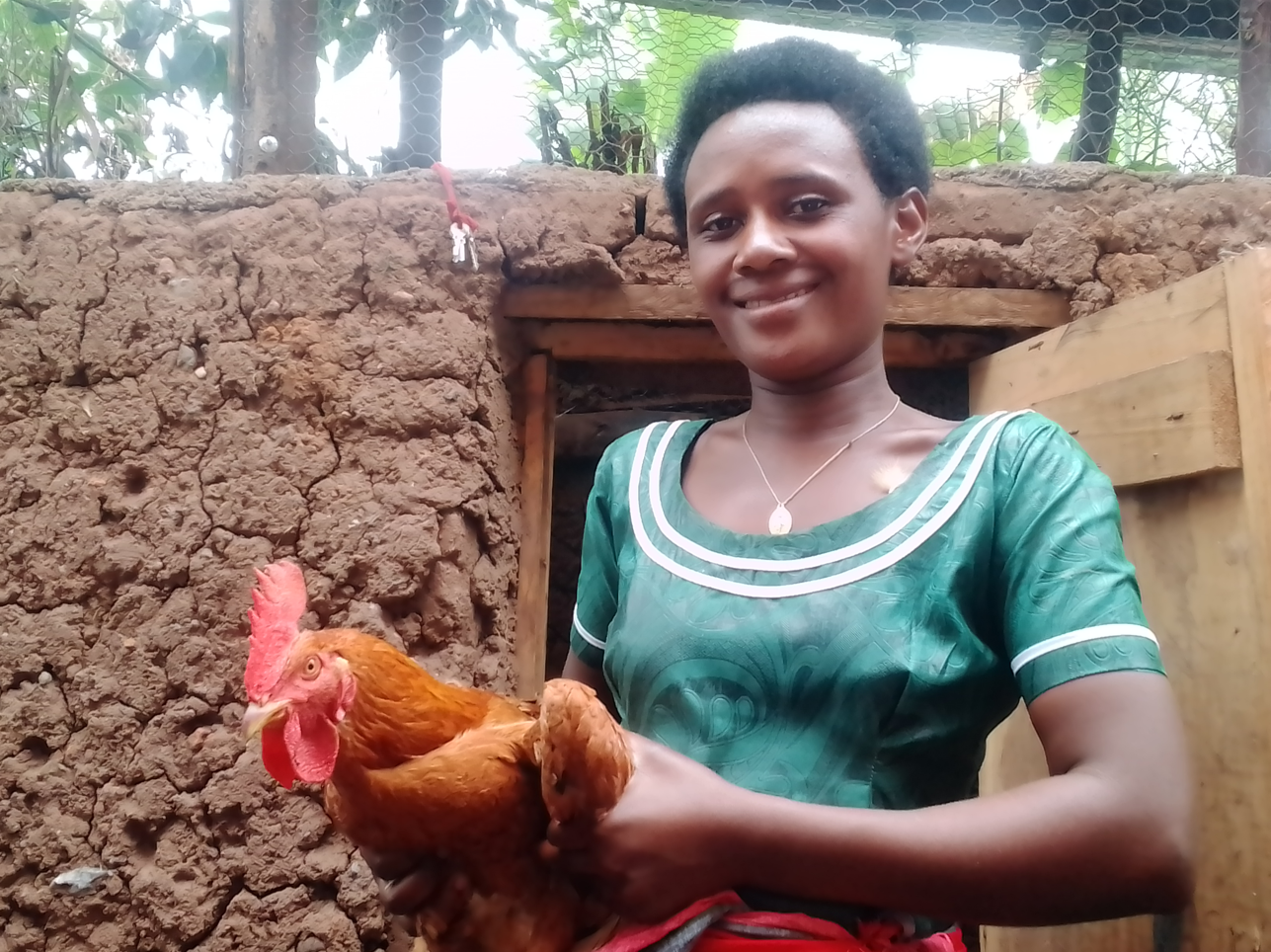
In the Northern Province, the project is contributing a lot in transforming lives of the poor communities by providing them with chickens, plus livestock management training and equipment.
Ribera Gratien, a citizen from Mukuyu village, Cyeru cell, Rwamiko sector in Gicumbi district is among the beneficiaries of chicken gift and animal husbandry training. He narrates how the project helped him to graduate from poverty and tackle malnutrition, whereby he gets eggs to supplement diet and use the poultry revenues to expand livestock farming.

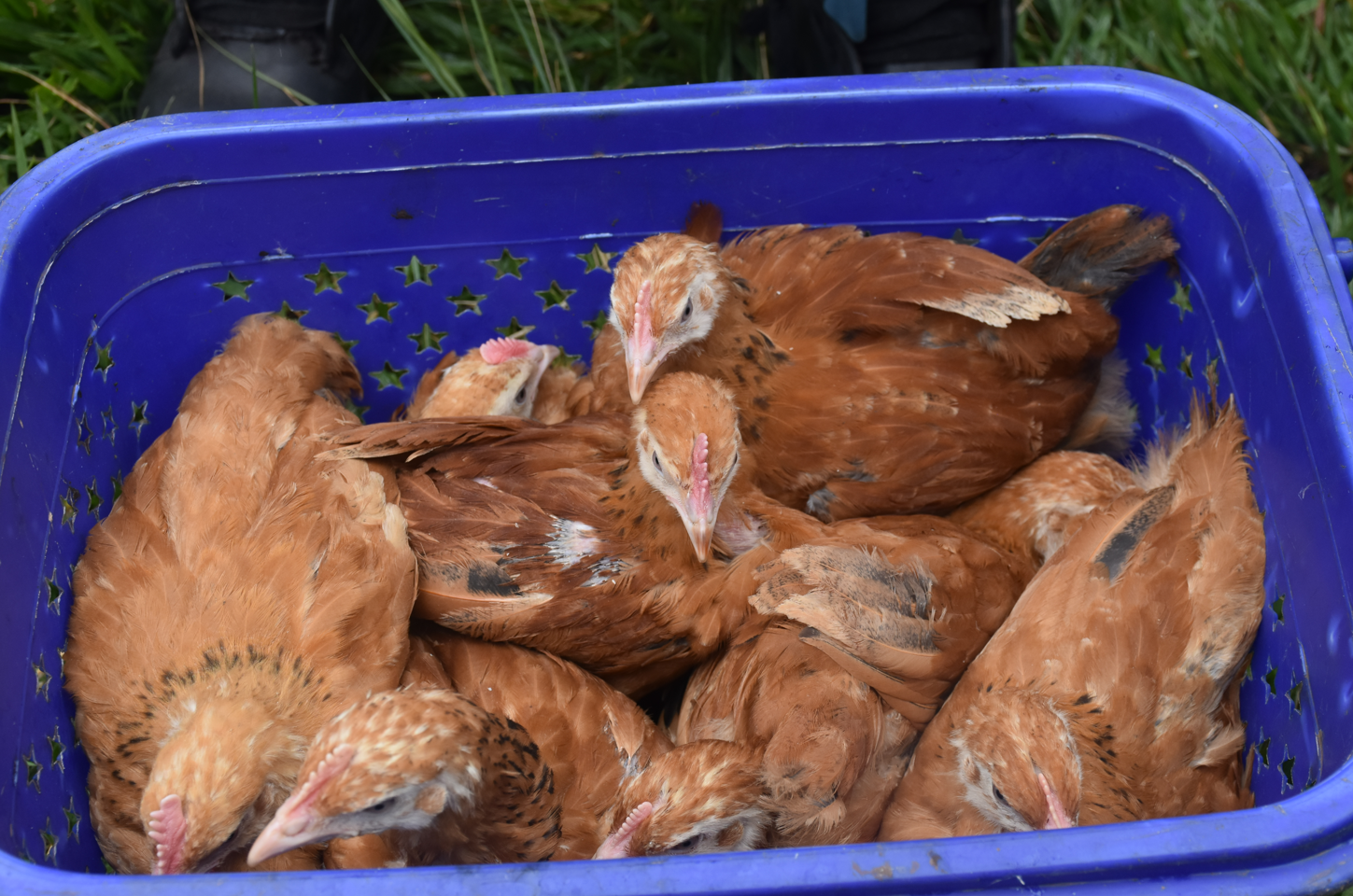
“In September 2022, I got 10 chickens through the project, five of them were coqs. They also gave me 2 iron sheets, nails and barbed-wire to construct the poultry shed, plus chicken feeds and chicken medicines to run my project. My little son was in critical nutrition status, we eat eggs and the child is now healthy,” Ribera said.
He indicated that the hens grew up and pond 30 to 35 eggs a day, we eat 20 and sell 15 and they never stop ponding.
“To date, I finished passing on the gifts to other neighbours as the project’s idea to give back to the community, I sold the five coqs at Rwf9,000 each (and got Rwf45,000 in total), which helped me to buy layers and construction materials to return in the project, with my savings in the group, I managed to get the loan to buy a small bull (cow) of Rwf150,000. I was in the second Ubudehe category…” he pointed out.
From the small bull, he added, he managed to buy a big cow to provide milk to the family and get organic manure to fertilise his crops for higher yields.
With the support of PRISM project, some of the beneficiaries who are in the saving groups, managed to build egg collection center and poultry feeds shop to boost poultry profitability.
The project also built livestock markets and veterinary posts to boost security, profitability and livestock taxes.
Burera district, one of 10 districts most affected by stunting, also benefited from poultry donations to transform both financial livelihood and nutrition status.
Marie Chantal Uwanyirigira, the Mayor of Burera District said that the project will help them to make significant strides in reducing the high malnutrition levels.
“We partnered in building the market for small livestock in Gatebe sector and a veterinary post in Rusarabuye sector, and a pig slaughtering house is at completion stage in Butaro sector,” Uwangirigira said.
“Today we have passed on the gifts of chickens to other beneficiaries, in the first batch, we distributed 2,190 chickens to 219 families. The chickens will help us to combat stunting as it increased from 41.6% in 2015-2016 to 42.9 % [currently], which is a burden we have to take on at all cost to meet the national target of reducing stunting at 19% by 2024,” she said.
Christian Ntakirutimana, an official in charge of finance and administration in Manyagiro sector, Gicumbi District, said that the market built by PRISM project boosted the profits of farmers and increased the number of small livestock coming in the markets.
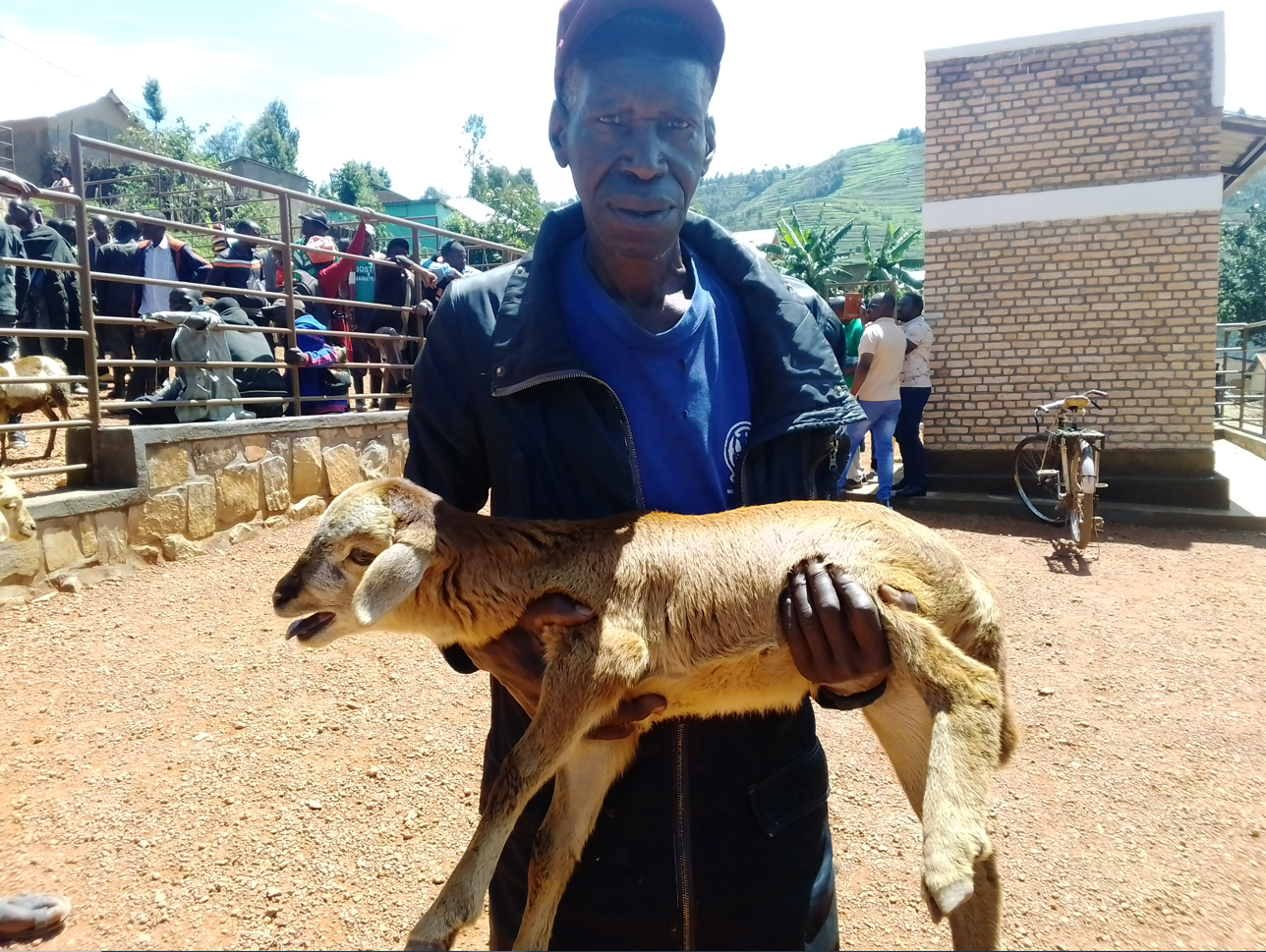
The new Manyagiro small livestock market hosts pigs, goats, sheep and hens. Farmers sell between 250 and 300 animals every week on Tuesday, while they used to sell between 160 and 170 animals before.
“The previous market was not adequate. The new market is fenced in a manner that gives trust to the citizens for security, no robbery can happen as before and all the taxes are collected at the entrance,” Ntakirutimana said.
Pigs and feeds changing lives in Western Province
After receiving 1 pig in July 2022, Cyprien Bamporineza, a resident of Ngobagoba Village, Nyange Sector in Ngororero District, Western Province, made financial achievements and has big dreams.
“I was given one big pig, which later gave birth to three piglets. From the sales, I got Rwf75,000 which I used to buy iron sheets and cement,” he said, adding that he passed on three piglets to his neighbours. “I plan to buy a cow from the income of my pig,” he added.
Judith Yankurije, a resident from Ngobagoba Village, Gaseke Cell, Nyange Sector in Ngororero District, said she gained necessary skills in building long-term self-reliance and working under associations. She got loan and sold 6 piglets and bought a cow.
“The pig gave birth to 8 piglets, I passed on 2 piglets to colleagues and sold 6, plus the loan from my saving association, then I bought a cow. I expect to graduate from the poverty line and invest in many income-generating rural projects,” she said.
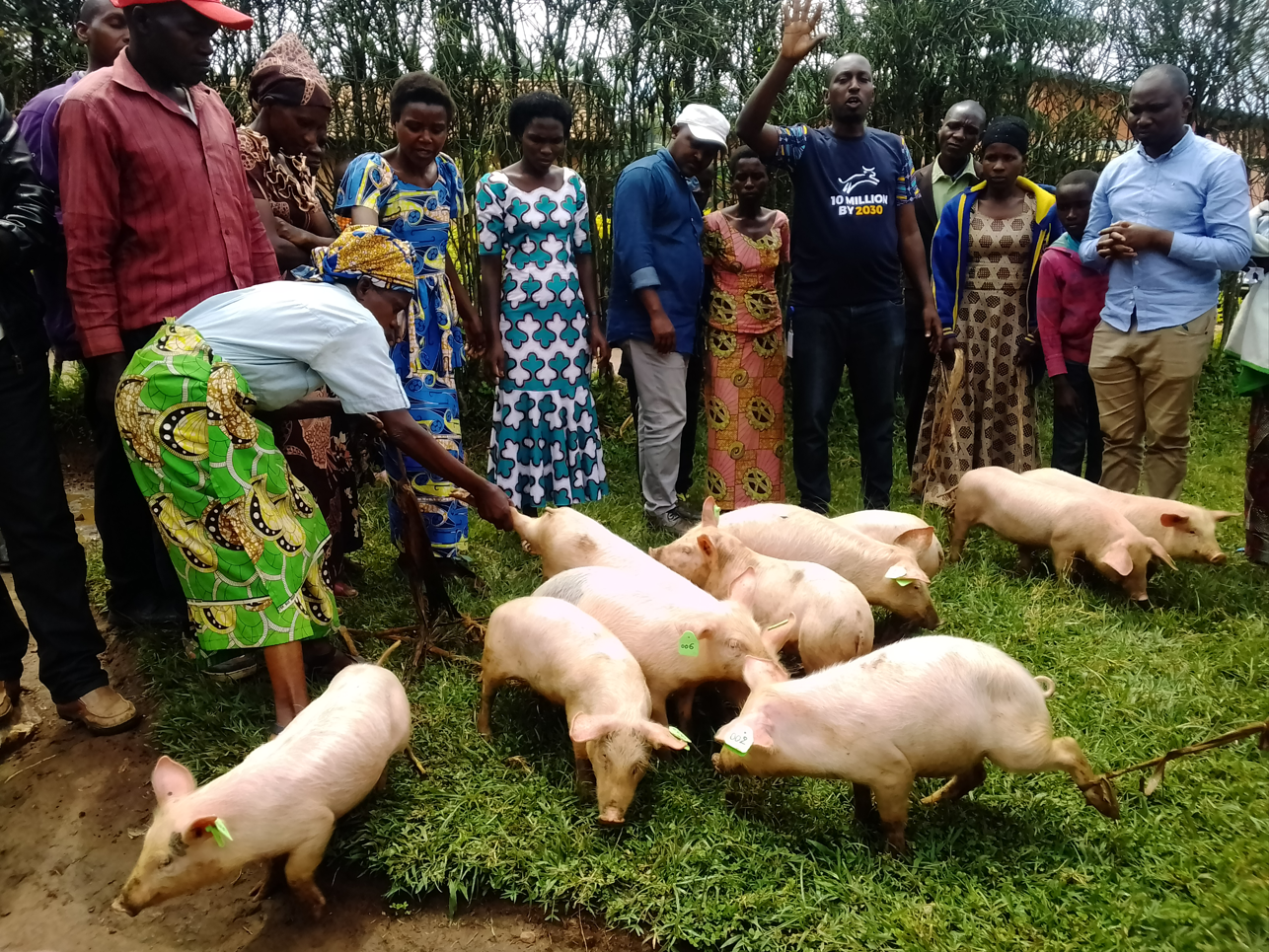
Mariam Kayiranga, another PRISM beneficiary, who was given pigs in Nyange sector, Ngororero District, narrated how together with her members of the savings group, established a pig feed shop near their households to solve the hunger crisis that was threatening their pigs.
“We decided to build a shop for pigs’ feeds. Before they could suffer from hunger because we struggled to buy feeds from Kigali or Huye District. But, this shop became our relief, and a solution to other farmers from Muhanga and Karongi, who all come here to buy pig feeds,” she said.
The broader support overview
Joseph Nshokeyinka, PRISM project coordinator says that they focus on increasing animal productivity to boost farmers’ financial income and tackle malnutrition.
“Since the last fiscal year, at least 3,375 needy families were given 33,750 chickens, whereby each family were given 10 chickens. Our aim is that beneficiaries become donors after this project though POG model,” she said.
“To date, 53,500 chickens were given to 5,350 families. About pigs, 1,576 families were given pigs last year. We first train them on livestock management, using 12 HEIFER cornerstones, the biggest of them is the POG – pass on the gift – to make sure our beneficiaries have graduated from poverty lines, and give back to other needy citizens,” Nshokeyinka said.
The project targets to establish 1,170 groups of beneficiaries and has formed 709 (60 percent) as of now.
Dr. Fabrice Ndayisenga, Director of Livestock Department in Rwanda Agriculture and Animal Resources Board (RAB) said that around 10 slaughtering houses were built through PRISM project. He calls up on the private sector to make these infrastructures more productive.
He said that the initiative of donating small livestock will complement GIRINKA- one cow per poor family – programme as some of the beneficiaries are not capable to raise cows.
“Current statistics show that, every year, we leave some beneficiaries unserved through Girinka programme, who also need them, so, this project will help to help those poor families have access to organic manure and increase domestic income, also tacking malnutrition. We plan to distribute 350,000 chickens and around 20,000 pigs before the project closes in the next three years, we make sure that a beneficiary receives livestock, feeds and medicines as well as shed building equipment,” he said.
theinspirerpublications@gmail.com
Follow us @theinspirerpubl


Leave a Reply