

Making Rwanda’s least-forested districts green again
By Michel Nkurunziza.
Between 40 and 50 years ago, Rwanda’s Eastern Province had substantial forest cover.
However, the once green eastern region, with its gently rolling hills, broad lowland plains, open savannah and grasslands, wetlands and marshes, experienced widespread deforestation as people cut trees in search of agricultural land, charcoal, firewood and construction materials.

Degraded forests are being restored in Eastern Province.
The Eastern Province of Rwanda consists of seven districts: Bugesera, Gatsibo, Kayonza, Kirehe, Ngoma, Nyagatare and Rwamagana.
Deforestation in the Eastern Province has outpaced afforestation.
From 2009 to 2019 alone, about 65,807 hectares were deforested, which is 9 per cent more than the area afforested, according to the Rwanda Forest Cover Map.
It is the only region in Rwanda where deforestation surpasses afforestation, the map shows.
“Due to such deforestation, you can rarely see trees in some areas. The demand for charcoal and firewood has made the situation worse. I can buy one bundle of firewood and it is exhausted in one day,” said Felecien Nshimiyimana, a resident of Rusera Cell in Kabarondo Sector, Kayonza District.
In Kayonza District, deforestation covering 18,179 hectares exceeded afforestation of 5,174 hectares between 2009 and 2019, according to the 2019 Rwanda Forest Cover Map.
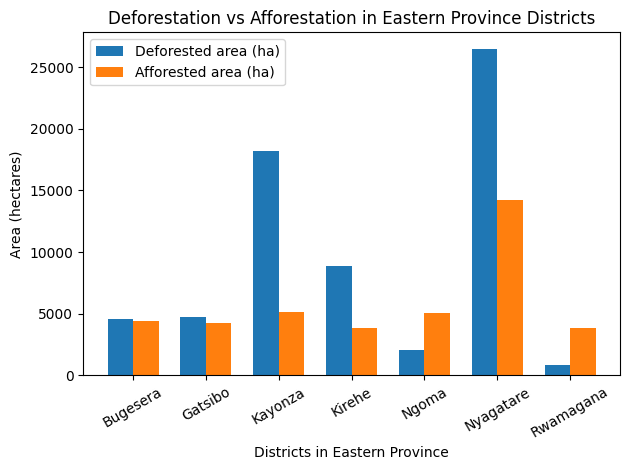
Deforestation and afforestation rates in Eastern Province District.Nyagatare records the largest forest loss of forests but also the highest tree planting . Kayonza shows very high deforestation while afforestation remains relatively low. Forest loss in Kirehe is more than double the area of tree planting.
Forest cover change analysis over the decade shows a net loss. Overall forest cover in Kayonza decreased by about 14 per cent during this period, equivalent to roughly 1.4 per cent forest loss per year.
This negative trend reflects the fact that deforestation exceeded afforestation in most sectors of the district. Exceptions included Mukarange, Nyamirama, Rukara and Ruramira sectors, where afforestation gains were recorded.
Ndego Sector experienced one of the most severe declines, with about a 51 per cent reduction in shrub and forest cover, while afforestation accounted for only about 1 per cent over the same decade.
“Wood harvesting for fuel and construction is a key driver of deforestation. Clearing land for agriculture by the local population and people from other provinces who migrated to the area has also fuelled deforestation,” Nshimiyimana said.
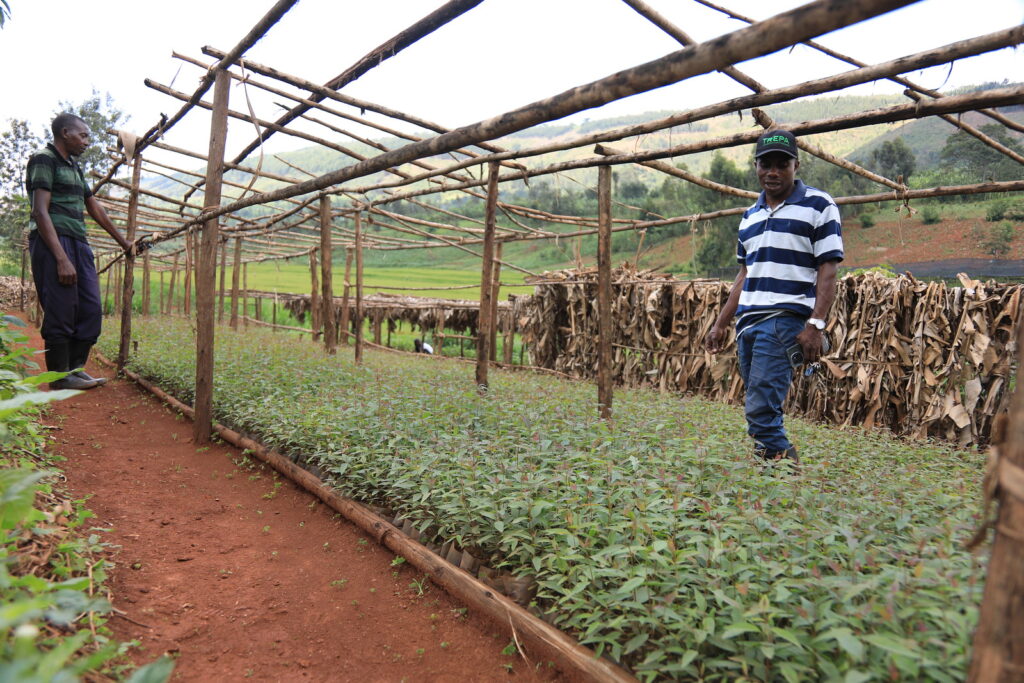
Farmers participate in seedlings preparation to green Eastern Province again
As a result, Kayonza District is characterised by drought, low forest cover, as much of the district is semi-arid, and heavy reliance on biomass, with 93.1 per cent of residents using firewood for cooking.
In 2016, 47,300 households bore the brunt of drought that hit the country, with Kayonza and Nyagatare districts in the Eastern Province the most affected. Drought damaged crops on 16,119 hectares of land in Kayonza District.
In 2025, Kayonza was again hit by severe drought. More than 23,000 families received food assistance following prolonged dry spells in parts of the district.
Amos Dusengimana, a father of three, said prolonged dry spells continue to strain communities due to crop failure, leaving many people reliant on food from outside the district.
Making semi-arid districts green again
The district land use plan for 2023 to 2050 states that there is a need to reinforce indigenous tree species that are well adapted to local climate conditions.
Shrubs will form part of efforts to restore shrub forests that once covered most high-slope areas. Afforestation and reforestation are required on about 4,000 hectares.
Transforming the Eastern Province through Adaptation, a project financed by the Green Climate Fund, and the COMBIO project are expected to intervene, according to the master plan.
The six-year Swedish-funded COMBIO project is designed to restore degraded ecosystems, enhance biodiversity and support green economic development across seven districts in Rwanda’s Eastern Province through to 2027.
The TREPA-funded initiative, running until 2027, aims to restore 60,000 hectares of degraded landscapes, enhance climate resilience and improve livelihoods for smallholder farmers through agroforestry, reforestation and sustainable land management.
Providence Nyirabagande, a farmer with one hectare of trees in Kigina Sector, Kirehe District, leads a Private Forest Management Unit in the district.
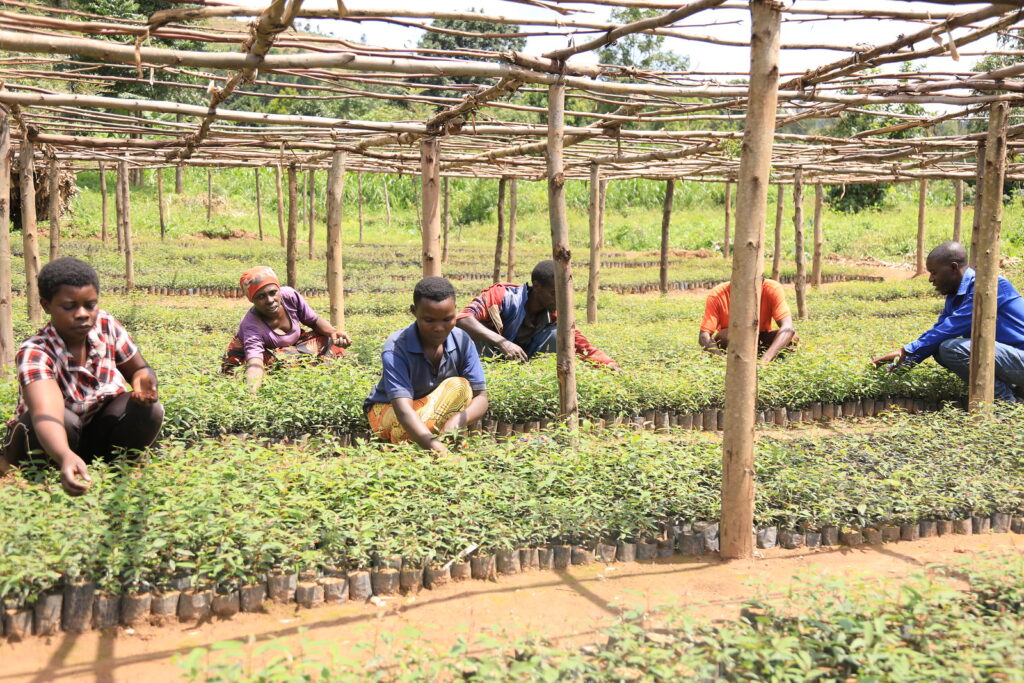
Many jobs created through the greening projects
Nyirabagande and her team of 262 members, 51 per cent of whom are women, have embarked on landscape restoration. She said there had been little recent tree cover in her area.
“Crops were drying up. The area had become like a desert due to deforestation. You could see 100 metres between one tree and another. Even the trees that were available were in poor condition. People had been cutting trees indiscriminately at a young age because of the need for fuelwood and arable land. This led to reduced rainfall in the eastern region,” she said.
The district has lost forest cover over time, particularly natural forests and woodlands, due to multiple pressures.
Over the past 10 years, deforestation has reached 8,889 hectares, representing 36.4 per cent, while afforestation has covered only 3,834 hectares.
Overall, the district shows a declining forest trend of about 20 per cent over the past decade, averaging roughly 2 per cent forest loss per year.
The findings show that, except for Mpanga Sector, which has a protected natural reserve known as the Ibanda-Makera gallery forest, other sectors have undergone accelerated deforestation over the past decade since 2009.
Mahama, Nyamugali and Gahara sectors are the three most deforested, and afforestation efforts in these areas remain too slow to compensate for forest loss.
Nyirabagande said she began restoring her land and planting trees two years ago.
“The Government introduced a project to restore our forests. We were given jobs in forest rehabilitation. We have a cooperative that also practises beekeeping using tree species that attract bees. Our cooperative planted trees on 79 hectares,” she said.
In November 2025, the cooperative planted trees on an additional 20 hectares.
“There was little rain, but we hope that as rainfall returns, they will grow. These planted trees will bring rainfall and fresh air. We have received improved cookstoves to reduce pressure on newly planted trees. Wood that would be used in one month on a traditional stove can now last six months. Cooking gas will also help,” she said.

She added that farmers are waiting to harvest the trees when they are six to seven years old.
“We have a cooperative with over 200 members engaged in beekeeping, with 30 beehives. This provides alternative income and helps us avoid felling trees before they mature,” she said.
Ngoma District
Athanase Bahoranimana, a farmer from Ngoma District, said there were very few and mostly old trees in his area.
With only 12 per cent forest cover, Ngoma is one of the least forested districts in Rwanda. Despite being the least forested district in the country, continued afforestation efforts are notable.
The findings show that, except in Rukumberi Sector, where deforestation at 70 per cent exceeds afforestation at 40 per cent, other sectors have made progress in afforestation over the past decade since 2009.
The overall trend is positive, with about a 48 per cent increase in forest cover over the past ten years, averaging roughly 4.8 per cent growth per year.
“At least 1,000 hectares need restoration in our area. We started restoring and planting trees in 2023. The trees are growing quickly. We have forest management cooperatives,” he said.
Bahoranimana, a member of the Dufateneza Amashyamba Cooperative, owns half a hectare of forest.
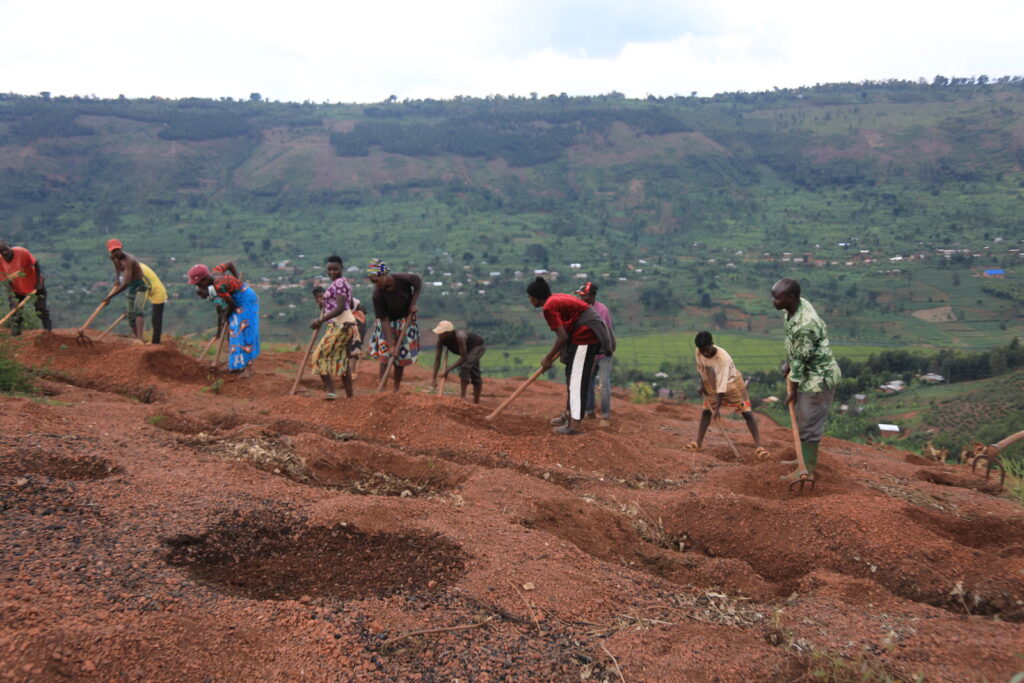
“Many areas still experience low rainfall due to deforestation. Our ancestors had large native trees in the area, but none can be seen today. We need to make the area green again,” he added.
Livestock farmers to benefit
High-yielding, drought-tolerant fodder species such as Brachiaria, Chloris gayana and Desmodium are being planted by farmers.
Emmanuel Nkubito, a livestock farmer from Nyagatare District, is adopting these techniques.
He said farmers have also learned about fodder trees such as Calliandra calothyrsus and Leucaena diversifolia, which thrive in harsh conditions and provide year-round feed.
“These species are not only resilient to climate shocks, they are also rich in the nutrients livestock need to remain healthy and productive,” he said.
Eastern Province prioritised during tree-planting season
The Rwanda Forestry Authority has announced that 43,610,143 trees, mainly indigenous species, have been planted across Rwanda since the start of the 2025/2026 tree-planting season as part of efforts to protect the environment and promote forestry development.
In the 2025/2026 financial year, Rwanda has committed to planting nearly 60 million trees.
The Eastern Province has recorded the highest number of trees planted so far this financial year, with 16.98 million planted in recent months.
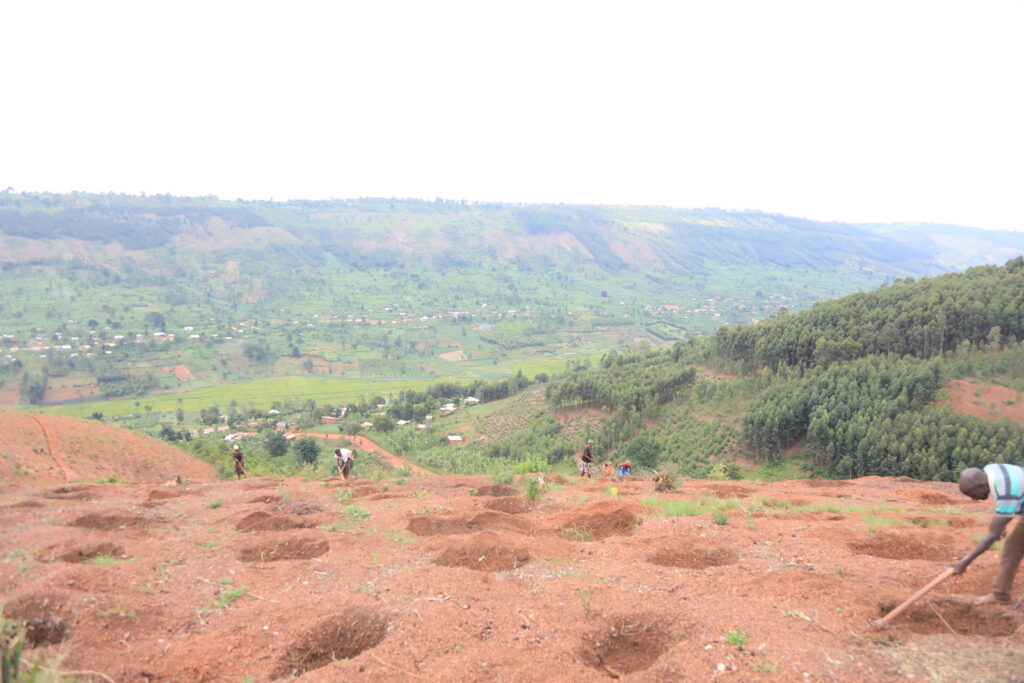
Four to five decades ago, Rwanda’s Eastern Province had significant forest cover
It is followed by the Southern Province with 10.77 million trees, the Western Province with 10.31 million and the Northern Province with 5.45 million. In the City of Kigali, 490,865 trees have been planted.

How provinces rank in terms of number of trees in millions planted during 2025/26 tree planting season
Among the indigenous species being planted are umwungo, umushwati, umushyika, ibyufe, umuhumuro, umusave, umusebeya, umuzibaziba, umukore, umukereko, umunazi and umutoyi.
The Director General of the Rwanda Forestry Authority, Dr Concorde Nsengumuremyi, said Rwanda is prioritising indigenous trees because they are native and highly resilient to climate change. Even in cases of heavy rainfall or rising temperatures, he explained, these species are better able to withstand harsh conditions.
“Indigenous trees are able to cope with climate change and continue growing. They are also more resistant to diseases compared to exotic species such as citrus and grevillea, where a single disease outbreak can affect an entire forest,” he said.
He added that another reason for promoting indigenous trees is their ability to support biodiversity by attracting bees, birds and other organisms that play a vital role in the ecosystem.
“You will notice that under an indigenous tree, grass grows well because its leaves decompose easily and enrich the soil. In contrast, some exotic species can degrade the soil due to the high acidity of their leaves, making it difficult for biodiversity to thrive. Moreover, indigenous trees, because they are often dense and have many branches, absorb significant amounts of carbon, helping to reduce harmful emissions in the air we breathe,” he explained.

Claver Uwimbabazi, a resident of Karongi District, commended the Government’s efforts to restore indigenous trees, noting that medicinal plants had become scarce in his area after such trees disappeared.
“These indigenous trees are very important to us because they provide medicine. For example, umuhumuro is used to make medicine for both people and livestock. Others, such as ibyufe, produce edible fruits. Before they became scarce, we used to harvest and eat their fruits,” he said.
In 2024/2025, the top ten districts, namely Kayonza, Gatsibo, Bugesera, Nyagatare, Kirehe, Gicumbi, Rutsiro, Ruhango, Nyaruguru and Gisagara, received a substantial share of the 65 million trees to be planted across Rwanda. Five of these districts are located in the Eastern Province.
Under the second phase of the Government’s National Strategy for Transformation, Rwanda has set a target of planting more than 300 million trees by 2029.
This story was produced with support of Rwanda Environmental Journalists (REJ) in partnership with FOJO Media Institute


Leave a Reply