
Why CSOs, Media should master Monitoring and Reporting Techniques in the Human Rights Context?
By Elias Hakizimana.
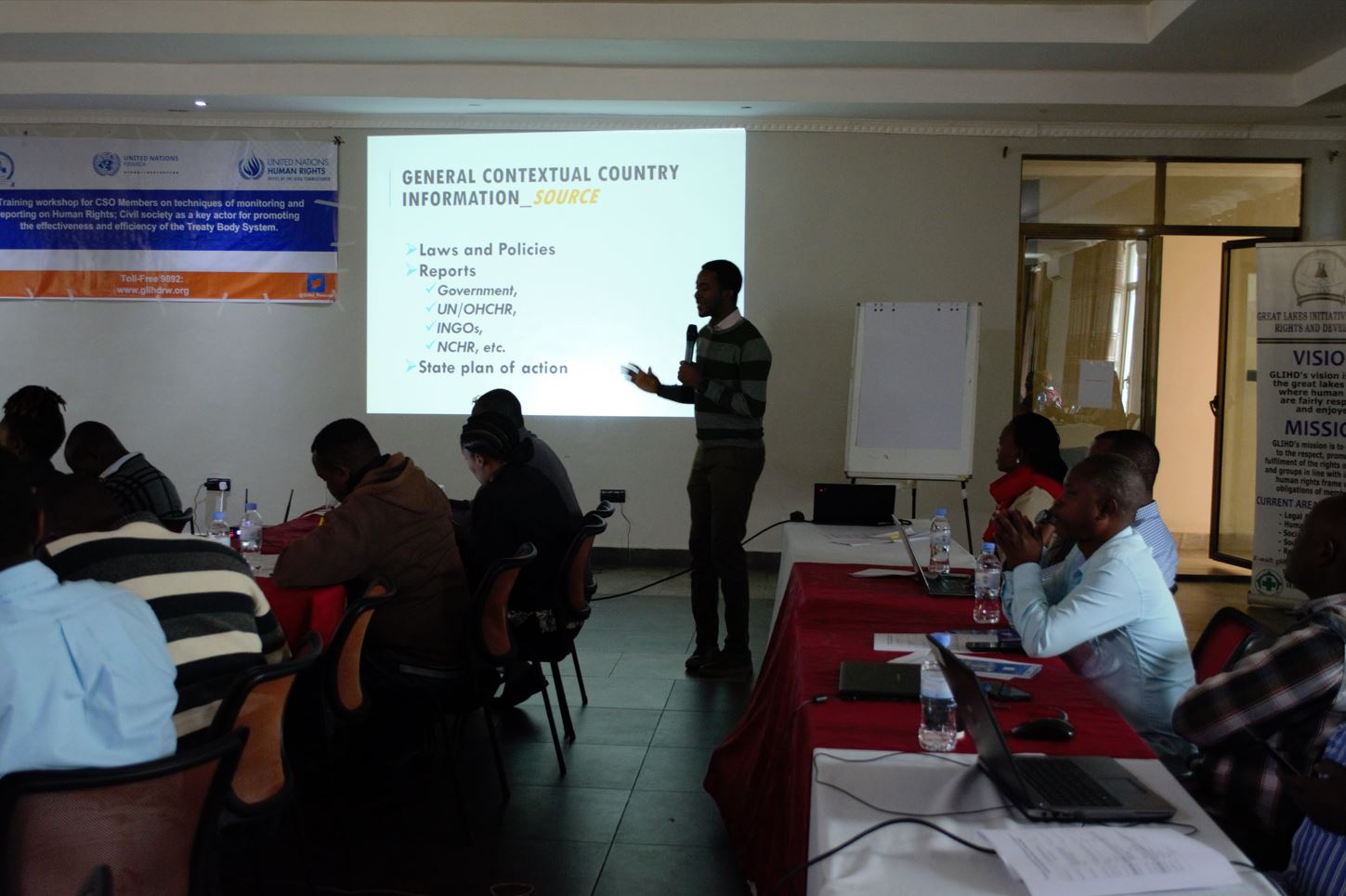
Rwanda’s Civil Society Organizations (CSOs) and members of the press are in Musanze District, Northern Province of Rwanda over the four days to learn the techniques of monitoring and reporting on Human Rights.
The training that was organized by Senior Human Right Advisor office, in collaboration with Great Lakes Initiative for Human rights and Development (GLIHD) is being conducted under the theme: “civil society as a key actor for promoting the effectiveness and efficiency of the Treaty Body System”.
It aims at strengthening the capacity of civil society organizations on reporting and monitoring techniques on human rights and it is expected to deliver successful outcomes that include increased knowledge and skills of CSOs on human rights Protection and better understanding of CSO’s member on best practices and applicable principles on data collection and evidence research advocacy among others.

All over the world, the promotion and protection of human rights is of crucial importance in the construction of peaceful, stable, and democratic societies based on the respect for the values of equality and the promotion of non-discrimination. The respect and protection of human rights are important prerequisite for any sustainable development process.
Madox, who identifies (herself) as a (man), is one of the trainees who represent a sexual minority community (LBTQI/FSW). (He) said that there is need for civil society to approach vulnerable communities to hear from them so that they report the right information. She said that the training is very important to enable human rights and justice activists know what to do and when to do it as they prepare their monitoring and reports.
“In my point of view, CSOs reports are good but they are less informed about our lives and challenges we face, so they sometimes report contrary to the situation on the ground. We are discriminated and silently denied services by people from different entities such as healthcare, education and labour market among others, these challenges can have an end once there is a law in place punishing whoever abuses the rights of LBTQI community,” Madox said.
Tom Mulisa, Founder and Executive Director of the Great Lakes Initiative for Human Rights and Development (GLIHD) said that the role of civil society and the media is critical as they all have linkage with Human Rights defending.

“There are important aspects that a professional journalist learns, including news gathering, fact checking. Human Rights has also important principles and some techniques they should know and follow when reporting or looking information on human rights violation and certain rights,” He said.
Mulisa said that there was a gap of misinformation of the global recommendations among the civil society and media, in regard to human right principles and ratified international treaties.
“The majority of international NGOs take information about human rights from local civil society organizations and the media, example is the overcrowding of inmates in the prisons, what a journalist will reply when asked of such a question, what information does he/she provide and what techniques he/she follows? This is why we are here.” Mulisa said.

According to Me. Christian Garuka, the government has responsibilities to prevent violation and to follow cases of offence against Human Rights violation under human right protection context.
Marie Claire Mukasine, the president of the National Commission for Human Rights (NCHR) said that the training helps different partners including CSOs and media to perform their job in the interests of Rwandans and the country.
“This training is very important because civil society and the media play a significant role in following how human rights are respected, our country has signed many international treaties on the human rights and CSOs do reports on the implementation of these rights to be submitted to concerned entities at Africa and global levels. The good implementation of this work requires actors to have enough knowledge about human rights concepts and how to practically deal with them,” Mukasine said.
The four-day training started on Tuesday, 29th November 2022 to end on 2nd December 2022.




theinspirerpublications@gmail.com




Leave a Reply