

The International Potato Center (CIP) launches inclusive agriculture training for people with disabilities in Musanze
By Elias Hakizimana.
Musanze, Rwanda – In a groundbreaking step toward building a more inclusive and equitable agricultural sector, the International Potato Center (CIP), in collaboration with the Rwanda Agriculture and Animal Resources Development Board (RAB) and the Inclusive Hub, piloted a specialized training program for 15 people living with disabilities (PLWDs) in Musanze District.
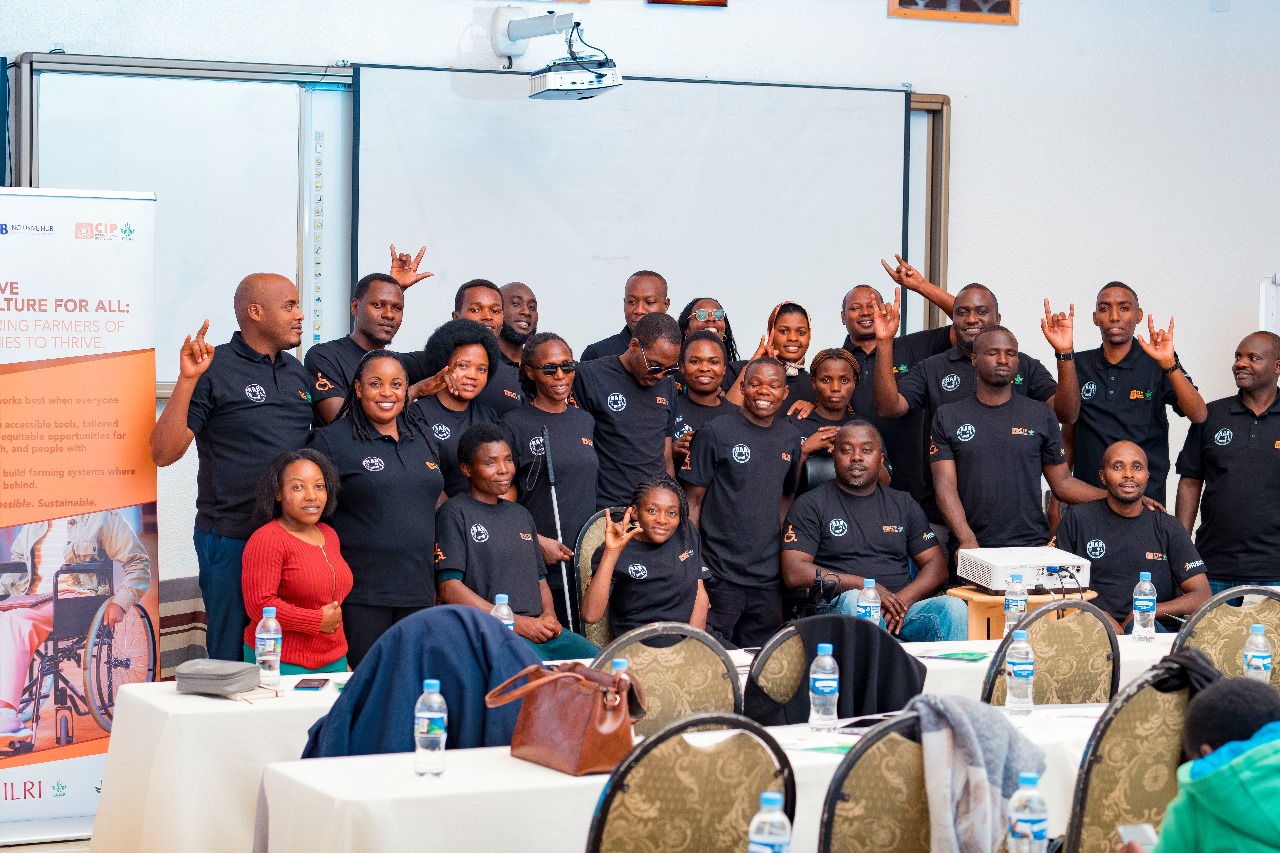
The list of participants comprised 5 members with hearing, 4 with visual and 6 with physical impairments. The initiative is the first of its kind in Rwanda’s agriculture sector, aiming to ensure that people with disabilities are not only beneficiaries of agricultural services but also leaders, trainers, and influencers in their communities.
The training focused on equipping participants with the skills to become Trainers of Trainers (ToTs) and Farmer Facilitators under the Farmer Field School (FFS) approach, a model that has been instrumental in strengthening Rwanda’s extension system.

According to CIP representative, Dr Bester Mudereri, the purpose of the training is to make agricultural advisory services more inclusive, accessible, and reflective of the diversity within farming communities.
“People with disabilities are often left out of critical agricultural information and training, not because they lack ability, but because the systems were not designed with them in mind. Thus, as we embark on responsible scaling of the digitally developed fertilizer recommendations under the CGIAR Sustainable farming and Scaling for impact programs, we have developed tailored training materials suitable for the deaf, the blind and the physically challenged members of our communities”, he said.
“This initiative begins to correct that gap by empowering PLWDs to become knowledge carriers and leaders.”
The three-day-long training, held in Musanze, covered practical skills on climate-smart agriculture, potato agronomy, nutrition-sensitive farming, and the use of digital tools for information access.
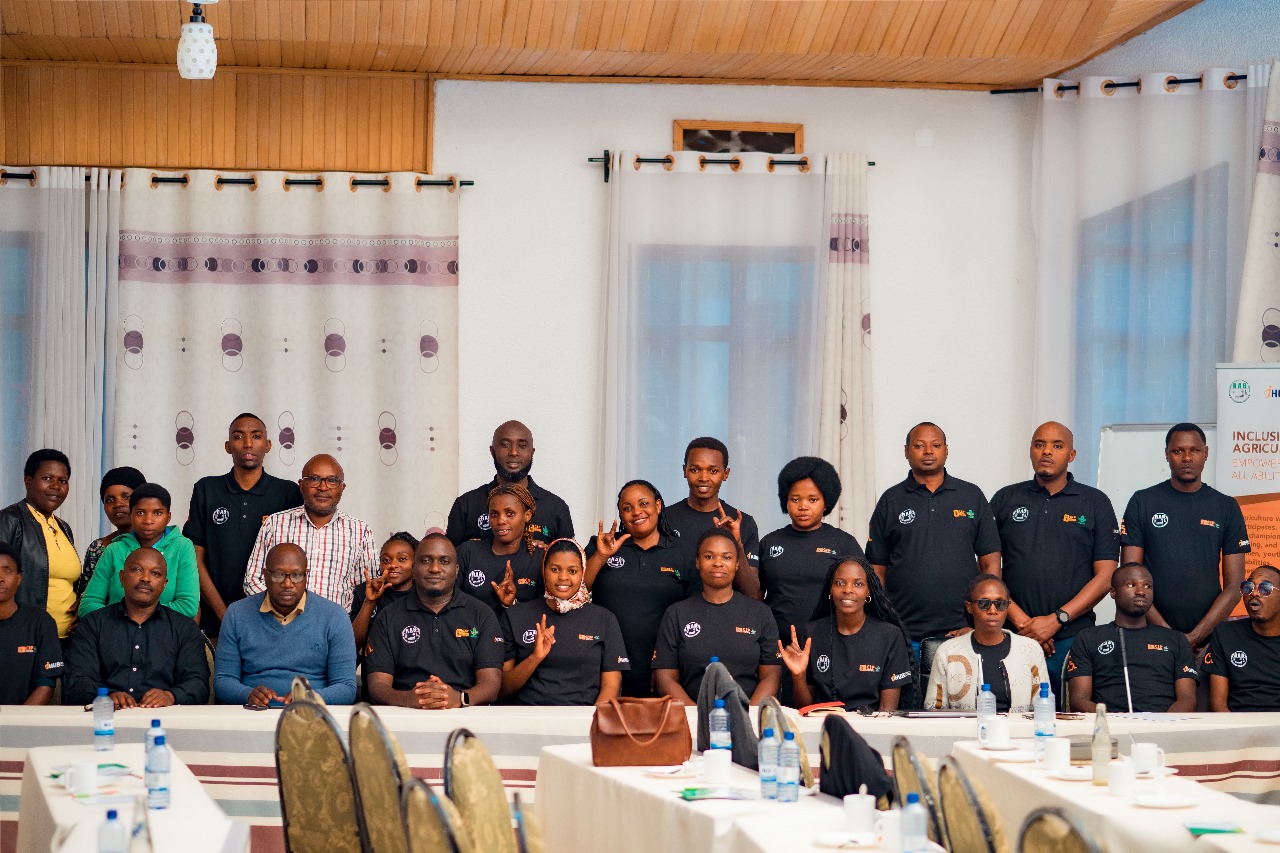
Participants also learned how to lead Farmer Field School groups, facilitate peer learning, and adapt training materials to meet various accessibility needs, including simplified content, braille-designed materials, audio recorders, visual aids, and other alternative communication methods.
For many, the program represents a pathway to dignity and recognition within their communities.
“I have always wanted to support other farmers, but I lacked the platform,” said one participant. “This training gives us confidence and the chance to show that disability is not inability. We can teach, lead, and improve agriculture in our communities.”
Local leaders in Musanze welcomed the initiative, noting that it aligns with Rwanda’s broader commitments to inclusion and equal opportunities for all citizens.
RAB partners also emphasized that the training will help ensure that future agricultural programs integrate disability considerations from the design stage, rather than as an afterthought.

Beyond the training itself, the initiative aims to influence how agricultural manuals, guidelines, and extension messages are developed, ensuring they reflect the needs of all farmers.
CIP plans to pilot accessible versions of agronomic training materials, which will later be scaled to other districts.
According to Gahire Billy, Founder and CEO at Inclusive Hub, the organisation contributed specific accessibility adaptations to ensure full participation.
“We provided sign language interpreters, Braille and audio materials, and accessible venue selection to ensure full participation for farmers who are blind, deaf, or have physical disabilities,” he explained.
To scale these adaptations nationally, the Inclusive Hub will develop a national toolkit with accessible formats and train RAB officers in disability inclusion.

Billy further explained that persons with disabilities face multiple barriers in accessing agricultural extension services, including lack of sign language and Braille materials, inaccessible training venues and agro-dealer shops, digital exclusion on platforms like SNS (*774#) that are not screen-reader friendly, and systemic exclusion from government programs and subsidies.
He noted that the pilot addressed these gaps by making the training fully accessible and creating direct linkages between farmers and RAB officers for ongoing support.
Looking ahead, the Inclusive Hub plans to continue supporting the trainees through mentorship, pairing them with trained RAB extension officers, and involving them as peer facilitators in local training sessions.
The organisation will also use mobile check-ins to monitor progress and challenges. Billy added that a national database of farmers with disabilities will be created to ensure their inclusion in future agricultural programs and support services.
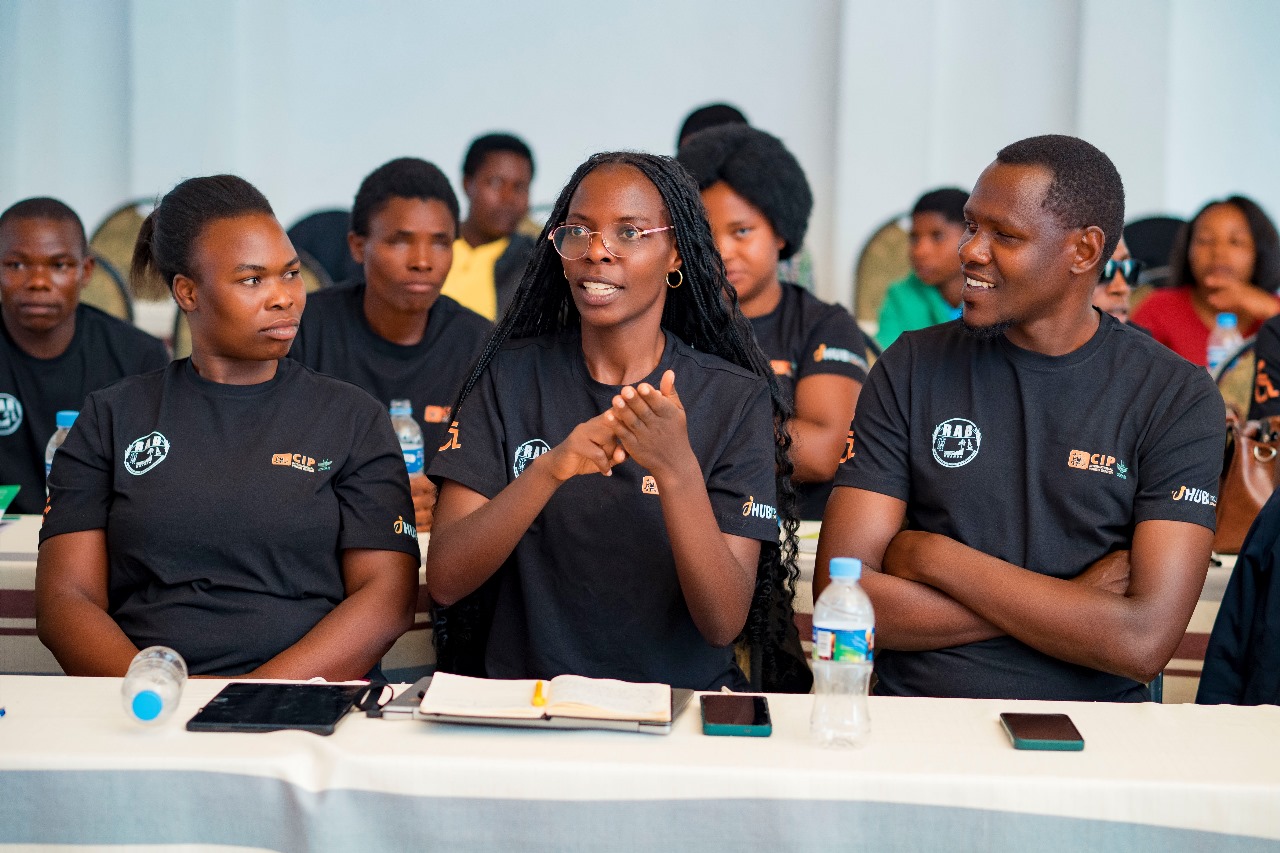
Egide Gatari, Agricultural Input (Fertilizers & Seeds) Subsidies Program Manager at RAB, said that government programs already aim to reach all farmers, including persons with disabilities.
“All the government’s programs for farmers are not excluding, they reach to everyone whether people with disabilities or not,” he noted.
Gatari emphasised that the first step is identifying and mapping persons with disabilities who are smallholder farmers to better understand their challenges.
RAB plans to collaborate with sector agronomists and input suppliers in all districts to begin this exercise. He acknowledged challenges at agro-dealer shops, where no dedicated access paths exist for persons with physical disabilities, and called for agro-dealers to deliver inputs directly to farmers who cannot reach the shops.
Gatari also noted the importance of manuals and information materials tailored for farmers with disabilities.

Some participants requested special agricultural subsidies, and while RAB will ensure they receive the same services as all farmers, additional subsidies would require further advocacy.
He called for a policy brief or policy paper developed with CIP to guide identification and engagement with government, civil society, and the private sector.
“When the policy is there, we can engage both the government, civil society and private sector, when this exercise is well done, everything is possible,” he said.
As climate change intensifies and agriculture becomes increasingly information-driven, inclusive advisory systems are essential. With this initiative, CIP positions Rwanda as a regional example in championing disability-inclusive agriculture.
The pilot cohort of 15 trainees is expected to form the nucleus of a national network of disability-inclusive Farmer Field School facilitators, strengthening Rwanda’s extension system and reinforcing the principle that agriculture is for everyone.


theinspirerpublications@gmail.com




Leave a Reply