

Stakeholders in Rusizi Convene to Address Urban Governance Challenges
By Elias HAKIZIMANA.
The Institute of Policy Analysis and Research (IPAR Rwanda) convened a stakeholders’ meeting in Rusizi District to tackle the pressing challenges of urban governance in Rwanda’s secondary cities.
The forum, held on August 21, 2024 in collaboration with the Partnership for Africa Social Governance Research (PASGR), focused on bridging the gap between research and policy-making to develop effective solutions for urbanization issues.
The Rusizi gathering brought together a diverse group of stakeholders, including district officials responsible for urbanization, infrastructure, and governance, as well as representatives from other government institutions, higher learning institutions, civil society, the private sector, and the media.
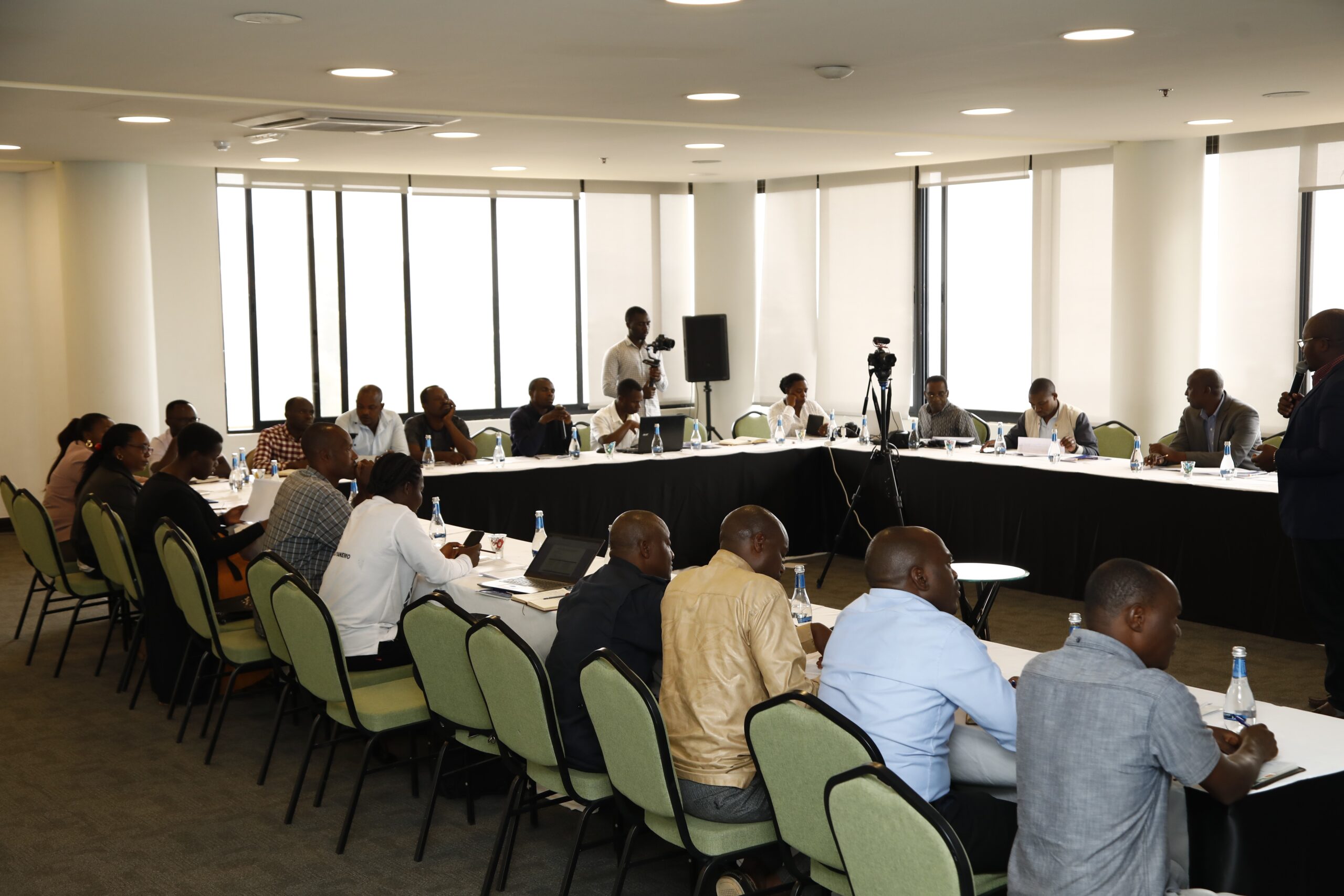
This meeting is part of a broader research project led by IPAR Rwanda, which has already engaged stakeholders in Musanze and Rubavu.
During the forum, participants were introduced to the project’s unique approach, which emphasizes collaboration between researchers and policymakers.
“Our approach is to connect research with policymakers because we have identified serious gaps between the two players,” stated Dr. Innocent, a Senior Researcher at IPAR Rwanda.
He highlighted the importance of ensuring that research findings are directly linked to policy formulation by fostering dialogue and joint problem-solving among stakeholders.

The discussions in Rusizi revisited issues identified in earlier sessions to assess progress and challenges.
Key obstacles to urban governance and development were highlighted, including limited coordination in planning, the neglect of social contexts during design and implementation, and the pressures of a growing population.
Rusizi is the third secondary city to host such a dialogue, following similar sessions in Musanze and Rubavu.
The insights gained from these discussions across all secondary cities will be consolidated into a comprehensive report and policy brief, which will be submitted to relevant policymakers as part of ongoing advocacy efforts to address these urban governance challenges.
IPAR Rwanda, recognized as the country’s leading independent think tank, remains committed to enhancing evidence-based policymaking.
Since its inception in 2008, IPAR has established a strong reputation for producing high-quality research and policy analysis, promoting dialogue, and driving impactful change across Rwanda.

theinspirerpublications@gmail.com



Leave a Reply