

Spiro outlines safety standards, battery plans amid concerns over electric motorbikes
By Elias HAKIZIMANA.
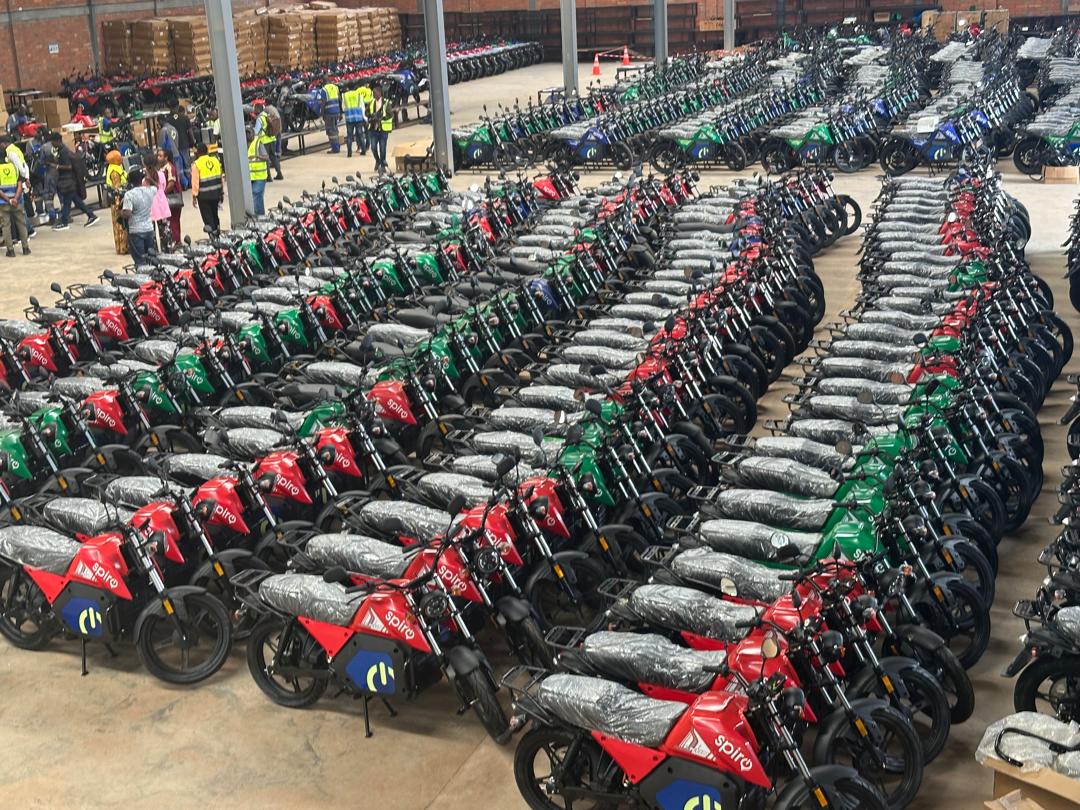
Spiro has moved to address safety, battery quality and business model concerns surrounding its electric motorcycles, saying its operations in Rwanda are built on international standards, long-term investment and continuous local adaptation.
Speaking during a media briefing, Bhandar Arun Kumar, Spiro’s Country Director in Rwanda, said the company has been operating in the country for nearly two and a half years, with rapid expansion backed by extensive testing, certification and infrastructure development.
“We started operations in Rwanda in April 2023. Today, we have more than 15,000 bikes on the road and close to 700 battery swap stations spread across all 30 districts,” Kumar said.
He added that Spiro operates in eight African countries, with over 70,000 electric motorcycles currently in use, giving the company broad experience in adapting its technology to different regulatory and operating environments.

International standards and local adaptation
Responding to safety concerns previously raised by riders, Kumar said all Spiro motorcycles, batteries and swap stations meet internationally accepted standards, even in countries where local certification requirements are still evolving.
“Every product that comes into Rwanda—bikes, batteries or stations—is certified and tested before deployment,” he said. “Where there is no local prerequisite, we still follow international standards.”
He noted that Spiro continuously adjusts its designs based on rider experience and local conditions. One example was the braking system.
“When we entered the market, we used disc brakes. Over time, we realised maintenance costs for riders were higher,” Kumar explained. “So we adapted to a braking system that is widely used locally, reliable and easier to maintain, without compromising quality.”

Battery safety, lifespan and replacement
Battery performance has been a central concern for riders, particularly around overheating, ageing and sudden power loss. Kumar said Spiro’s batteries are designed to last up to five years and undergo extensive testing before deployment.
“These are certified batteries with defined life cycles,” he said. “We are only about two and a half years into operations in Rwanda, so we have not yet reached the full battery life cycle stage.”
He stressed that battery ownership and replacement remain Spiro’s responsibility under its swap model.
“When a battery reaches the end of its life, it is replaced with a new one. This ensures continuity of operations and rider safety,” Kumar said.
He also defended the battery-swapping model as the most practical option for commercial riders.
“A Kigali rider typically covers 150 to 180 kilometres a day. If they owned a battery, they would have to stop for hours to recharge, disrupting their income,” he said. “Globally, swapping is the most accepted model for commercial transport.”

Expanding infrastructure and investment
To prevent shortages of batteries or congestion at swap stations, Spiro says it is scaling infrastructure ahead of demand. Kumar revealed that the company has already invested more than $30 million in Rwanda and expects total investment to reach nearly $50 million by mid-2026.
“This is not a one- or two-year project,” he said. “We are building an ecosystem, just like fuel stations were built over decades. Our network will keep expanding, with more batteries and denser coverage.”
Spiro currently employs more than 1,000 people in Rwanda, reinforcing what Kumar described as a long-term commitment to the market.

Training and rider awareness
On rider safety and skills, Kumar said Spiro provides mandatory training to every rider at onboarding, with repeated refresher tutorials available across swap stations and service points.
“Sometimes a bike is taken by one rider and used by another,” he acknowledged. “That’s why we keep repeating safety and usage tutorials, so information is always accessible.”
He added that Spiro is also the only company in Rwanda supplying RSB-certified helmets, alongside its motorcycles.
Franchising model and returns
Addressing concerns from station franchise operators about revenue sharing, Kumar said the model is structured to balance capital investment, operational costs and long-term returns.
“Batteries are the most expensive component of the swap stations, and Spiro bears that cost,” he said. “Franchisees handle operational expenses like electricity, rent and staffing, and their returns are calibrated to cover those costs and deliver profit.”
He explained that as swapping volumes increase, franchisee margins also rise.
“It’s designed as a win-win model. As efficiency improves and demand grows, returns increase,” he said, adding that Spiro is working with authorities to increase station capacity so investors recover costs faster.
Looking ahead
Kumar acknowledged that improvements are ongoing but insisted the company is responsive to feedback.
“Wherever improvement is needed, we act,” he said. “We are here to stay, and we will continue investing in safety, infrastructure and rider support.”
The briefing marks a shift from earlier uncertainty around electric motorcycle safety toward clearer explanations of standards, systems and long-term planning—key issues regulators and riders have said are essential for confidence in Rwanda’s transition to electric mobility.


 theinspirerpublications@gmail.com




Leave a Reply