
Rwf933 million project supports social cohesion gains in Rwanda’s post-genocide society
By Michel Nkurunziza
The healing and recovering from the most tragic humanitarian crime — the genocide — is a process and a hard-earned effort, and it’s sustainability is achieved through sustaining social cohesion gains. In Rwanda, a two-year Rwf933-million (or over USD 1 million) project is supporting such a move.
The project, funded by the United States Agency for International Development (USAID), offers interventions to the entire post genocide society composed of survivors of the genocide against the Tutsi in 1994, perpetrators, those who were not hunted for death during the genocide, as well as those who were forced to exile owing to the genocide.
Now, the members of this varied community that resulted from the genocide which split apart the social fabric of the Rwandan society, is having relief, social cohesion and hope for a bright future thanks to trauma healing and financial support by the two-year project, which was launched in August 2016, as per the project monitoring report.
The joint reconciliation project dubbed “Healing our communities: promoting social cohesion in Rwanda” is being implemented by four NGOs on peace building namely Institute of Research and Dialogue for Peace (IRDP), Aegis Trust, Karuna Center for Peace, Healing and Rebuilding our Communities (HROC).
It uses an inter-generation approach, which promotes social cohesion that consists of trauma healing, community dialogue, joint problem-solving and volunteer projects to support the vulnerable.
The achievements of one year were presented on Thursday Afternoon in a national listening session that brought together the implementing NGOs, National unity and Reconciliation commission (NURC), the Ministry of Local Government, National Commission for the Fight against the Genocide (CNLG), among others.
The project’s country manager, Rosette Sebasoni said that apart from trauma healing that struck the post genocide society, and reconciliation among it’s members, the project also includes running small income generating projects for both social and financial cohesion among the formed groups.
“One of implementing partners has so far trained 640 people on community healing; the other trained 30 groups of people engaged in peace dialogues, while others have trained 30 groups in involving youth [in social cohesion and development],” she said.
All these people were also empowered to start small income generating projects that financially improve their lives but also help strengthen social cohesion among them — Sebasoni.
She added that the small income generating activities include agriculture and livestock whereby beneficiaries pass on heifers to other vulnerable groups. Other interventions include provision of technical skills such as in tailoring, providing bicycles, building residential houses for needy people who were effected by the genocide against the Tutsi among other projects.
The project operates in eight districts of Gcumbi, Gakenke, Karongi ,Nyamasheke, Rubavu, Kirehe, Bugesera and Gisagara, out of 30 districts makingbup the country.
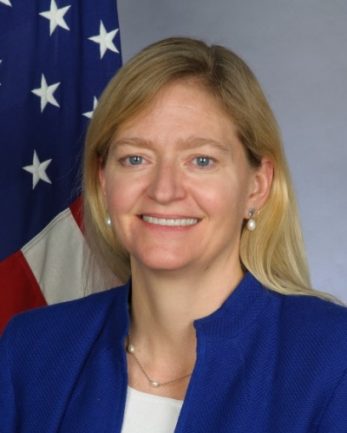
The U.S Ambassador to Rwanda, Erica J.Barks-Ruggles expressed satisfaction with the project accomplishments.
“The U.S. Government is proud to fund this project. We believe that Rwanda is remarkably resilient for a country that is still recovering from one of the most of the devastating genocide in modern history. we are honored to be granted the opportunity to help advance the reconciliation process,” she noted.
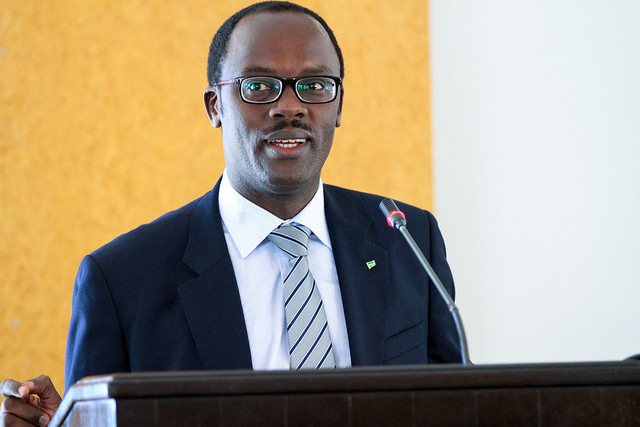
Fidele Ndayisaba, Executive Secretary of the National Unity and Reconciliation Commission, said thatbbecause of partners and government’s political will, unity and reconciliation among Rwandans are at good progress and are likely to gain momentum.
“We need to foster Rwandans unity as long as there is political, citizens and private sector commitment. Unity and reconciliation among Rwandans are at good progress but there are still challenges where few Rwandans still have genocide ideology and look themselves in the mirror of ethnic groups,” he said.
“Healing post genocide community is a journey that needs joint efforts. That is why we commend the NGOs that approach grassroots communities with trauma and those with remorse in a bid to heal them,” he said pointing out that the registered positive impact will also help heal their surrounding communities.
Reconciliation status
The 2015 Rwanda Reconciliation Barometer’s findings showed that on average reconciliation among Rwandans was at 92.5% in 2015 from 82.3 % in 2010.
However, the assessment of the current status of reconciliation process in Rwanda also explored the challenges that may hamper this process. Key ones pointed to ethnic-based stereotypes, as expressed by 27.9% of citizens, the persistence of genocide ideology, as expressed by 25.8% of citizens, and the wounds resulting from the divisive past and the genocide not yet fully healed, as expressed by 4.6% of citizens.




Leave a Reply