
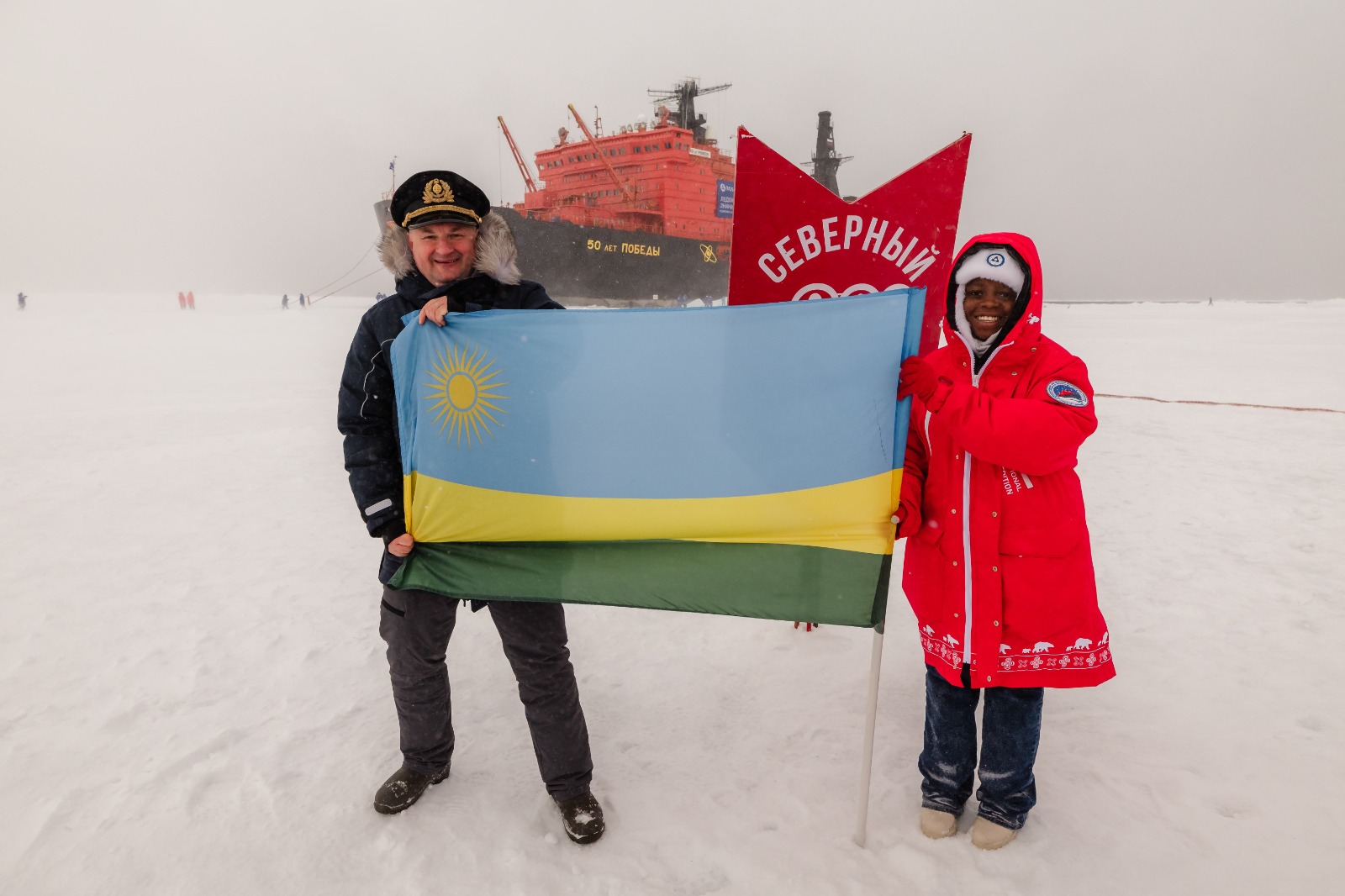
Rwandan Student Returns from North Pole Expedition Aboard Rosatom’s Nuclear Icebreaker in Rwanda’s First-Ever Arctic Voyage
By The Inspirer.
- On August 13, Rosatom’s 7th Icebreaker of Knowledge returned to Murmansk from the North Pole, bringing a Rwandan student a unique STEM experience.
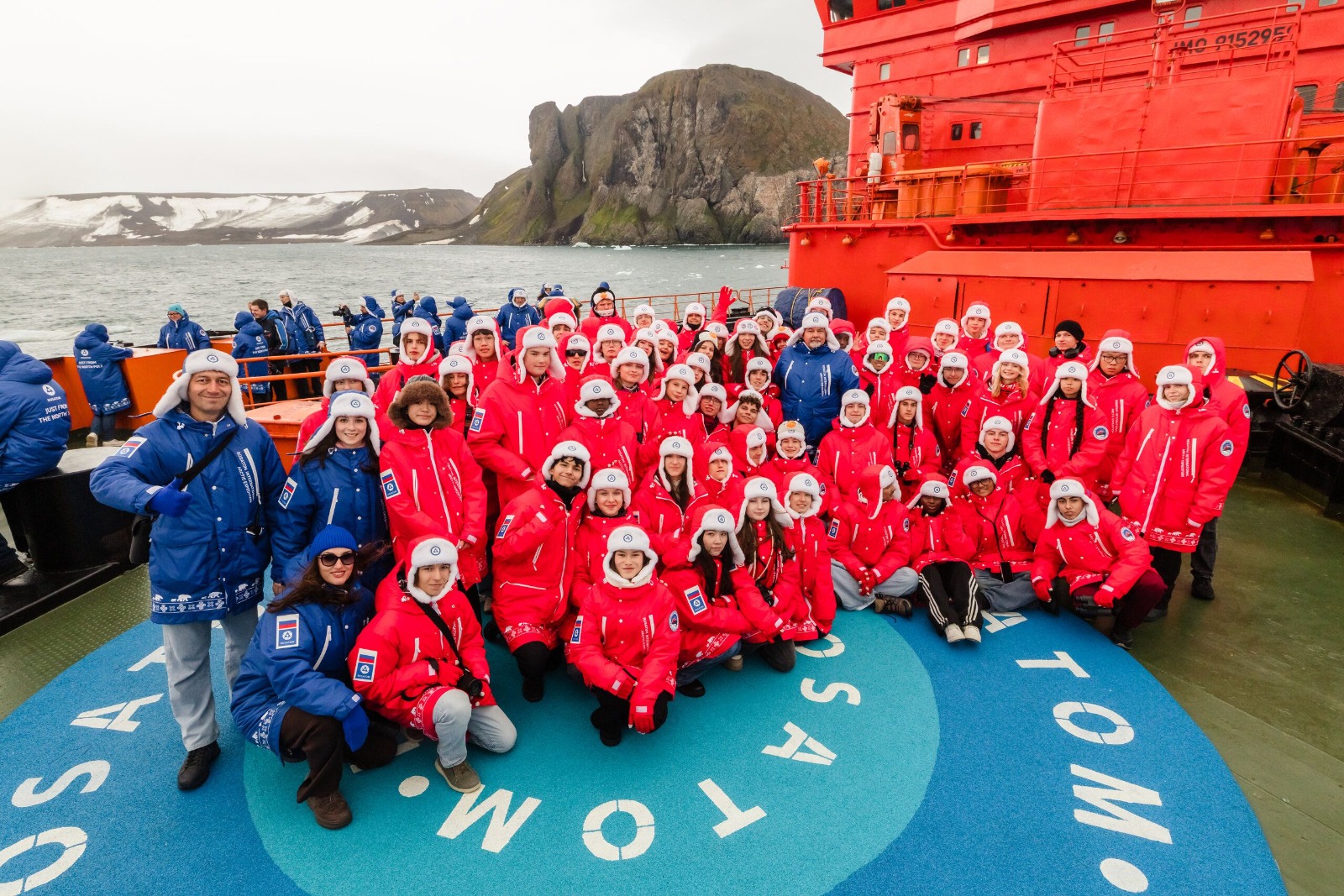
On August 13, Rosatom’s 7th international scientific and educational expedition, Icebreaker of Knowledge, returned to Murmansk. Over the course of ten days, talented high school students from around the world traveled aboard the nuclear-powered icebreaker 50 Let Pobedy along the route Murmansk – North Pole – Franz Josef Land – Murmansk, and the voyage itself went down in history as the 200th expedition by a surface vessel to the North Pole.
“We have successfully completed the seventh voyage of the Icebreaker of Knowledge Arctic expedition. The crew always approaches this project with special enthusiasm: such voyages truly contribute to the development of the next generation. The brightest and most talented young people join the expedition – and once again, we’ve seen this for ourselves. Many of them dreamed of visiting the North Pole and seeing polar bears, and I am very glad that Rosatom and our crew helped them make that dream come true,” emphasised a captain of the nuclear-powered icebreaker 50 Let Pobedy Ruslan Sasov.
A rich scientific and educational program was organised on board the nuclear-powered ship for the participants of the Icebreaker of Knowledge expedition, which included a real aerospace laboratory. As part of the expedition, the participants, together with scientists, prepared and conducted two unique experiments: the launch of a radiosonde to provide communication in hard-to-reach areas of the Arctic and along the Northern Sea Route, as well as the testing of the world’s first recoverable stratospheric platform.
“At Rosatom, we work every day on things that seemed like science fiction just yesterday. That’s why it’s especially important for us to show this to the kids in person, and it’s great that we can do it right on board the nuclear-powered icebreaker 50 Let Pobedy. During the expedition, the children saw that Russian science is about the future and real technologies that change people’s lives for the better,” noted an expert on the Icebreaker of Knowledge scientific and educational expedition and project manager at the Laboratory of Genomic Technologies and Tissue Engineering at the Research Institute of Technical Physics and Automation (NIITFA, part of Rosatom’s Scientific Division) Yegor Plakhotnyuk.
Among the expedition’s participants was Izere Louise from Rwanda, one of the young talents selected to take part in the international scientific and educational journey to the North Pole. For her, the expedition was an opportunity to experience the Arctic firsthand, meet peers from other countries and see how science and technology are applied beyond the classroom.
“Reaching the North Pole was an experience I will never forget. Seeing the endless ice and snow with my own eyes made me realise how much of our planet remains to be explored. I was especially proud to make this journey representing Rwanda. The expedition showed me that science can take you to places you once thought were impossibly far away, and it has inspired me to dream even bigger about my future,” shared an expedition participant from Rwanda Izere Louise.
On the day the North Pole was reached, a symbolic event was held – the northernmost and most international circle dance around the 90° point. It took place to the live performance of AY YOLA, a musical group from Bashkortostan. During the voyage aboard the nuclear-powered icebreaker, expedition members, together with science fiction writer Sergey Lukyanenko, wrote a science fiction story that will be published on the social media accounts of Rosatom’s Icebreaker of Knowledge.
The Icebreaker of Knowledge is aimed at promoting natural science disciplines and technologies of the nuclear industry, finding and supporting talented and gifted children, developing their abilities and offering career guidance. The project brings together school students and students of secondary vocational education programs aged 14–16 from around the world. About 5,000 students from 22 countries competed in the international selection process to participate in the voyage: Rwanda, Namibia, Egypt, South Africa, Armenia, Bangladesh, Belarus, Bolivia, Brazil, Hungary, Vietnam, India, Indonesia, Kazakhstan, China, Kyrgyzstan, Mongolia, Myanmar, Serbia, Tanzania, Turkey, and Uzbekistan.
Rosatom’s cooperation with students and young professionals is part of a broader effort to develop the human capital needed for the nuclear industry, including across Africa. As more countries recognise the potential of nuclear technologies for their long-term development, Rwanda is no exception.
The country and Rosatom have been building long-term cooperation in nuclear education and personnel training since 2019, when the parties signed a Memorandum of Understanding on cooperation in human resources development. The partnership has since produced concrete results: 18 graduates of Russian universities with nuclear-related degrees are already employed in Rwanda’s nuclear and related organisations, while in 2025 nine Rwandan students graduated from the National Research Nuclear University MEPhI. For the 2026/2027 academic year, Rosatom has allocated 20 places for Rwandan students to study at Russian universities in nuclear and related fields.
This cooperation is developing alongside Rwanda’s growing focus on science, technology and innovation. Projects such as Icebreaker of Knowledge add a practical and international dimension to this work, giving young Rwandans opportunities to discover advanced technologies, broaden their horizons and connect their academic interests with future careers. For Rwanda, where the development of a skilled STEM workforce is increasingly important, such experiences can become part of the foundation for the country’s future scientific and engineering talent.




Leave a Reply