

Rwanda empowers public school librarians to lead inclusive digital library transformation
By Prince Boris CYUBAHIRO & Elias HAKIZIMANA.
Musanze, Rwanda – May 28, 2025 — The Rwanda National Commission for UNESCO (CNRU), in collaboration with INES Ruhengeri, has launched a groundbreaking two-day training to build the capacity of public-school librarians in managing inclusive and digital libraries.
Held at INES Ruhengeri in Musanze District, the workshop brought together 30 librarians, one from each of Rwanda’s districts, as part of a nationwide initiative to transform libraries into modern, accessible learning spaces that support both students and teachers.
In the digital age, libraries are evolving into critical knowledge hubs that transcend physical spaces. However, many public schools in Rwanda face challenges such as a lack of trained library staff, inadequate infrastructure, and limited access to digital tools. This training is aimed at addressing those gaps.
Philomene Mukankusi, in charge of communication and documentation at CNRU, explained the vision behind the workshop:
“This training is in line with our project to build a digital library, but with the particular goal of being inclusive—especially for people with visual impairments. We want to help students in rural day schools access books through smartphones, even if they can’t visit a library physically. Librarians are being trained not only to manage digital content but also to mobilize students to make the most of these new tools.”
Participants appreciated the hands-on nature of the training. Amina Uwizeyimana, a librarian from G.S. Marie Reine Rwaza in Musanze, highlighted how the workshop has shifted her understanding of her role.
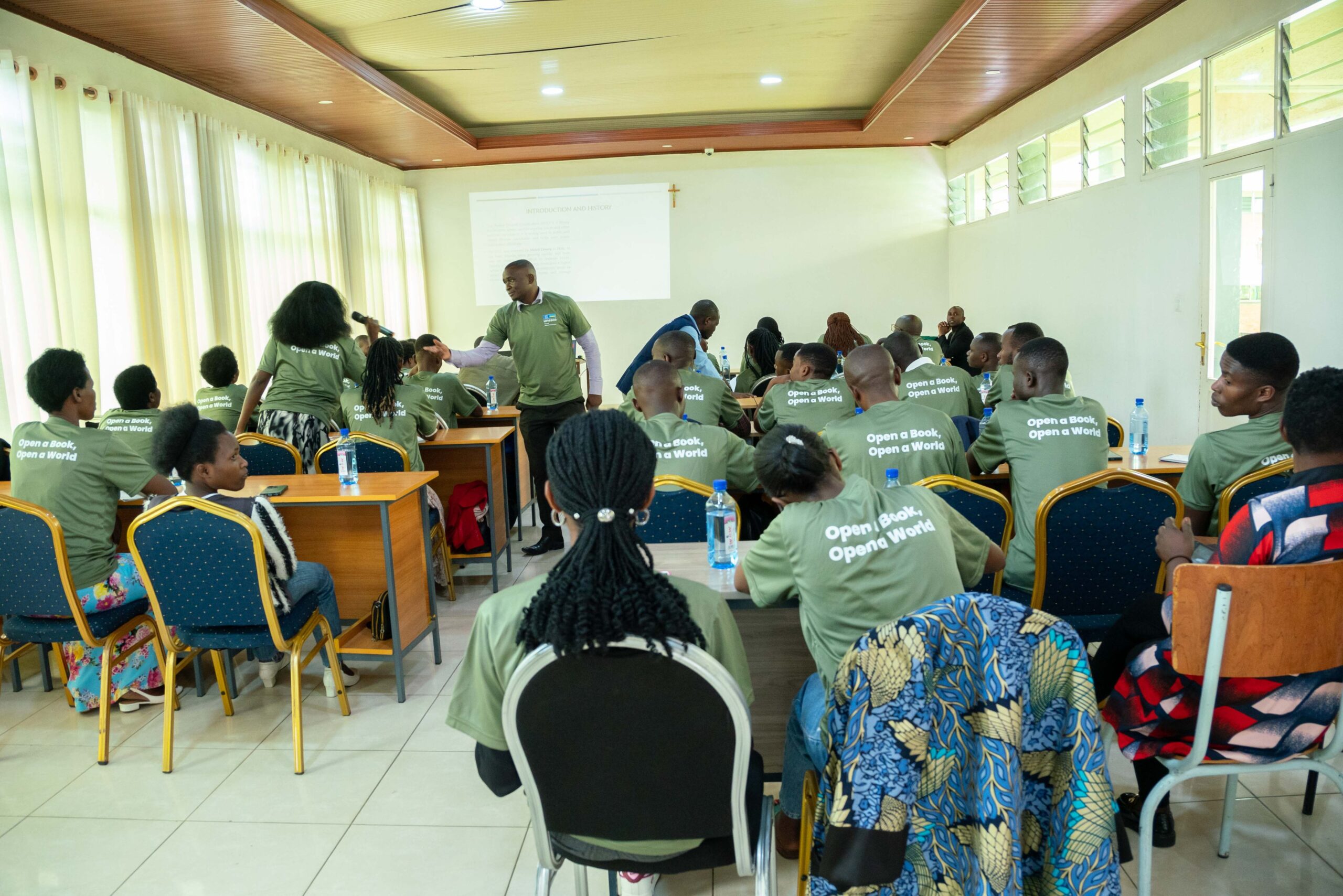 Trainees during a learning session
“We learned how to properly organize and manage a library. Before, our libraries often served multiple purposes, such as being both reading spaces and book storage areas, which caused disorder. Now, I understand how important it is to have a well-arranged library. This training has equipped us to return to our schools and advocate for better collaboration with school leaders to create organized, welcoming libraries that support students in doing research and improving academic performance.”
Yet, the workshop also revealed how far many schools still have to go to meet these modern standards.
Protais Nambazimana, Deputy Headmaster in charge of Education and also a librarian at G.S. Rutabo in Rulindo District, expressed both appreciation and concern.
“This training is timely. But what we’ve learned is very different from what we are doing on the ground. Many schools don’t have designated library staff or even a dedicated room for a library. Books are stored where other activities happen. We are requesting the government to invest in school infrastructure and to provide more computers. Also, to enable students in rural areas to access books at home, they will need smartphones and electricity.”
One key takeaway from the training was the importance of cataloguing. Participants learned that each book should be coded and entered into the system before placement on the shelves—something not practiced in many schools today.
The initiative also received backing from the Rwanda Cultural Heritage Academy. Diane Nyiramugisha, in charge of acquisition, emphasized the role of digital libraries in bridging access gaps.
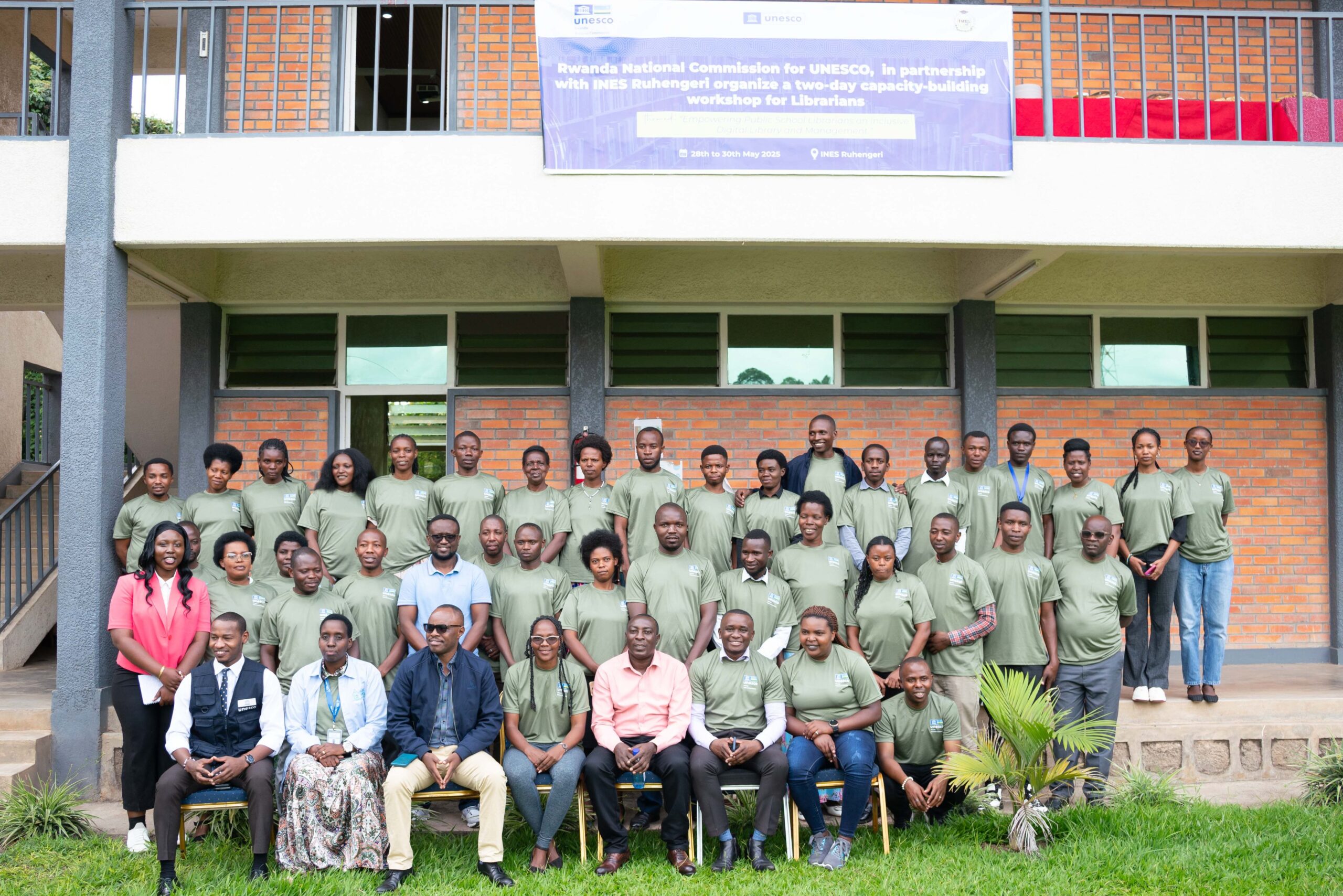 Trainees pose for a group photo at the end of the training.
“We already have systems in the national library that allow users to search for books online. A digital library makes it possible for anyone to access information without being physically present. School libraries must move in this direction. Libraries are not just bookstores—they are information wealth centers.”
Participants also toured INES Ruhengeri’s digital library, gaining first-hand experience in using digital tools and inclusive software. Some computers are equipped with assistive technology for students with visual impairments.
The workshop is expected to result in a national network of trained librarians, each of whom will return to their district with an action plan to improve their school libraries. The long-term goal is to create a user-friendly, inclusive national e-library system.
By empowering librarians, Rwanda is laying the groundwork for more equitable access to knowledge and a brighter educational future for all.
theinspirerpublications@gmail.com



Leave a Reply