
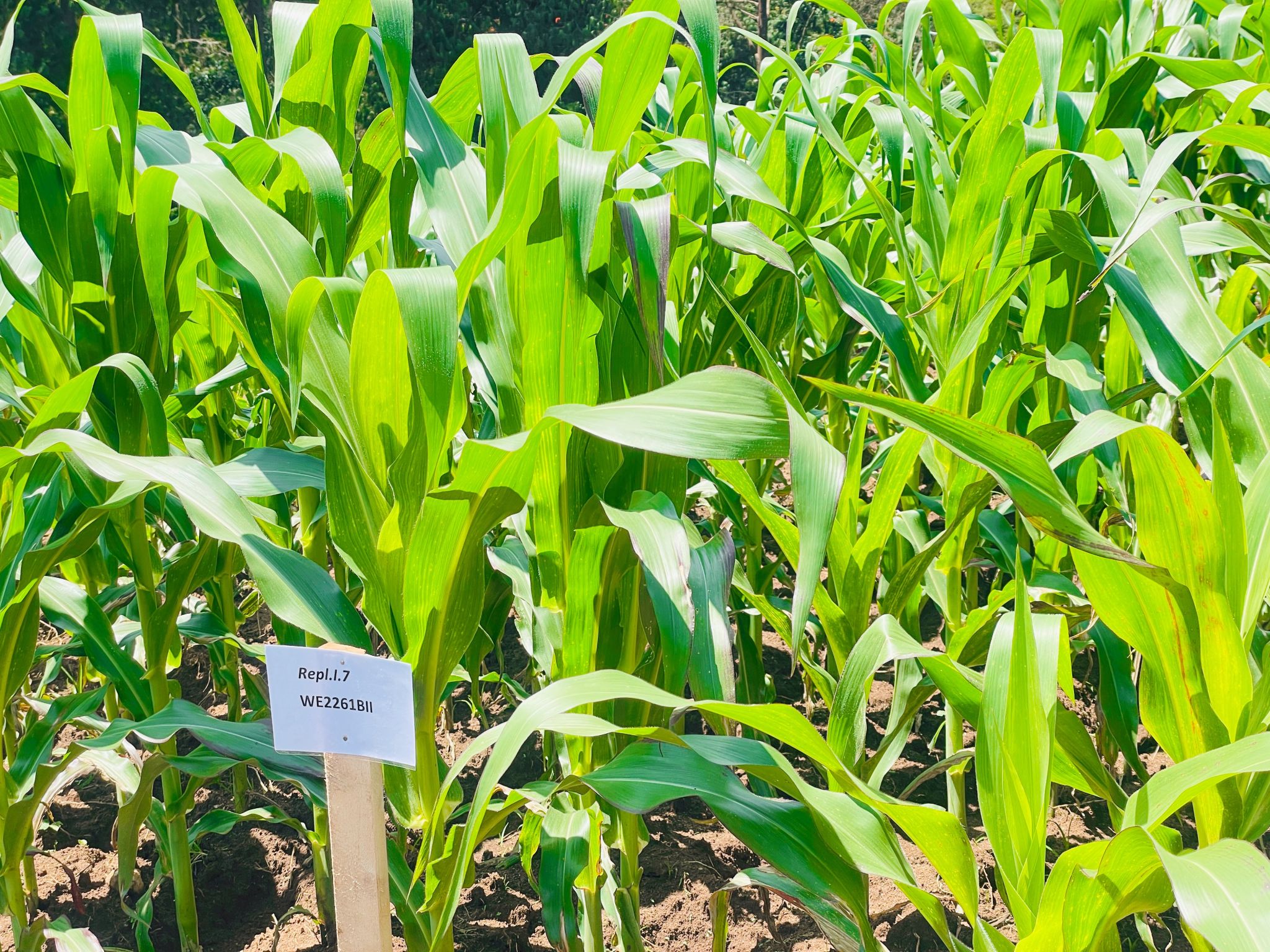
RAB unveils fall armyworm-resistant GMO maize seed
By The Inspirer.
The Rwanda Agriculture and Animal Resources Development Board (RAB) has unveiled a new genetically modified maize seed designed to resist the destructive fall armyworm, marking a significant step toward boosting maize productivity.
The seed, introduced to farmers, seed multipliers and traders for the first time, does not require pesticide application, as it has been enhanced using genetic engineering to withstand the pest. Researchers say the variety also shows resilience to climate variability.
The breakthrough follows years of research by RAB scientists in response to declining maize yields since 2016, when fall armyworm was first reported in Rwanda.
Dr Alphonse Nyombayire, a maize researcher at RAB who led the study, said 12 improved varieties have been developed and are currently undergoing field trials. The varieties are being tested alongside a widely used local seed, RHM 1,407, under the same conditions to assess performance.
“This is the first planting season for these varieties, and trials will continue across different seasons to evaluate their adaptability and yield performance,” he said.
Farmers see potential boost in yields
Farmers have welcomed the innovation, expressing optimism that it could address persistent pest challenges.
Uzamukunda Yukunda, a maize farmer from Muhanga District, said fall armyworm remains a major threat regardless of weather conditions.
“Even when there are no droughts or heavy rains, the pest continues to damage crops. We are hopeful this improved seed will increase production, especially as it is said to mature quickly and adapt to changing climate conditions,” he said.
Seed traders also view the new variety as a solution to long-standing issues related to poor-quality seeds.
Alice Iribagiza Rwema, head of the association of maize seed multipliers and traders, said the improved seed could help eliminate cases where farmers receive substandard varieties that either fail to produce cobs or yield poor grain quality.
“This will restore confidence in the seed market, as production and distribution will be handled through certified systems,” she said.
Part of Rwanda’s biotech push
RAB officials say the maize seed is part of a broader pipeline of genetically improved crops aimed at strengthening food security.
Dr Athanase Nduwumuremyi, a biotechnology research coordinator at RAB, noted that improved cassava and potato varieties have already been tested and are nearing release, with maize now following.
He said early observations from field trials show clear differences, with conventional maize already affected by fall armyworm while the improved varieties remain intact.
The 12 maize varieties—including WE2295B, WE2250B and WE8206B—are being tested across multiple sites in Rusizi, Musanze, Huye and Nyagatare districts.
Upon completion of trials, the seeds will be submitted for certification before being approved for distribution to farmers.
Rwanda’s move aligns with global trends, where genetically modified crops have been used for over four decades in countries such as the United States, China and India. Several African countries, including Kenya, Nigeria and Ghana, have also adopted or piloted the technology.
The development follows Rwanda’s 2024 law regulating the use of genetically modified organisms, aimed at ensuring biosafety and environmental protection as the country advances its agricultural transformation agenda.





Leave a Reply