
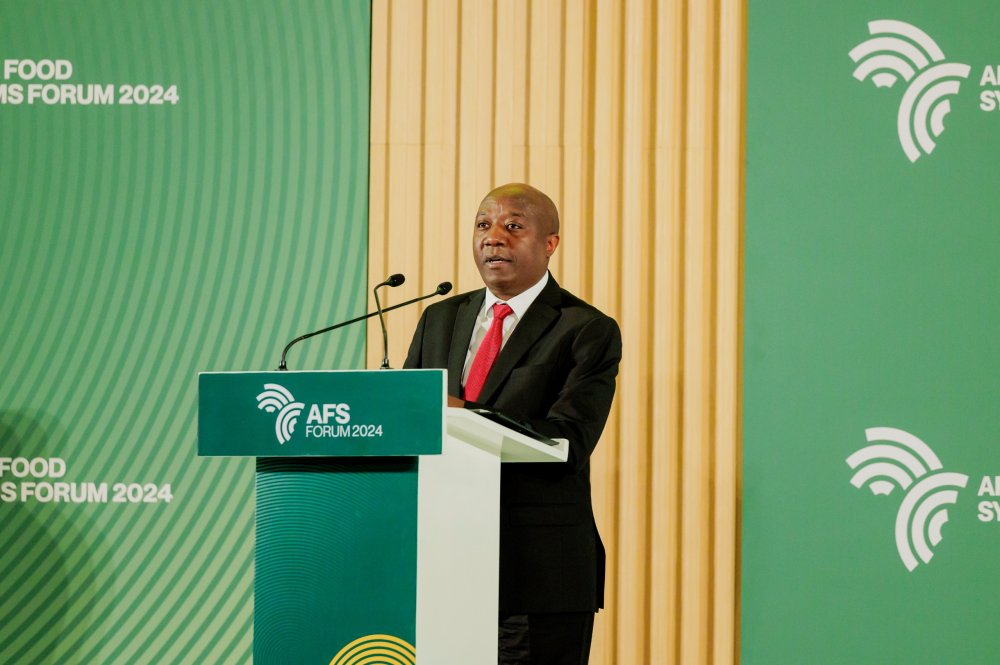
Prime Minister Ngirente highlights the heavy costs of neglecting Agriculture in Africa at AFSF 2024
By The Inspirer.
Prime Minister Dr. Édouard Ngirente has underscored the substantial losses Africa incurs due to the underdevelopment of its agricultural sector, noting that the consequences extend beyond food insecurity to include significant financial expenditures on addressing related issues such as diseases and other crises.
Speaking at the Africa Food Systems Forum (AFSF) 2024, currently taking place in Rwanda, Dr. Ngirente emphasized the importance of advancing agriculture, as the forum brought together key stakeholders from across the continent, including farmers, investors, researchers, and policymakers.
The Prime Minister pointed out that Africa’s disregard for agriculture leads to financial resources being diverted to address the fallout from food scarcity, including malnutrition, child stunting, conflicts, and other related problems. These funds, he argued, could be better spent on critical infrastructure and development projects.
“When African countries lack sufficient food, they end up spending vast amounts of money to manage the consequences, money that could have been invested in more beneficial sectors,” Dr. Ngirente remarked.

He highlighted the ongoing food insecurity crisis in Africa, noting, “Over 20% of our continent’s population lacks adequate food, meaning that one in five Africans is food insecure.”
Dr. Ngirente stressed that this situation is unacceptable, especially given that “food is a fundamental human right, yet it remains insufficiently available on our continent.”
He went on to affirm Rwanda’s commitment to enhancing agricultural productivity, particularly through the adoption of modern technologies that support farmers in accessing necessary resources. “Rwanda continues to promote agricultural insurance to ensure that farmers can benefit from their investments,” he said.
The Prime Minister also emphasized the importance of innovation in driving agricultural development, acknowledging the role of the Alliance for a Green Revolution in Africa (AGRA) in implementing transformative initiatives within the sector.

Dr. Ngirente praised AGRA’s efforts in shaping Africa’s agricultural strategies, highlighting the organization’s contribution to the continent’s economic development through its focus on agriculture.
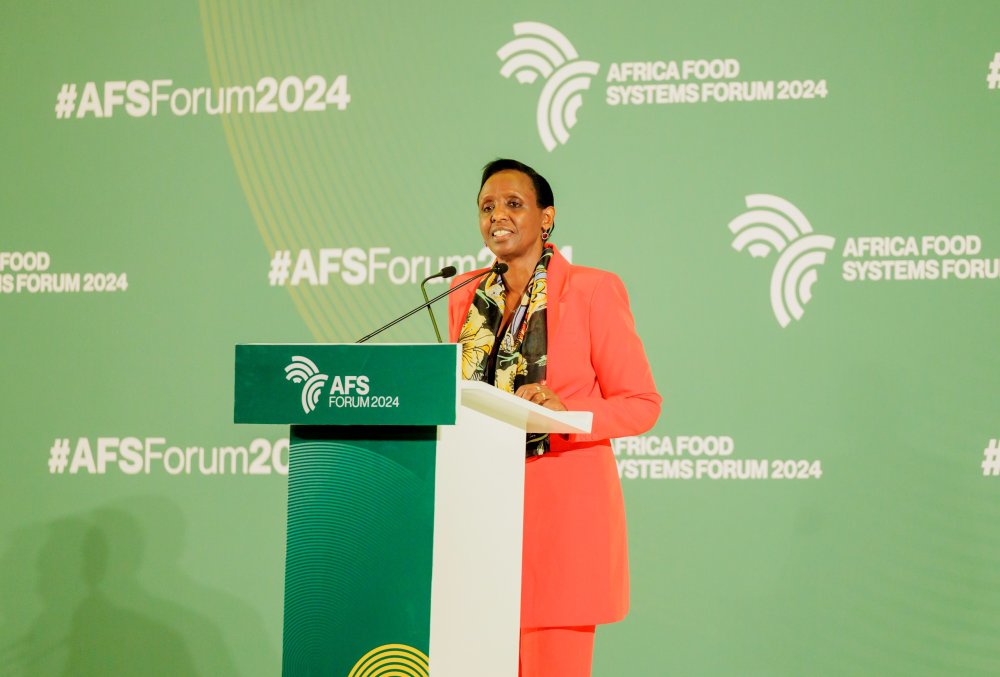
AGRA President Dr. Agnes Kalibata commended Rwanda’s role in promoting agriculture, a sector that is central to the country’s economy. “This forum, which brings together all stakeholders in the agricultural sector, is an excellent platform for discussions,” she said.
Dr. Kalibata explained that the forum is a vital opportunity for African countries to collaborate on strengthening agricultural practices across the continent. She emphasized the need for Africa to prioritize finding solutions to the challenges facing agriculture, urging youth to engage in innovative efforts during the forum.
The AGRA President also expressed her appreciation for the contributions of young people to the advancement of agriculture.
Minister of Agriculture and Animal Resources, Dr. Ildephonse Musafiri, expressed Rwanda’s pride in hosting the forum for the second time. He highlighted the significance of the event in bringing together Africa’s agricultural stakeholders, who play a critical role in helping the continent achieve its agricultural development goals by 2030.
Neglect of African Agriculture
Hailemariam Desalegn, former Prime Minister of Ethiopia, attributed the lack of progress in African agriculture to the sector’s neglect by political leadership across the continent.
“African agriculture has not received the necessary political support, considering the level of investment we put into it,” Desalegn stated.
He called for a paradigm shift in how Africa approaches agriculture, emphasizing the urgency of revitalizing the sector. “We know we cannot continue business as usual because, as the African saying goes, tomorrow is shaped by what we do today,” he said.
Desalegn advocated for the implementation of strategies that enable agriculture to withstand challenges such as climate change and for the inclusion of youth in driving agricultural innovation.
He also highlighted the importance of Africa taking agriculture seriously, warning that failure to do so could leave the continent unable to feed its projected population of 2.5 billion by 2050.
“We all agree that advancing agriculture is critical because the demand for food continues to rise,” he concluded, stressing the need for Africa to reduce its dependence on imported agricultural products and take responsibility for addressing its own food security challenges.

theinspirerpublications@gmail.com




Leave a Reply