
National dialogue pushes for better access to finance for women with disabilities
BY CYUBAHIRO PRINCE BORIS
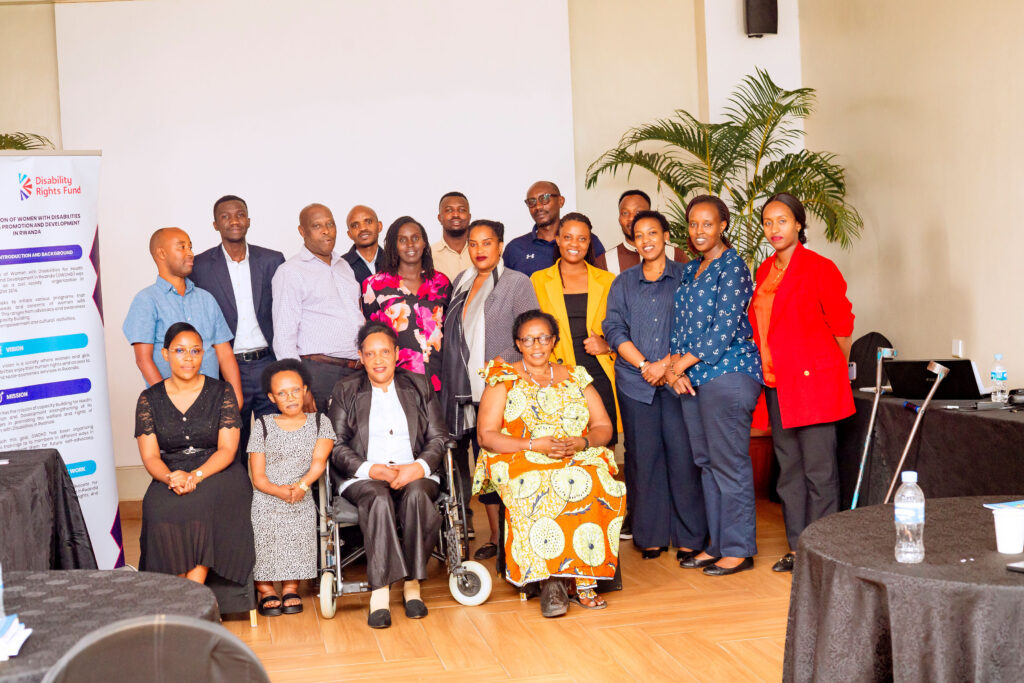
KIGALI – For many women with disabilities in Rwanda, getting a bank loan is about more than filling out forms. It can mean facing inaccessible bank buildings, strict collateral requirements, or simply not receiving information in a format they can use. Those challenges took center stage in Kigali as policymakers, financial institutions, disability rights organizations and development partners met to discuss how to make Rwanda’s financial system work for everyone.
The National Advocacy Dialogue on Inclusive Financial Policies for Women with Disabilities, organized by the Organization of Women with Disabilities for Health Promotion and Development in Rwanda (OWDHD) under the MAKE IT WORK Project with support from the Disability Rights Fund (DRF), focused on practical solutions to improve financial inclusion.
The meeting heard that although Rwanda has expanded access to financial services in recent years, many women with disabilities still struggle to access loans, savings products and insurance. Participants pointed to physical barriers in some banking facilities, limited access to information in disability-friendly formats, high collateral requirements and negative attitudes that continue to exclude many women from economic opportunities.
The moderator reminded participants that financial inclusion is not simply good practice but a legal obligation. Rwanda’s Constitution, the National Disability Policy, the National Strategy for Transformation (NST2), and the United Nations Convention on the Rights of Persons with Disabilities all require equal access to services, including finance.
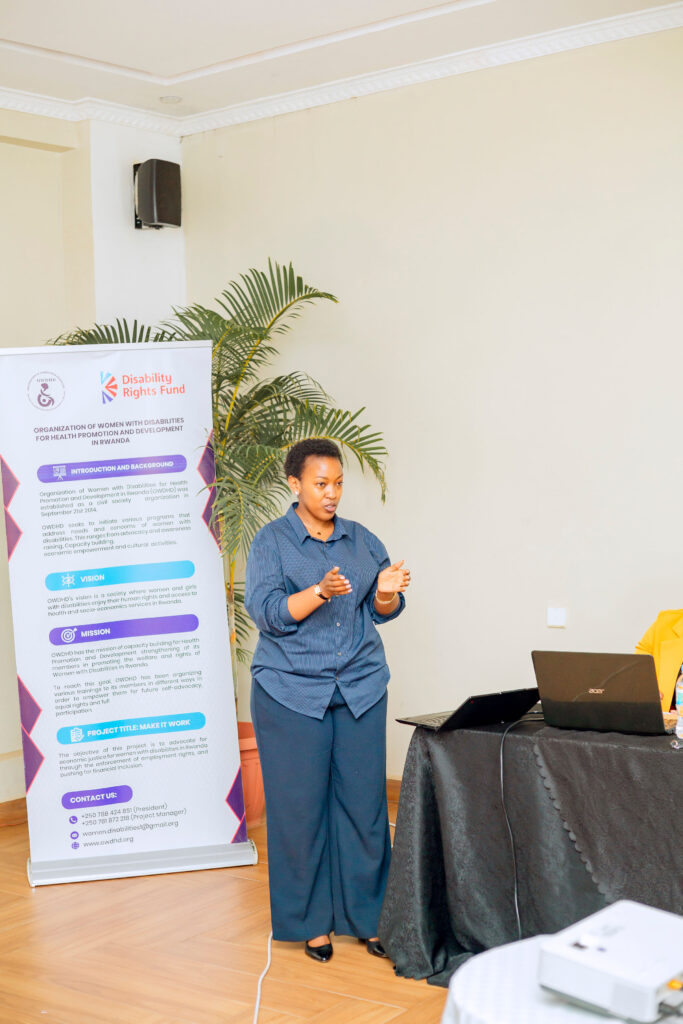
Speaking during the dialogue, Darlene Ishimwe Gasaro, a Resource Mobilization Officer at the Development Bank of Rwanda (BRD), said BRD supports national development by financing projects through commercial banks, microfinance institutions and SACCOs rather than operating as a traditional commercial bank.
She highlighted the bank’s KATAZA Project, which targets youth and women in the agriculture ,tourism and hospitality sectors. “We want women with disabilities to know the opportunities available and to access financing under conditions that respond to their needs,” she said.
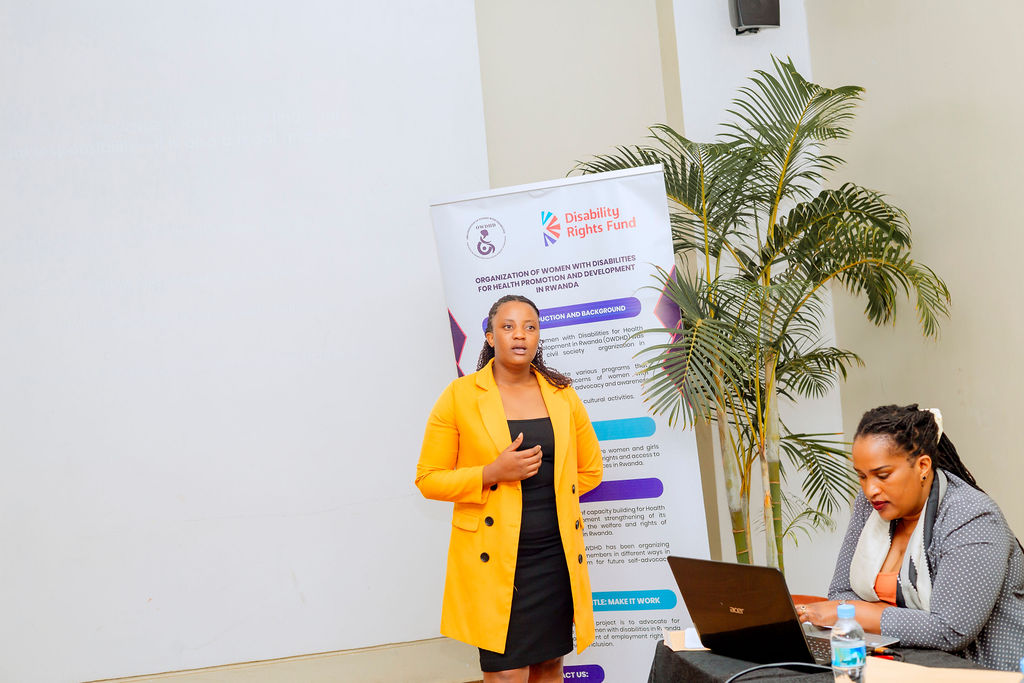
Chance Uwineza, Project Manager at OWDHD, said many women with disabilities remain locked out because information about financial services is often not provided in accessible formats, particularly for people with hearing or visual impairments.
“Our goal is to encourage financial institutions and policymakers to adopt inclusive policies so that women with disabilities can access financial services on an equal basis with everyone else,” she said.
She welcomed commitments from institutions including BRD, the Ministry of Finance and Economic Planning (MINECOFIN) and the Ministry of Public Service and Labour (MIFOTRA) to strengthen disability-inclusive policies.
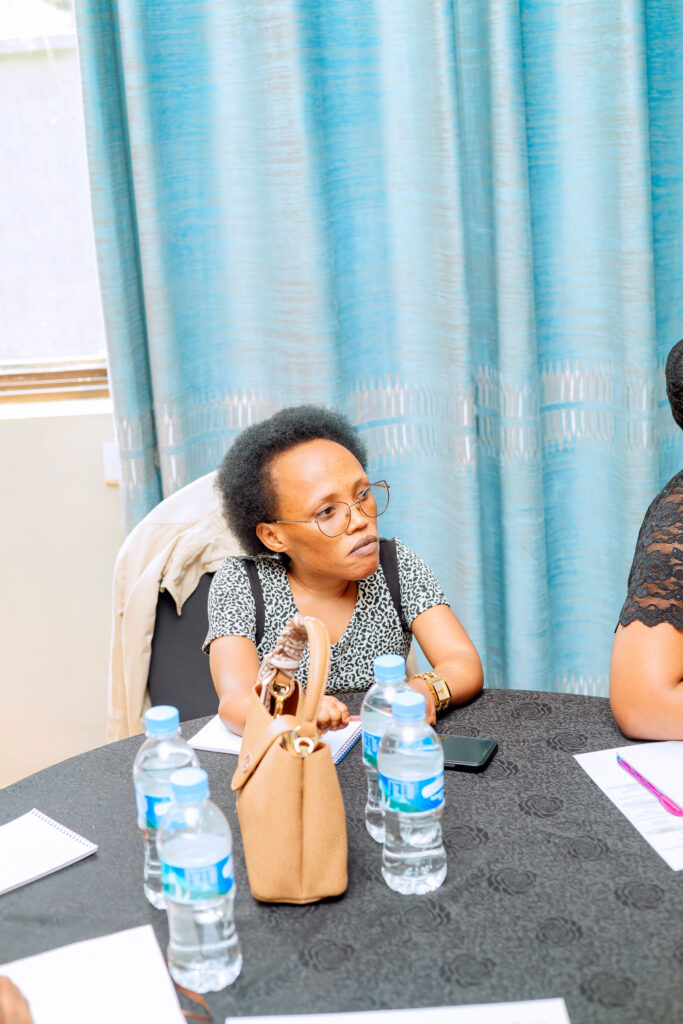
The Executive Director of the Rwanda union of little Peaple(RULP), Honoline Tuyishimire, called for lower interest rates and more flexible lending conditions for persons with disabilities.
“Women with disabilities often face additional costs that affect their businesses. Affordable loans and better access to information would help them compete fairly,” she said.
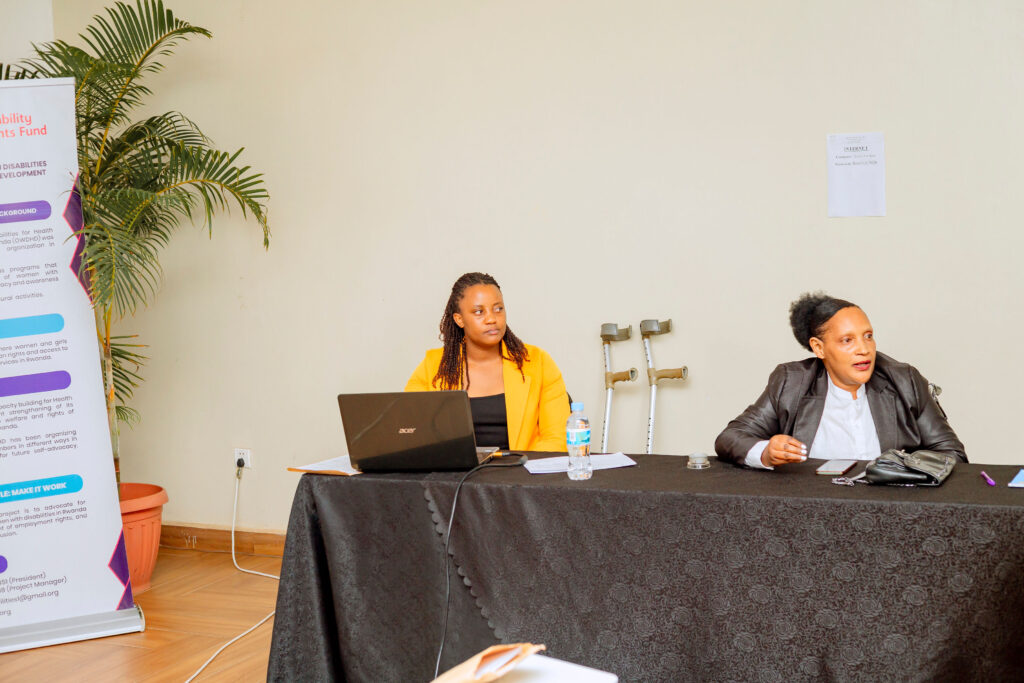
For Marie Rose Kanyamfura, Legal representative of OWDHD, the dialogue offered hope that long-standing barriers can be addressed through stronger collaboration. She welcomed BRD’s KATAZA Project, which can finance up to 80 percent of eligible investments, with beneficiaries contributing the remaining 20 percent, particularly in agriculture ,tourism and hospitality.
Participants urged government institutions to strengthen implementation of existing disability-inclusive policies, while financial institutions were encouraged to improve physical accessibility, simplify loan procedures, develop inclusive financial products and expand financial literacy programmes. The media was also challenged to raise awareness and share stories that promote positive attitudes toward disability inclusion.


Leave a Reply