

From Memory to Legacy: “Mulisa” Explores Rwanda’s Post-Genocide Reality
By The Inspirer.
Rwanda’s literary landscape continues to expand with stories that bridge the past and present, and Mulisa: From Exile to Legacy by Gasana Mutesi stands out as a poignant addition. The historical novel offers a deeply human exploration of how memory shapes identity and how legacy is carried forward in a country still navigating the long-term impact of the 1994 Genocide against the Tutsi.
At its core, Mulisa is not just a story about survival—it is about what comes after. It traces the journey of a boy born in exile, whose understanding of Rwanda begins as inherited memory before evolving into lived experience upon his return.
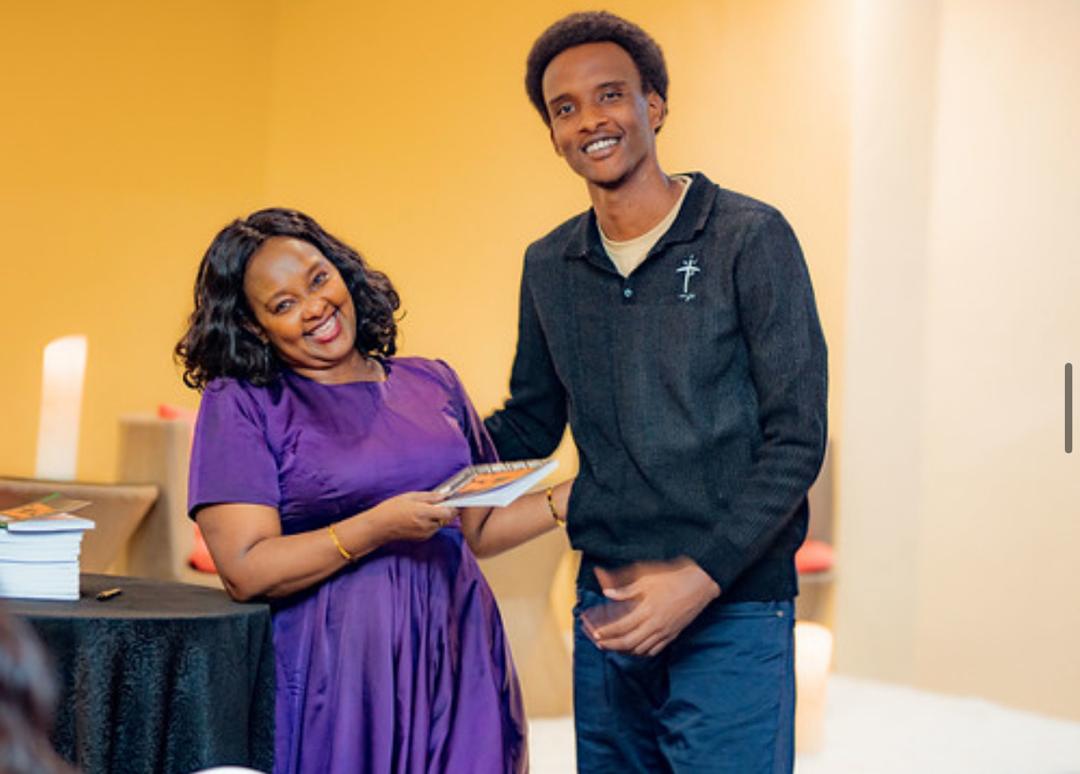 Gasana Mutesi hands a copy of his novel Mulisa: From Exile to Legacy to a young man as both share a smile during the book launch event.
A Life Rooted in Memory
Mulisa’s early years are spent outside Rwanda, where home exists only through stories told by others. These narratives—filled with longing, loss, and belonging—form his earliest sense of identity.
His return to Rwanda unfolds in the aftermath of the genocide, placing him in a society undergoing profound transformation. Through his perspective, readers encounter a nation working to rebuild not only its physical structures but also its social fabric.
Navigating a Post-Genocide Reality
The novel carefully examines the complexities of growing up in a post-genocide environment. Rather than presenting reconciliation as a finished achievement, it portrays it as an ongoing process—visible in everyday interactions, community efforts, and the unspoken realities of shared history.
Mulisa’s experiences reflect a broader generational story: that of young Rwandans who inherit both the pain of the past and the responsibility to shape a different future. In this way, the narrative captures the delicate balance between remembering and moving forward.
Transforming Loss into Legacy
A central emotional thread in the novel is Mulisa’s connection to his brother, who died during the liberation struggle that ended the genocide. This loss becomes a defining force in Mulisa’s life, shaping his sense of duty and purpose.
In Mulisa, legacy is portrayed as something deeply personal—carried through actions, choices, and remembrance. The story raises critical questions about what it means to honor those who are gone, and how individuals can live in ways that give meaning to past sacrifices.

Identity in a Changing Nation
Gasana Mutesi presents Mulisa as a character who is both shaped by history and actively shaping his own path. His journey reflects the experiences of many who returned from exile and grew up in a Rwanda committed to unity and reconstruction.
The novel moves beyond recounting tragedy, instead focusing on continuity—how memory informs identity, how loss can inspire growth, and how individuals contribute to a shared national story.
Preserving Memory Through Storytelling
As Rwanda continues to define its future, stories like Mulisa play an important role in preserving its past. Historical fiction provides a way to engage younger generations with events they did not directly experience, transforming history into something relatable and emotionally resonant.
By grounding national history in personal experience, the novel helps ensure that memory remains alive—not as a static record, but as a living influence on identity and values.
More Than a Story of One
Ultimately, Mulisa: From Exile to Legacy is a reflection of a broader journey shared by many Rwandans—from exile to home, from memory to legacy.
Through this work, Gasana Mutesi contributes to a growing body of literature that keeps Rwanda’s history present in meaningful ways. It is a reminder that while the past cannot be changed, how it is remembered—and how it shapes the future—remains in the hands of those who carry its legacy forward.




Leave a Reply