
Empowering Women’s Health: Elekta Foundation’s Crucial Role in the Fight Against Cervical and Breast Cancer in Rwanda
By Elias Hakizimana
Cervical and breast cancers, formidable adversaries that claim countless lives globally, remain a silent threat in Rwanda due to a lack of awareness, entrenched traditional practices, and delayed medical intervention.
The repercussions of these factors pose a severe risk, compelling women in Rwanda to unknowingly suffer and succumb to these top killers. Urgent appeals are being made for women to proactively seek early screening and treatment, acknowledging that cervical cancer ranks as the second-leading cancer in Rwanda.
Testimonies from women in Mukarange Sector, Kayonza district, during a campaign on January 30, 2024, unveiled the tragic reality of some losing relatives to these cancers unknowingly.

Jaqueline Tuyisenge, a 37-year-old mother from Rebero village, Nyagatovu cell, Mukarange sector, stressed the prevalence of breast cancer among women. She revealed how patients often resorted to traditional healers, leading to delayed biomedical treatment when the disease had already progressed significantly.
Grace Mukamanzi, 61, from Kinunga village, Mburabuturo cell, Mukarange sector, reiterated the consequences of seeking healthcare at a late stage, narrating firsthand experiences of witnessing women succumb to breast cancer. The prevailing reliance on traditional healers, instead of early biomedical care, has significantly contributed to these tragic outcomes.

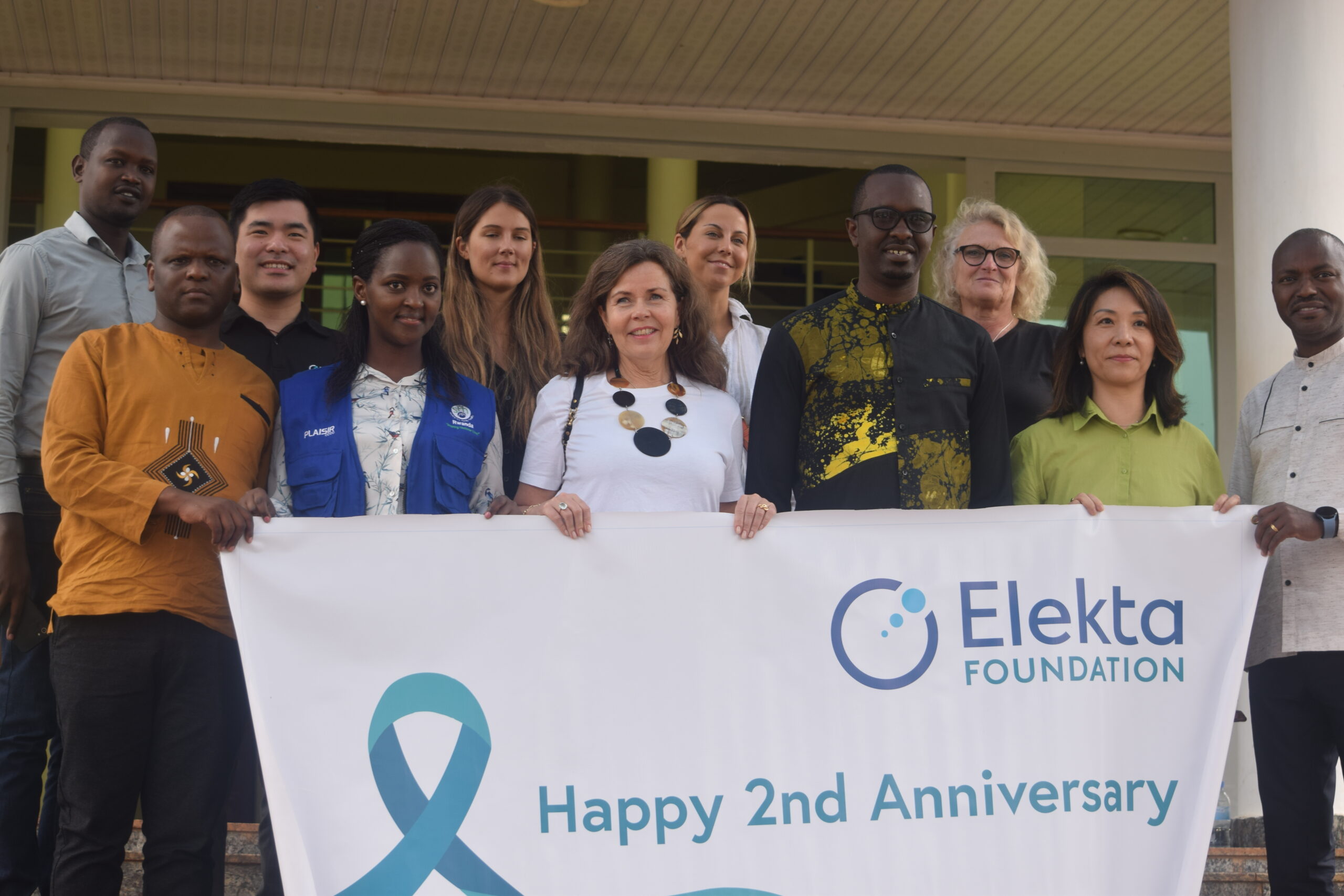
In a ray of hope, since September 2023, Kayonza has witnessed the initiation of a women-centered care project by the Elekta Foundation, a non-profit organization dedicated to improving cancer care access in underserved regions and communities. The foundation played a pivotal role in helping women become informed and undergo screenings for cervical and breast cancers through a mass campaign involving HPV testing and clinical breast exams.
Cecilia Wikström, Chairman of the Elekta Foundation, passionately emphasizes that no woman should perish from cervical and breast cancers, stressing their preventability and curability. Wikström underscores the profound impact of saving women, noting that it also prevents children from being orphaned and growing up without their mothers.
At Elekta, we focus on cervical cancer and breast cancer in this project, understanding the critical role women play in community building,” says Wikström.
Early detection, according to her, is instrumental in completely curing cervical and breast cancer, enabling women to return to their families and contribute to the prosperity of the nation.
Acknowledging the dire situation in Africa, where less than 8 percent of the population has full access to cancer care, Wikström emphasizes the importance of early detection, early treatment, and providing proper care to women in need.

Since 2022, the Elekta Foundation has played a pivotal role in healthcare initiatives in Gicumbi district, showcasing impressive results by screening and treating 45,000 women. The initial goal was to screen 42,000 women, encompassing 70% of the eligible population.
“We started with a pilot project in Gicumbi. In less than 4 months, we screened 20,000 women and treated 535 women with precancerous lesions so they will not develop cervical cancer. Last year, we implemented phase 2 and screened another 25,000 women. This 80% eligible women in Gicumbi.” says Lacy Hubbard, President and CEO of Elekta Foundation.
A holistic approach
The foundation employs a holistic approach to screen for cervical and breast cancer, focusing on early detection to prevent severe cases that might otherwise result in fatalities. The project in Rwanda took shape following the inspiration of First Lady Jeannette Kagame, who, two years ago, advocated for the imperative need to commence screening and treating cervical and breast cancer in the country.
After the signing of a Memorandum of Understanding (MoU) between the Elekta Foundation and the Ministry of Health in Rwanda in 2022, collaborative efforts were initiated with partners in Sweden, the US, and Rwanda. The project commenced in Gicumbi district, utilizing a FAST model to test and evaluate improvements achieved in collaboration with Rwanda Biomedical Centre (RBC), the implementing agency of Rwanda Ministry of Health, and other partners.
RBC facilitated the connection between Elekta Foundation and Partners in Health Rwanda, leading to the joint formation of a new model that screens women for both cervical and breast cancer simultaneously. This shift from disease-centered care to woman-centered care aims to comprehensively address these life-threatening diseases.
RBC also reports that from 2018 to 2023, a total of 372,904 women in Rwanda have been screened with cervical cancer. Shockingly, this represents only 23% of women who should be screened once every five years.
In 2023 alone, 132,103 women were expected to be screened, but the actual number screened is a mere 610, significantly lower than the WHO estimate of 1229 cases. This suggests that nearly half of the women with cervical cancer in the community may be going untreated.

Breast cancer
Turning to breast cancer, RBC’s statistics reveal that between 2018 and 2023, 345,045 patients were screened, with a projected 130,133 cases in 2023. However, the actual number of screened is only 605, much lower than the WHO’s estimated 1237 cases. This alarming discrepancy indicates that almost half of the population may have breast cancer but remain unaware.
In 2022, the total number of patients screened with all cancers in Rwanda was 5283. Data collection for 2023 is still ongoing, but an increase in this number is anticipated.
Kayonza cases
In Kayonza district alone, 22,000 women have been screened with cervical cancer since October 2023, thanks to the collaborative efforts of RBC, Elekta Foundation, and Partners in Health. This figure corresponds to 37% of all women requiring screening in the district. Of the identified cases, 603 women exhibiting early signs of cervical cancer in Kayonza underwent treatment, and 10 individuals screened with cervical cancer received treatment, unfortunately 1 of them died according to the sources. Regarding breast cancer in this district, 22,023 women were screened, with 13 of them undergoing treatment after being identified as ill.
RBC strongly advocates for women to undergo early-stage screenings for cervical and breast cancer, even in the absence of noticeable symptoms. These types of cancers often do not manifest symptoms in their initial stages, and early detection allows for effective treatment and cure.


Several machines employed for breast and cervical cancer screenings at Kibungo District Hospital, generously donated by the Elekta Foundation:


theinspirerpublications@gmail.com



Leave a Reply