
Dr Bizimana condemns journalists over failure to learn from genocide history
By The Inspirer.
The Minister of National Unity and Civic Engagement, Dr Jean Damascène Bizimana, has criticized some journalists for what he described as a failure to draw lessons from the divisive ideology that led to the 1994 Genocide against the Tutsi.
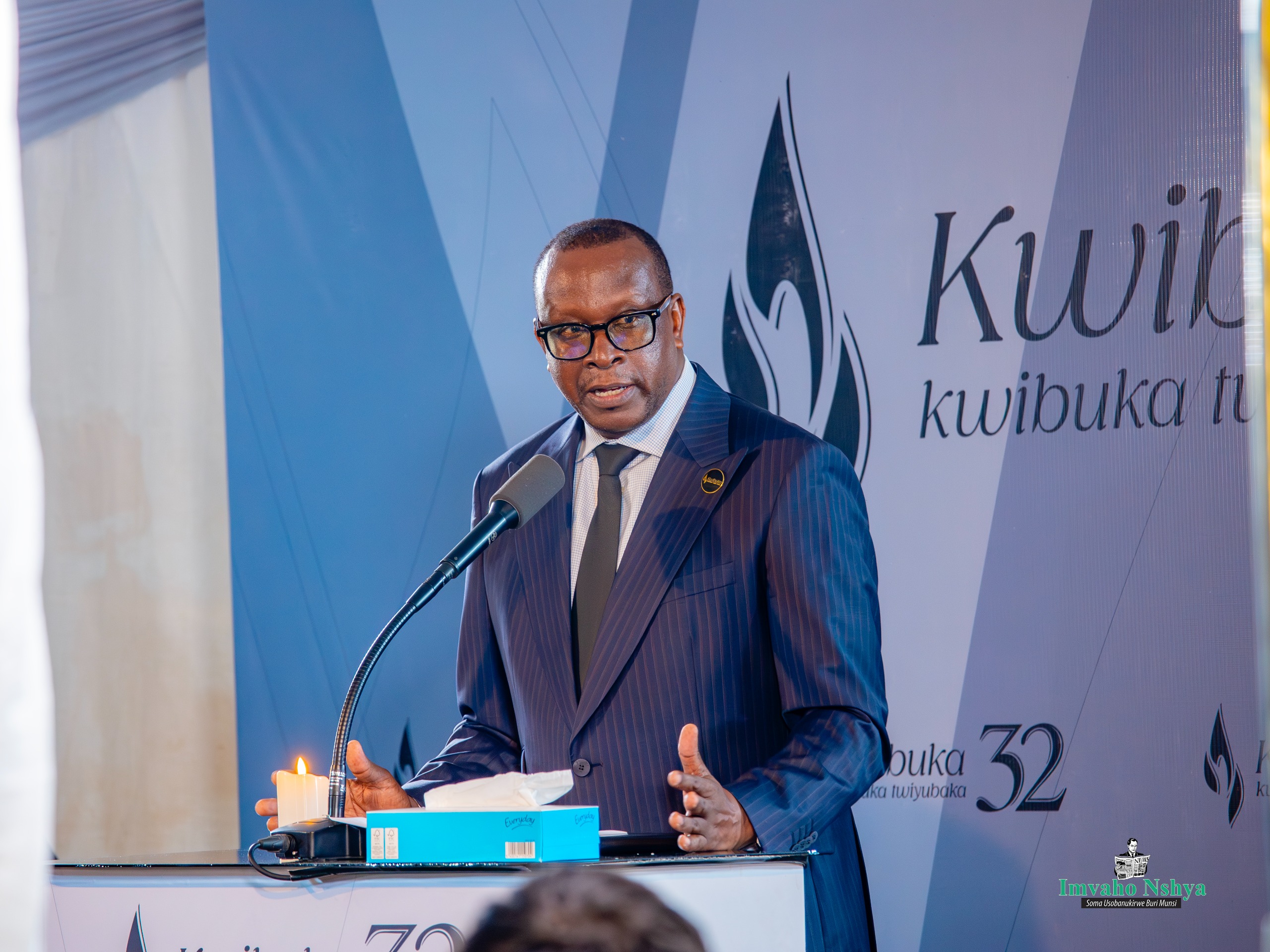
He made the remarks on Friday evening, April 10, 2026, during a commemoration event held jointly with journalists and families of media professionals who were killed during the Genocide. The ceremony, dedicated to honoring journalists who lost their lives in 1994, took place at the headquarters of the Rwanda Broadcasting Agency (RBA).
Dr Bizimana urged journalists and political actors to remain conscious of Rwanda’s historical context and avoid actions that could revive hatred and division.
“In a country that experienced genocide and carries a painful history of ethnic and regional division, no journalist or politician should behave as if they are operating in a context free of that reality,” he said.
He further criticized what he described as complacency among some media practitioners and political commentators, accusing them of disregarding the sensitivity of Rwanda’s past when engaging in public discourse.
Dr Bizimana also reacted to recent criticism directed at him following comments in which he condemned political actors accused of distorting the history of the Genocide against the Tutsi. He said some journalists had responded emotionally rather than reflecting on the broader historical responsibility of the media.
“It is evident that some journalists and self-proclaimed politicians are complacent about the realities of ethnic division and the gravity of the Genocide against the Tutsi,” he said. “When I speak about individuals convicted by courts, some react not on principle, but because of personal or financial connections. A journalist who defends genocide-related crimes is no different from those who spread hate ideology.”
He also dismissed comparisons of his public statements to the rhetoric of Léon Mugesera, who is accused of inciting violence against Tutsi prior to the Genocide, stating that such comparisons distort intent and ignore the responsibility of accurately addressing historical facts.
According to Dr Bizimana, misinterpretations of his remarks reflect a broader misunderstanding of Rwanda’s past and its implications for future generations born after the Genocide.
The Minister also highlighted the role of Joseph Serugendo, one of the founders and technical advisers of the former RTLM radio station, in facilitating its operations during the Genocide against the Tutsi.
“Serugendo was part of the Interahamwe network. He was a skilled radio technician and previously worked with Radio Rwanda before being involved in RTLM, where he played a key technical role,” Dr Bizimana said. “He contributed to equipment procurement and ensured uninterrupted broadcasting, including linking power supply to key state infrastructure.”
He noted that Serugendo was later convicted by a Rwandan court on June 12, 2006, and sentenced to six years in prison for Genocide-related crimes, including public incitement to commit Genocide and encouraging killings of Tutsi through broadcasts and writings. He added that Serugendo admitted to the crimes and apologized.
Dr Bizimana emphasized that although journalists like Serugendo did not directly use weapons, their role in spreading hate propaganda was instrumental in fueling the violence.
“A journalist can kill through words and writing—and words can kill,” he said.
He called on journalists to uphold ethical standards by learning from colleagues who refused to spread hate speech and paid the ultimate price for their professional integrity during the Genocide.
Dr Bizimana also responded to comments made by Jean Luc Habyarimana, son of former President Juvénal Habyarimana, rejecting claims that the Genocide was not planned, describing such statements as historical distortion.
Rwanda Broadcasting Agency (RBA) Director General Barore Cléophas said journalists who were killed during the Genocide were targeted because of their identity and the widespread hatred against Tutsi at the time.
“Being public figures and working in popular media did not protect them; instead, it made them more visible targets,” he said.
Dan Ngabonziza, Chairperson of the Rwanda Journalists Association (ARJ), commended government efforts in creating a conducive environment for journalists and promoting a professional media sector grounded in national values. He, however, urged journalists to use these opportunities responsibly and uphold professional ethics.


Leave a Reply