

District environment committees trained on action planning
By Inspirer Correspondent.
Rwanda Environment Management Authority (REMA) and the Global Green Growth Institute (GGGI) are training district environmental committees on action planning to address environmental issues.
Lack of enough public toilets, deforestation, lack of rainwater harvesting, and illegal mining are among major environmental issues that have been raised by district environmental committees.
General responsibilities of the districts’ committees set up Prime Minister’s order in 2021 include setting up strategies for the installation of latrines and ensuring proper hygiene in public buildings , places and on main roads.
They were also tasked to ensure monitoring of proper management of forests, monitoring of proper land use and management of marshlands and critical ecosystems, ensuring that protected areas, tourist sites and protected animal and plant species are properly cared for and follow up any other activity aimed at conserving and protecting the environment as well as combating climate change as requested by the District Council.
To ensure such strategies are implemented, government has embarked on building capacity for such committees.
District environment committees across Rwanda have, for instance, expressed concerns over shortage of public toilets, especially in high-traffic areas of urban centres and committed to increase the number.
ALSO READ: City of Kigali identifies 80 sites for new public toilets
“We still need more public toilets along major roads and in busy markets,” said Eng. Emile Mukunzi, who heads the environmental committee in Bugesera District.
“Many of the existing ones are not maintained properly, and waste-sorting bins are either lacking or misused.”
Redempta Uwimana, who oversees forest, natural resources, and environmental protection in Nyarugenge District, echoed the concern.
“The shortage of toilets is a major concern, especially in public places,” she said.
She added that rapid urban development has also led to a decline in forest cover, with implications for air quality.
ALSO READ: Over 30 sites identified for new public toilets in Kigali
“We are planning to step up advocacy efforts for improved sanitation, but progress is constrained by budget limitations,” said Uwimana.
Addressing other challenges
The committees’ representatives noted that mining also poses a significant environmental challenge, as some investors fail to rehabilitate mining sites they committed to before starting their activities.
Uwimana said they are also seeing a reduction in forests, especially in city areas, saying ” that’s directly affecting the air we breathe,” “It’s a slow but serious impact.”
“In some parts of the district, floods are caused by poor storage of rainwater,” she said.
“We do mobilise residents to use water tanks, and in high-risk zones, we work with local authorities to find long-term solutions, including possible relocation.”
ALSO READ: Rwanda loses $300m to disasters annually – report
Despite their growing responsibilities, many environment committee members work under tight constraints.
Limited funding, competing duties, and lack of regular training often hinder their effectiveness, they said.
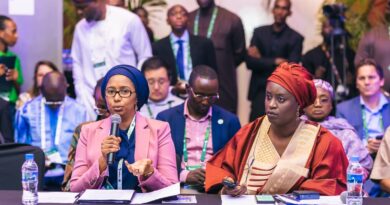
The issues were raised last week during a training session by the Rwanda Environment Management Authority (REMA) and the Global Green Growth Institute (GGGI), where committee members from various districts shared their observations from May 15–16 in Kigali.
Marie Dalie Dukuze, Director of the Advocacy and Multilateral Environment Agreements Monitoring Unit at REMA, explained that committees are being strengthened to understand the laws and develop plans to protect their local environment.
She added that the committees have to work with the local institutions to implement some of the activities without waiting for their budgets to increase, as there are some activities they can manage to do as local institutions.
“They play a vital role in identifying areas in need of restoration, like degraded wetlands, and mobilising communities to take action,” she said.
“There’s a need for regular, in-depth training and closer follow-up on their work,” said Dukuze. “We’re also working with stakeholders to ensure these committees have clear, actionable plans that are supported at all levels,” she said.
“The goal of environmental protection is not only to have a clean country and clean air, but to also create income-generating opportunities through conservation, such as ecotourism parks like Nyandungu EcoPark. The committees are helping us identify other wetlands that need restoration and could be developed in the same way.”

Leave a Reply