
Creating Employment for Youth through E-waste Management
Enviroserve Rwanda Green Park and GIZ Eco-Emploi Programme in collaboration with Rwanda Utilities Regulatory Authority (RURA) and Rwanda Environment Management Authority (REMA) launched a nationwide awareness campaign to build a sustainable e-waste management ecosystem in Rwanda.
The main aim of the campaign is to sensitize informal e-waste handlers to operate in fulfillment of national regulations governing e-waste management in Rwanda, which were published in April 2018.
RURA issued the Regulation n°002 of 26/4/2018 Governing E-Waste Management in Rwanda. This Regulation sets a regulatory framework for electrical and electronic waste management in Rwanda and reiterates that any person carrying out activities related to e-waste collection, transportation, retailing, importation, dismantling, recycling, refurbishing shall hold appropriate license issued by the Regulatory Authority.
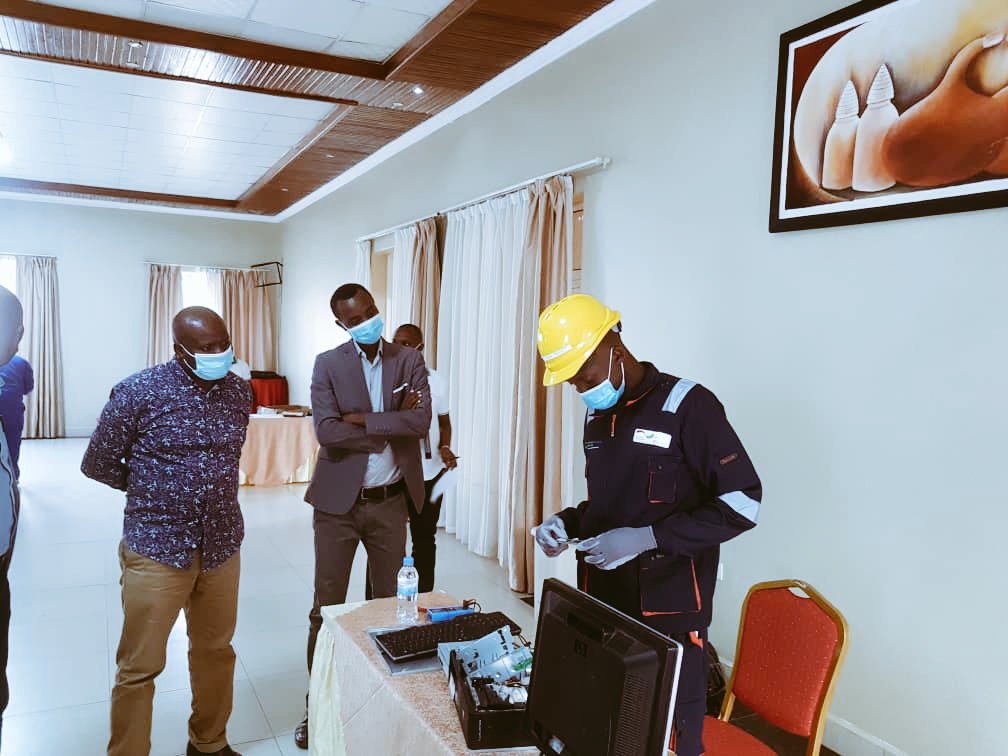
Following the successful launch of the National Awareness Campaign and Training of Informal Technicians in Northern, Southern and Eastern Provinces, Enviroserve Rwanda launched similar trainings in Western Province held in Rubavu District from 9th to 13th November 2020.
It seeks to create awareness on sustainable management of end of life electrical and electronic waste hence building skills of 300 current repair technicians without a formal degree and/or RURA license in sustainable e-waste management.
On 12th November, ERGP launched the e-waste collection point which will be the central point for collection and interim storage of e-waste from Rubavu District.
However, Enviroserve Rwanda Green Park has already established other collection points in different districts of the country and specifically other 3 collection points in Western province totaling to 4 including Karongi, Nyamasheke, Rusizi and Rubavu District.
The 5 days training of informal repair technicians that aims at building their skills, and launching of e-waste collection point, it is Enviroserve’s broader initiative to protect human life and environment from hazardous and toxic substances in electrical and electrical equipment that are nearing their end of life through e-waste awareness campaign.
To leverage the amount of e-waste collected to be dismantled and recycled in an environmentally friendly manner at Enviroserve’s facility in Bugesera Industrial Park and increase green jobs created per year hence ensuring the protection of the environment.
Enviroserve Rwanda e-waste recycling, provides sustainable solution to mitigating risks from improper management of e-waste. It has also created green jobs to 413 people and this number is expected to rise once the facility and nationwide collection points are fully operational.
According to the global e-waste monitor 2020 statistics, 53.6 million metric tons (Mt) of e-waste was generated worldwide. The new report also predicts global e-waste – discarded products with a battery or plug – will reach 74 Mt by 2030, almost a doubling of e-waste in just 16 years. This makes e-waste the world’s fastest-growing domestic waste stream, fueled mainly by higher consumption rates of electric and electronic equipment, short life cycles, and few options for repair (ISWA, 2020).
The demand for electrical and electronic equipment (EEE) has increased significantly in Rwanda due to the general economic growth and modernization. As a result, the 2014 inventory survey on e-waste and the expected amount of e-waste to be generated in Rwanda showed an annual increase of 6% and a total quantity of ten thousand (10,000) tons of e-waste generated each year plus the quantities generated in the past years.
To ensure sustainable management of e-waste, the Government of Rwanda in partnership with Enviroserve Rwanda Green Park established a modern and environmental friendly state of art e-waste dismantling and recycling facility to treat e-waste in Bugesera Industrial park in January 2018.
However, the country still lacks skilled people/technicians to work in the e-waste management value chain (collection of e-waste, repair, refurbishment, and dismantling) and there is a need for collection points around the country to ensure proper collection of e-waste.
Enviroserve Rwanda Green Park Country General Manager, Mbera Olivier commends the partnership to build sustainable e-waste management value chain in Rwanda: “Enviroserve Rwanda believes that through the partnership with GIZ Eco-Emploi, it is the right moment to empower Rwandan youth especially women and informal technicians with technical knowledge and skills.”
“Concretely, through theoretical and practical oriented training and apprenticeship at the state of art e-waste recycling and dismantling facility which will enable the creation of green jobs in e-waste collection, repair, and recycling, promote the circular economy and sustainable consumption and ensure sustainable management of e-waste in Rwanda,” he added.
Enviroserve Rwanda Green Park (ERGP) is a private company dedicated to electronic and electrical waste recycling, green growth, and the circular economy.
As a subsidiary of Enviroserve Dubai, an ISO, OSHA certified company with over 15 years of experience in operating the world’s largest electronic and specialized recycling facility, Enviroserve is pioneering e-waste management in East Africa and operates the region’s only state-of-the-art e-waste dismantling and recycling facility.
Through a partnership with the Rwanda Green Fund and the Ministry of Trade and Industry, the facility is protecting millions from the hazardous threat of e-waste, providing peace of mind to electronic and electrical equipment users across the region through the proper and environmentally friendly management of electronic and electrical waste.
The company also collaborates with academic institutions to distribute refurbished computers to schools – part of our commitment to give back to the community and support Rwanda’s mission of inclusive digital literacy.
The Promotion of Economy and Employment Programme (Eco-Emploi) is part of the priority area ‘sustainable economic development’ of the Rwandan-German Development Cooperation. The programme embodies an integrated approach of technical and vocational education and training, labour market interventions and private sector development




Leave a Reply