

Civil society recommends Government to invest in sustainable infrastructure to cope with outbreaks
By Elias Hakizimana.
Covid-19 pandemic gives lessons to various governments and civil society organizations as well as the world’s population since it began to quick spread to all continents.
Since mid-March 2020 when it arrived in Rwanda, now, it has disrupted most of the life corners including economy, Health, Education, Tourism and everything.
The Great Lakes Initiative for Human Rights and Development (GLIHD) after their survey on the impacts of COVID-19 has called the government for increased efforts in investing in long-term infrastructures as response mechanisms to cope with future unexpected outbreaks such as Coronavirus.
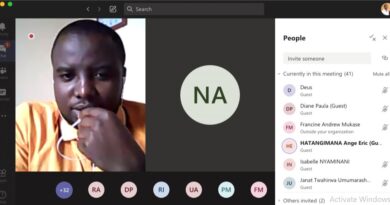
The call was made on Tuesday November 24, 2020 by Jean Damascène Ndabirora Kalinda, program director in GLIHD during the workshop with duty bearers on Human Rights Treaty Reporting.

The workshop aimed at presenting the survey conducted by GLIHD on the impacts of Covid-19 on Human Rights Whereby Education and Health were much affected.
It brought together various Ministries including the ministry of justice.
“With the Covid-19 aspect, right to education was compromised, as civil society, our role is doing research-based advocacy and work with the government to support the most affected communities by participating in classrooms construction and more.” he said.
During the lockdown, children from the families with enough financial capacity managed to follow the lessons on Televisions or mobile smart phones but others from vulnerable rural communities failed to manage the situation, which Jean Damascène said is a child’s basic rights that were not met.
“There is a need to increase efforts in sustainable and affordable ICT; we recommend the government (the ministry of ICT and the Ministry of Education) to avail such mechanisms in order to cope with future unexpected situations such as Covid-19 by investing in ICT infrastructure.” He noted.
Health sector affected
“Covid-19 targeted our health; we do recommend the health sector to have preparedness and proactive mechanisms for future capability to cater for human health when it comes to adapting to unexpected situations that can endanger lives of the people.” He added.
A citizen speak out
“When officials announced that students will follow lessons on Radio, Televisions and Internet, my three children didn’t immediately adapt. I had no Television neither Radio. I had a feature phone which has Radio which they could use but not every time because I use it in business. They didn’t follow lessons accordingly,” Eveline Nyirahabimana, a mother from Musanze district spoke about Covid-19 impact.



Leave a Reply