
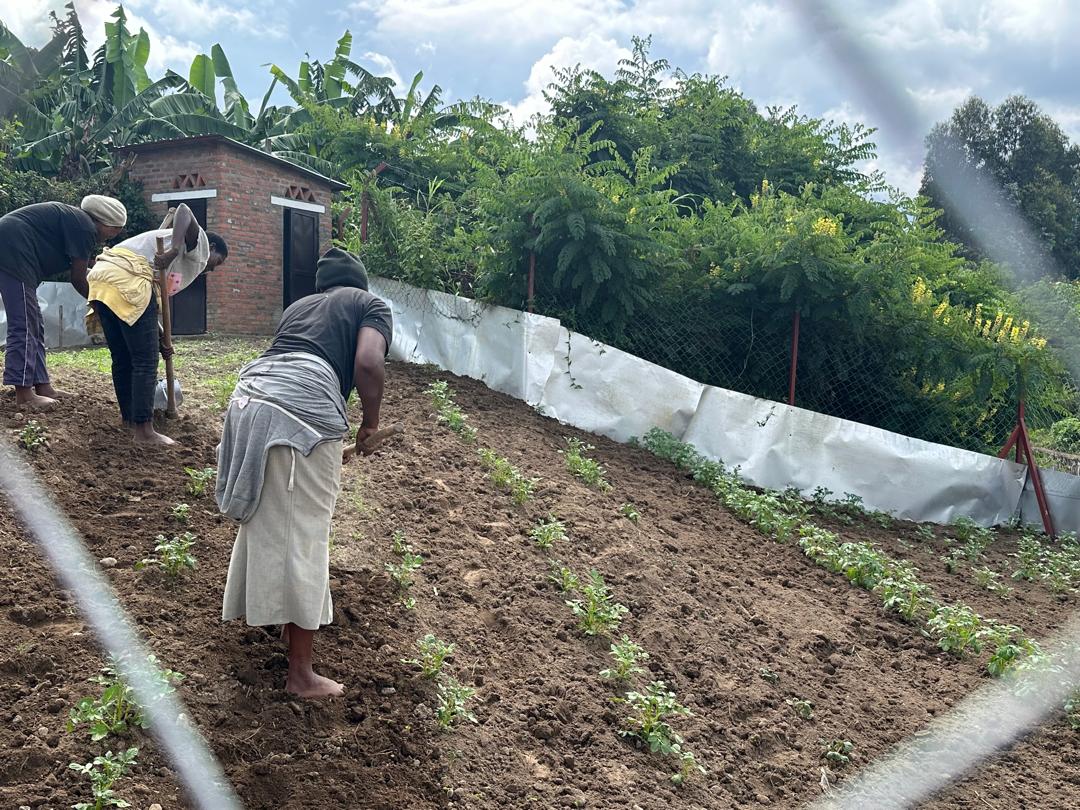
Can GE potatoes help Rwanda grow more with fewer pesticides?
By Elias Hakizimana.
When Rwanda’s first improved Irish potato varieties were released years ago, farmers across the highlands embraced them for their high yields and resilience.
Now, researchers are exploring the next leap — genetically engineered (GE) potatoes designed to resist late blight, the devastating fungal disease that forces farmers to spray pesticides up to 12 times a season.
Genetically engineered (GE) potatoes are plants modified by precisely inserting genes from wild potato relatives to provide resistance against late blight disease without introducing foreign DNA from unrelated species.
For many smallholders, this shift could mean more than just healthier crops. It could mean lower production costs, better harvests, and fewer risks from pesticide exposure.
Late blight has stalked potato fields in Rwanda for decades, often wiping out entire crops when weather conditions turn wet and cool.
Farmers like Virginie Nyiranambajimana in Musanze District know the struggle all too well.
“We have to spray almost every week during the rainy season,” he said. “If you miss just one application, the disease can destroy everything.” Young farmer Nyiranambajimana told The Inspirer.
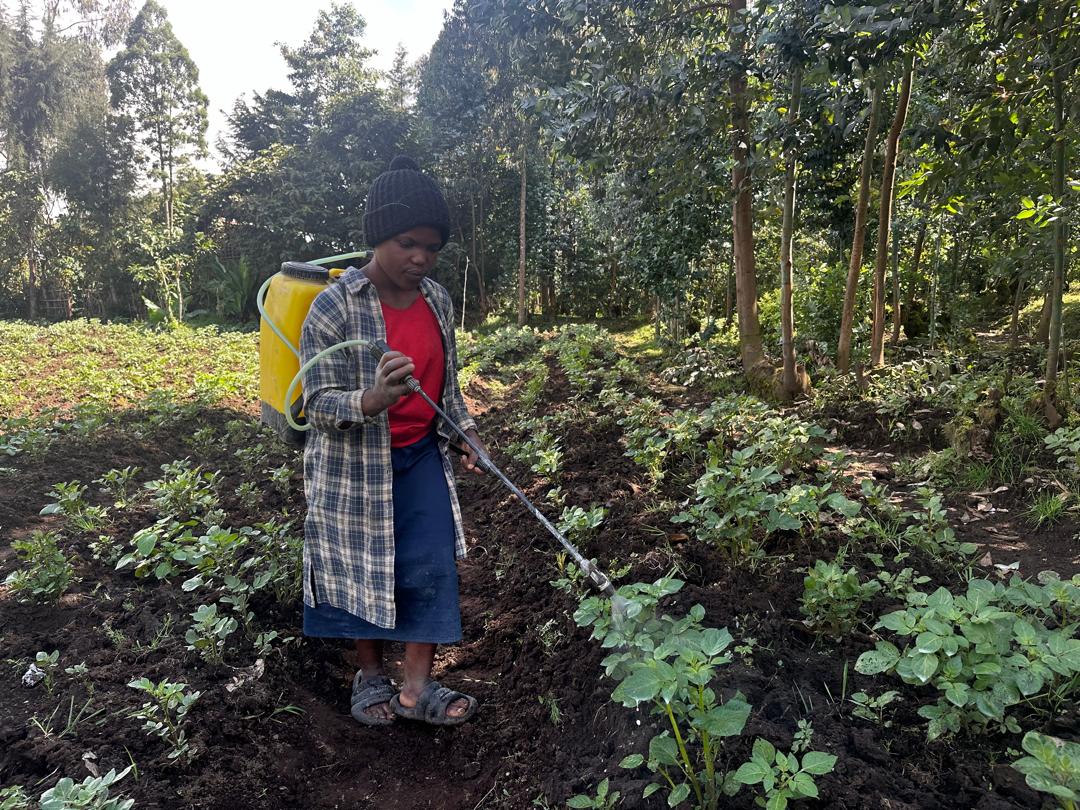
Pesticides are expensive. For a small-scale farmer, the cost can consume a large share of expected income, and chemical exposure poses health risks.
According to Rwanda Agriculture and Animal Resources Development Board (RAB) scientists, GE potatoes with built-in resistance genes could cut fungicide use by up to 90 percent.
The Science behind the promise
GE potatoes are developed through precise insertion of genes from wild potato relatives that naturally resist late blight. This differs from traditional breeding, which can take a decade or more and often transfers unwanted traits along with desired ones.
Dr. Athanase Nduwumuremyi, a senior researcher at RAB and Rwanda’s coordinator for the Open Forum on Agricultural Biotechnology (OFAB), explained:
“These GE potatoes carry only the resistance genes we need. That means farmers can get the same taste, texture, and yield they know — but with far stronger disease protection.”
Field trials in other African countries, including Uganda and Kenya, have shown promising results. Researchers hope Rwanda’s regulatory process will allow for local trials soon.
Farmer economics in focus
Rwanda’s potato farmers face high production costs, largely from fungicide purchases and labor for spraying. Eliminating most of that expense could change household economics.
A RAB cost-benefit model estimates that late blight-resistant GE potatoes could increase net farm income by 25–40 percent compared to conventional varieties. This comes not just from reduced pesticide spending, but also from more reliable yields and less crop loss.
For farmers like Nyiranambajimana, that could mean paying school fees on time or expanding production without taking on debt.
Global experience, local caution
GE potatoes are already in commercial use in the United States and parts of South America. They have undergone food safety and environmental risk assessments by international and national regulatory bodies.
Still, Rwanda is moving carefully. The country has biosafety laws requiring thorough review before any GE crop is released. This includes environmental risk assessments, food safety evaluations, and consultations with farmers and consumers.
“We cannot rush. Science must lead the way, and the public must understand the benefits and safeguards,” Dr. Nduwumuremyi said.

Looking beyond the farm
GE potatoes could also reduce environmental pesticide runoff into streams and wetlands, helping protect water quality in the volcanic highlands where most potatoes are grown. This aligns with Rwanda’s climate resilience and sustainability goals.
Lower fungicide use could also lessen the carbon footprint of potato farming, as manufacturing and transporting pesticides contributes to greenhouse gas emissions.
In Nyabihu District, farmer cooperative leader Vestine Mukamana sees potential but wants assurance.
“If the potatoes are safe and give us good harvests without all these chemicals, we will welcome them,” she said. “But we need clear information from the experts, not rumors.”
Building that trust may be the biggest challenge. Past debates over biotechnology in Africa have often been shaped by public perception rather than technical data.

The road ahead
Before GE potatoes reach farmers’ fields in Rwanda, they must pass national biosafety review, be tested under local growing conditions, and be accepted by consumers and markets.
For now, RAB researchers are working with partners in Uganda and Kenya to share trial results and prepare for eventual local testing.
“Our goal is simple: give farmers a potato that yields well, tastes the same, but doesn’t demand so much spraying. That is good for farmers, consumers, and the environment.” Dr. Nduwumuremyi says.
If successful, GE potatoes could mark a turning point for one of Rwanda’s most important staple crops, bringing science from the lab to the land in a way that directly touches farmers’ lives.
theinspirerpublications@gmail.com



Leave a Reply