

Beyond Connectivity: Community Advocacy Dialogue Demands Safer, More Affordable Internet for Rwanda’s Underserved Communities
By Elias Hakizimana.
Young Rwandans, Internet experts and members of the Internet Society community have called for more affordable connectivity, stronger digital skills and greater participation in Internet governance as Rwanda seeks to expand its digital economy.
The call was made during an interactive evening session held at the Kigali Marriott Hotel on Monday, August 10, 2026, ahead of the three-day Africa Community Advocacy Workshop taking place in Kigali from August 11 to 13. Officially designated as “Day 0: Local Community Immersion and Advocacy Dialogue,” the session was convened under the theme “Strengthening Our Collective Voice for the Internet.”
Bringing together more than 50 participants, the event served as an open and collaborative space. Attendees included Internet Society Rwanda Chapter members, alumni of Internet Society online learning programmes, Fellowship, community advocates, and Internet Society global staff, all reflecting on the critical role local communities play in advancing an open, globally connected, secure, and trustworthy Internet.
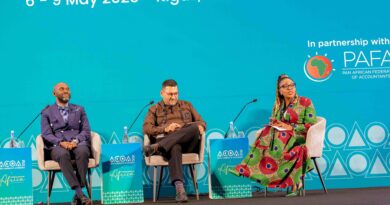
 Participants attend the community advocacy dialogue in Kigali ahead of the three-day Africa Community Advocacy Workshop.
For young people in attendance, one of the key concerns remains unequal access to reliable and affordable Internet, particularly outside the capital city.
Munyangeyo Kwizera Eloic, an undergraduate student at the Adventist University of Central Africa (AUCA), pointed out that while connectivity is generally high-quality in Kigali, it can be significantly weaker in rural regions, such as parts of the Eastern Province.
“Here in Kigali, the Internet is generally very good. However, I live in the Eastern Province, and there are certain areas where the Internet connection is very poor,” Eloic said. He noted that poor connectivity directly impedes young people’s ability to access online education, essential information and business opportunities, with slow speeds and constant buffering making it extremely difficult to follow online coursework.

Eloic also advocated for more affordable Internet packages tailored for young people, arguing that many are still students or job seekers who cannot easily afford expensive data tariffs. “I would like to see the government work with Internet service providers to find ways of reducing prices and making Internet access more affordable for young people,” he said.
He further urged youth to utilize social media and other digital platforms to organize, share knowledge and collectively advocate for issues affecting them, emphasizing that a stronger, unified online voice can help elevate local concerns to the attention of national policymakers.
Olaf Kolkman, Principal – Internet Technology, Policy and Advocacy at Internet Society who addressed the gathering, emphasized that Rwanda’s digital development priorities must extend beyond basic access. “I would look at the Internet Society’s priorities: making sure people are connected and making sure that they are ‘safe and sane’ once they are connected,” Kolkman said.
He identified these core elements, alongside digital skills, as the three pillars of a robust digital economy: connectivity, skills, and online safety. According to Kolkman, connectivity must be expanded to underserved communities and made economically viable, while local populations require technical training to maintain infrastructure, connect devices, and develop relevant digital services.

Kolkman cited existing capacity-building programs conducted through a partnership between the Internet Society and AUCA, noting that more than 5,000 people have been trained. This growing pool of talent, he said, is equipped to maintain local digital infrastructure, develop localized content, and create new entrepreneurial ventures.
He also stressed the necessity of online safety, stating that users must develop critical skills to distinguish trustworthy information from misleading content and navigate the digital environment securely and responsibly.
On the dialogue’s core theme of a collective voice, Kolkman pointed to global and local forums such as the Internet Engineering Task Force (IETF) and the Rwanda Internet Governance Forum (RWIGF) as vital venues where diverse stakeholders can active shape the Internet’s evolution. “You need to be in the room together in order to bring out all the information and perspectives,” he remarked.
He warned that the digital divide remains a primary threat for Rwanda and other African nations, especially as technological capabilities and resources risk becoming heavily concentrated in wealthier regions. “We need to make sure that the digital divide does not broaden between the African continent and the rest of the Global South on one side and the G7 countries on the other,” Kolkman cautioned.

Emmanuel Mfitumukiza, Chairperson of the Internet Society Rwanda Chapter, explained that the session was specifically designed to connect community advocacy fellows with the Rwanda Chapter members and foster a meaningful exchange among fellows, alumni, chapters, and global leadership before the formal three-day workshop commenced. Through these interactions, the expected outcome was for participants to identify key advocacy lessons and emerging opportunities from local and regional Internet policy discussions to inform their own advocacy initiatives.
The gathering featured an interactive ‘Ask Me Anything’ (AMA) session with Olaf Kolkman and other Internet Society staff, providing a unique platform for participants to exchange ideas, pose questions, and explore how collective advocacy can support the vision of an Internet for everyone.
Additionally, the session celebrated the ongoing impact of training and e-learning programmes supported by the Internet Society Foundation, with a strong emphasis on Network Operations implemented by AUCA and Online Trust and Safety led by ISOC Rwanda.

Mfitumukiza highlighted the value of these informal, high-level exchanges, which allowed participants to learn directly from experienced global professionals and establish relationships. “It was important to create that initial connection before the formal training begins,” he said.
These rich discussions successfully set the stage for the subsequent three-day Africa Community Advocacy Workshop, where participants continued to explore how young advocates, technical experts, civil society, and other stakeholders can collaborate to build an inclusive, secure, and trustworthy Internet.

theinspirerpublications@gmail.com



Leave a Reply