
A Taste of Brazil, a Reflection of Rwanda: When Culture Becomes Diplomacy
By The Inspirer.
At Brazil’s National Day celebration in Kigali, food, photography, sport, music and memory came together to create something more than a diplomatic evening.
Diplomats and officials exchanged the usual pleasantries. Brazilian food and drinks flowed generously, and the garden carried the warmth of a genuine celebration rather than a rehearsed one.
But there was also art, sport, music and, perhaps most importantly, memory.
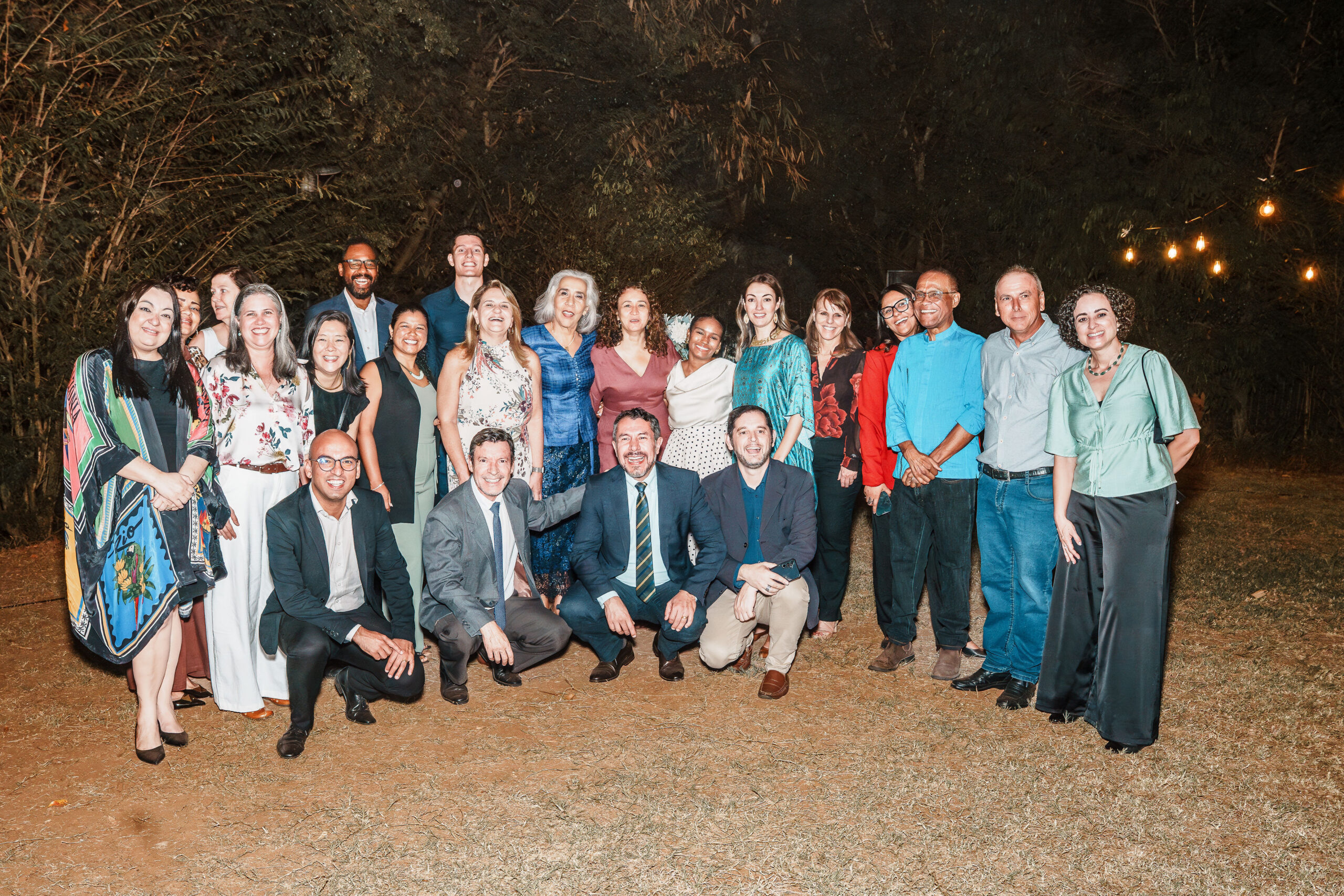
It was Brazil’s National Day celebration in Kigali, the first since Brazil opened its resident embassy — a milestone that arrived, fittingly, with a saxophone rather than a ribbon.

Minister Olivier Jean Patrick Nduhungirehe graced the occasion, speaking of the longstanding friendship between the two countries and reaffirming Rwanda’s commitment to deepening it.
On paper, it was diplomacy. In the garden, glass in hand, it felt much more human.
Cultural encounters have a way of doing what diplomatic language cannot. They work through what people eat, believe, celebrate and remember, rather than what they draft and sign.
The evening felt less like a diplomatic function and more like an invitation to taste, listen, look, meet and understand.
The food and conversations were part of the diplomacy. The art was perhaps its most eloquent voice. And it was there, before the toasts and speeches, that the evening had already begun its own quiet conversation.
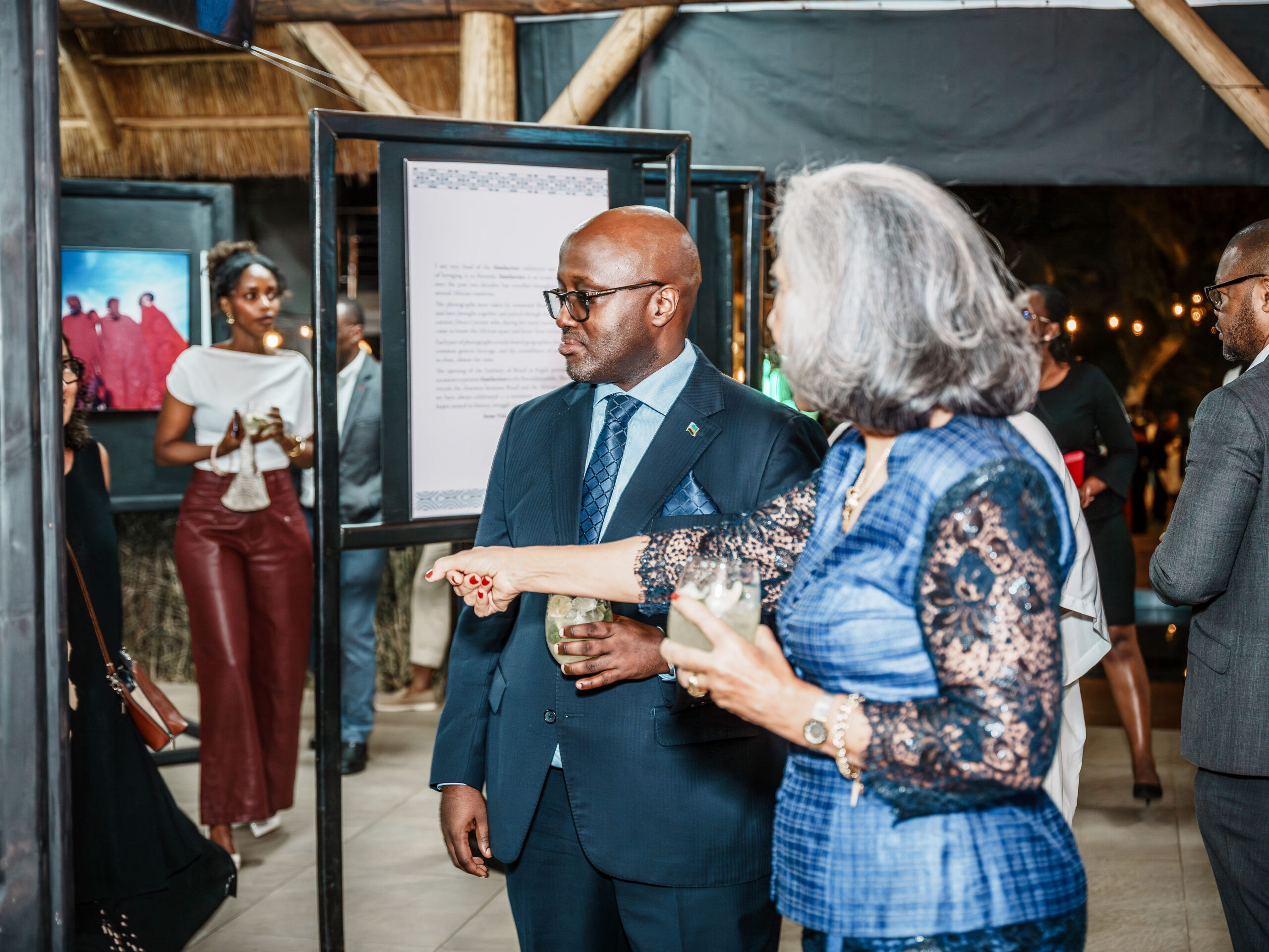
In one room stood a photography exhibition, curated by Darcee Carrion, built around a single, disarming question: what would Brazil be without Africa?
It sounds simple until one sits with it.
The honest answer is that Brazil, as the world knows it, would not exist at all.
The exhibition placed images from Brazil and Africa side by side, inviting the eye to notice what policy papers rarely capture: a rhythm, a gesture, a way of grieving or celebrating that echoes across an ocean and centuries.

Brazil’s culture carries enormous African influence — in music, religion, food and the architecture of community itself.
Candomblé and Umbanda carry West and Central African spiritual traditions. Capoeira carries resistance disguised as dance. Samba carries rhythms older than Brazil’s own borders.
Not sameness, but connection.
Brazil and Africa do not share identical histories, but they share echoes — the centrality of music, the resilience of people and the power of storytelling.
To ask that question inside a Rwandan residence was itself an act of humility.
Brazil was saying, in effect: before we tell you who we are today, let us show you who made us.
Somewhere between the photographs and the food, a young man, Matheus Bettim, stood up to speak.
What he did next said more about Brazil–Rwanda relations than any communiqué could — and rather more than most guests expected.
A volleyball player brought to Rwanda to strengthen one of the country’s top clubs, he was invited to say a few words.
He did it in Kinyarwanda, catching more than a few diplomats mid-sip.
Not a borrowed greeting, but Rwanda’s mother tongue delivered as though it were simply his own.
He speaks of Brazil the way anyone speaks of the place that raised them. But he now speaks of Rwanda that way too: the club that became family, the language he chose to learn, the city that stopped feeling foreign.
Two homes, not one traded for another.

It is what all the diplomatic language in the world reaches for — bilateral cooperation, people-to-people ties — described, in the driest words, by one young man standing up and speaking Kinyarwanda.
He let a second country claim him, and claimed it back. No treaty required.
Ambassador Irene Vida Gala spoke warmly of the good relations between Brazil and Rwanda.
The ties are still young, since the Kigali embassy only recently became a resident mission, but already warm enough to survive a Rwandan sun and a long guest list.
She said she had a dream: that one day a Brazilian team would carry the Visit Rwanda logo, the way some of the world’s biggest clubs already do.
It is a model Rwanda has used for years to put its name before audiences it could otherwise never reach, sleeve by sleeve.

Less a plan than a hope spoken aloud, it is the kind of ambition built where treaties cannot reach — in a young athlete’s decision to speak a second language as though it were his first.
But the most profound part of the encounter was not at the residence.
It was at the Kigali Genocide Memorial, where Brazil brought an evening of peace and reconciliation featuring musicians Derico Sciotti and Jeff Sabbag.
Their music deserves to be understood, not just heard.
Sciotti began his musical life at five, trained in flute under respected classical teachers, and by his teens was winning international competitions.

A genuine multi-instrumentalist, he became known to Brazilian audiences through one of the country’s most beloved television programmes. His saxophone and flute became a familiar presence in millions of homes, played alongside some of Brazilian music’s biggest names.
Jeff Sabbag, the pianist beside him, is part of the circle Sciotti has performed with for years, weaving jazz, choro and Brazilian popular music into evenings that feel like conversations between old friends and their instruments.
In Kigali, the setting gave the music another meaning entirely.
This was not simply a festival. It was music brought into a place of remembrance — Brazilian instrumental tradition entering a Rwandan space of memory, where every note had to be chosen with care and respect.
Ambassador Irene understood that.
Hosting Brazil Day at the Memorial, she explained, was a way of honoring Rwanda’s past while respecting where Rwanda is headed.

Her message was simple and profound: “You can’t serve the people without understanding their history.”
International relationships can become obsessed with the future — trade, investment, tourism.
But countries are people, and people carry memory.
To engage Rwanda meaningfully is to understand what the 1994 Genocide against the Tutsi means to Rwandans, and the effort Rwanda has made to rebuild itself.
Bringing Sciotti’s saxophone and Sabbag’s piano into the Memorial was therefore a significant gesture.
It said: we want to celebrate with you, but first we want to understand you.
That is diplomacy with humility.
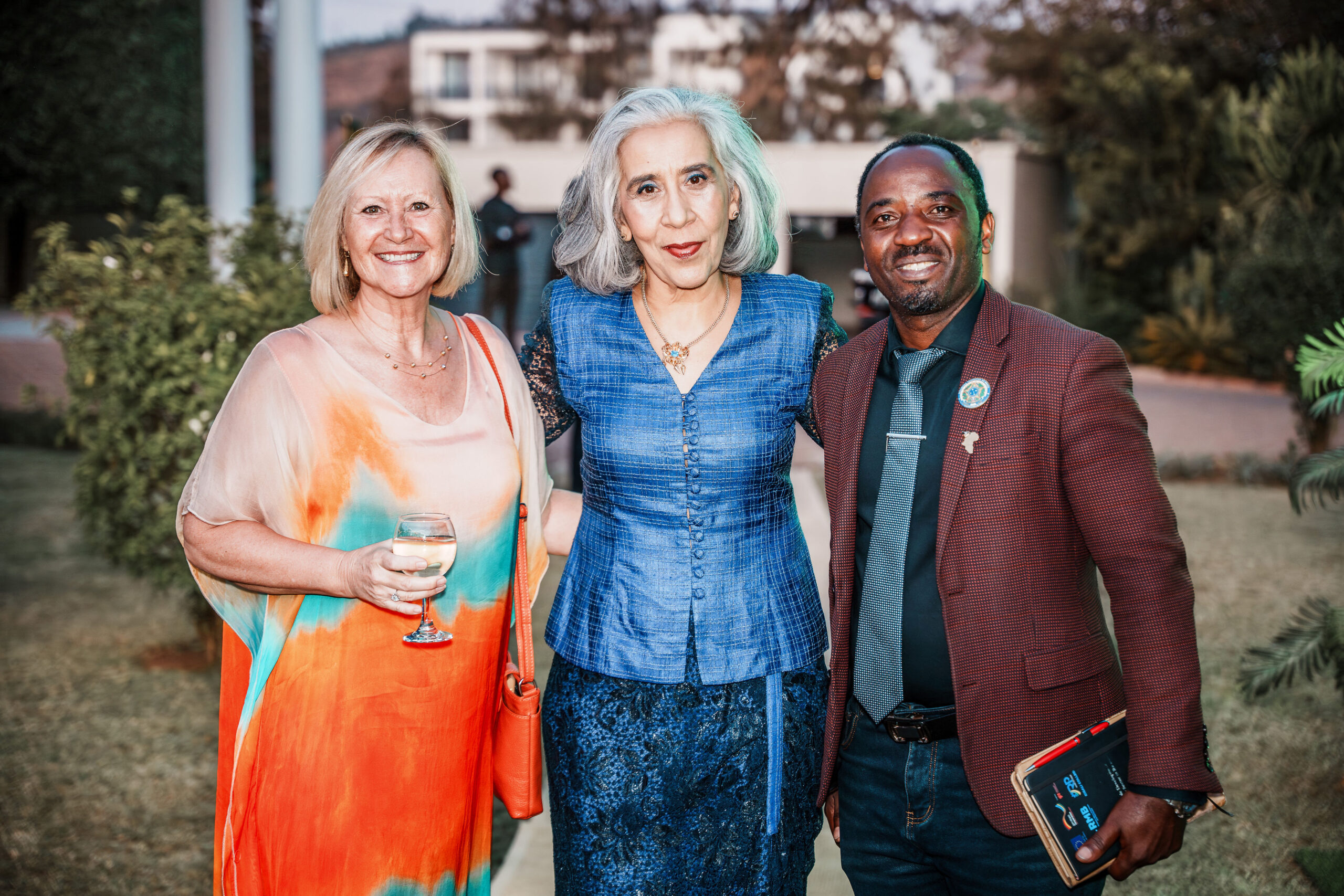
Freddy Mutanguha, who appreciated the decision to bring the festival to the Memorial, captured another dimension of the evening: “We don’t have the same history, but we share the same humanity.”
Brazil does not have Rwanda’s history, nor Rwanda Brazil’s.
Their wounds and journeys are different, and should remain understood in their own contexts.
But humanity gives them a place to meet.
Music, sport, food and stories can all meet there. Perhaps reconciliation can meet there too.
Mutanguha also thanked Ambassador Irene for the choice of venue — an acknowledgement that the Memorial was not simply another concert hall, but a place where memory was present.
Rwanda is increasingly positioning itself as a place where international relationships become partnerships.
It also stands to become a place where cultures encounter each other too.
More Rwandan and Brazilian writers meeting. More publishers exchanging books. More athletes moving between Kigali and Brazilian cities, the way this young volleyball player already has.
More tables. More stories. More music. More matches played for the joy of it.
And perhaps one more ambassador’s dream quietly ticked off a list.
This is not soft diplomacy in the sense of being unimportant.
It works through attraction, curiosity and trust — the foundation of almost every meaningful relationship, and considerably cheaper than a treaty.
Perhaps that is the diplomacy the world needs more of: not diplomacy that asks people to become the same, but diplomacy that teaches shared humanity while honoring difference.
One plate, one photograph and one very memorable speech in Kinyarwanda at a time.



Leave a Reply