
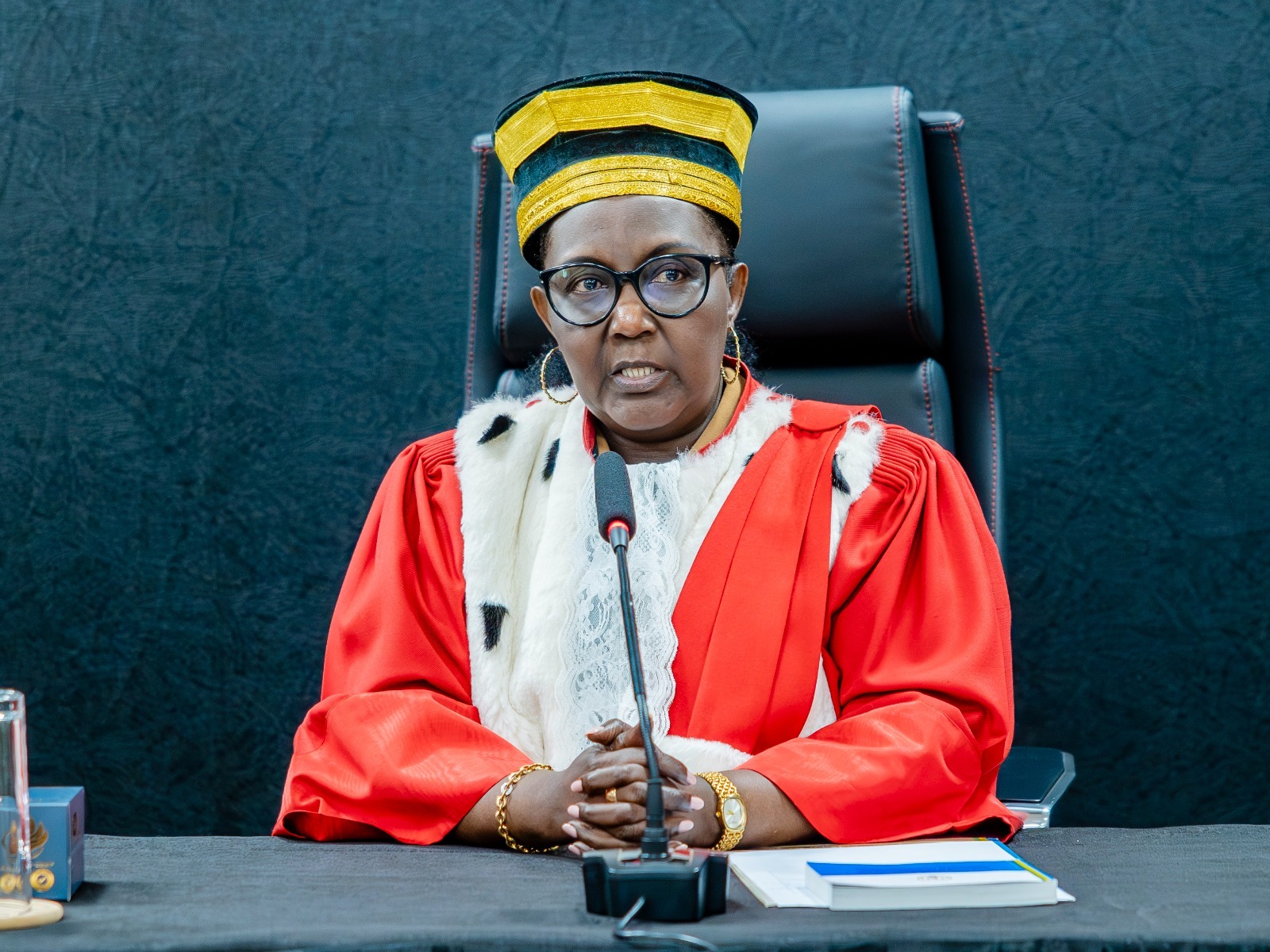
Chief Justice Mukantaganzwa calls for integrity and fairness in the judiciary
By Elias Hakizimana.
Supreme Court President Domitilla Mukantaganzwa has called on newly appointed judges and court registrars to uphold professional ethics, warning that corruption, favouritism and personal bias can undermine the delivery of justice.
Mukantaganzwa, who also chairs the High Council of the Judiciary, made the call on October 15, 2026, during the swearing-in of seven judges and eight court registrars taking up new responsibilities in primary courts.
She told the officials that their work directly affects citizens’ trust in the justice system, making impartiality and accountability essential to their daily responsibilities.
“Rwandans expect justice that is free from personal feelings, corruption in all its forms and favouritism,” she said, stressing that judicial officers must put professional duty ahead of personal interests.

The Chief Justice pointed to cases of misconduct involving members of the judiciary, saying some officials had faced consequences over corruption, favouritism and poor performance. She urged the new appointees to learn from such cases and maintain high standards in their work.
She also encouraged them to consult their supervisors whenever they face legal or procedural questions rather than risk making errors that could affect the rights of people appearing before them.
Mukantaganzwa singled out the responsibility judges carry when deciding disputes, cautioning them against attempts by litigants to influence proceedings or steer decisions away from the merits of a case.
A judge who lacks integrity, she said, risks making decisions that favour the wrong party, with consequences extending beyond the individuals involved.
Such errors can also generate further litigation, placing additional pressure on the courts, including the Supreme Court, she added.

Beyond the decisions they make, judicial officers were reminded of the importance of how they treat court users. Mukantaganzwa urged them to provide timely services, communicate respectfully and avoid unnecessary procedures that make it harder for citizens to obtain justice.
She described primary courts as the foundation of Rwanda’s judicial system, noting that they handle many of the disputes brought forward by citizens. The performance of these courts, she said, has implications for the wider justice system, from intermediate courts to the High Court, Court of Appeal and Supreme Court.
The newly appointed officials were also encouraged to view their positions as an opportunity to serve the public with integrity. Mukantaganzwa said those who demonstrate professionalism and transparency could be considered for greater responsibilities within the judiciary.
She called on family members to support the officials as they take on their new duties, while respecting the boundaries of their professional roles and avoiding interference in their decisions.

Newly appointed judicial officers commit to better service
Some of the officials who took the oath said they intended to prioritise fairness, transparency and efficiency in their work.
Mukunzi Jean de Dieu, who has been assigned to Kagano Primary Court in Nyamasheke District, said he would focus on delivering well-reasoned judgments while avoiding corruption, favouritism and unnecessary delays.
He noted that delays can arise when cases are not handled promptly, leaving court users waiting longer for decisions and prolonging disputes that require resolution.
Ruseti Seraphine, the newly appointed court registrar, said listening to people seeking judicial services would be central to her responsibilities.
She said understanding what each person needs would help her provide appropriate assistance and improve the experience of those who come to court.
Meanwhile, Ntezimana Théophile highlighted reconciliation as an important element of justice in Rwanda, pointing to the country’s longstanding tradition of resolving disputes in ways that promote harmony among citizens.
The appointments come as the judiciary continues to emphasize professional conduct, timely service delivery and public confidence in the institutions responsible for resolving disputes and upholding the law.



theinspirerpublications@gmail.com





Leave a Reply