
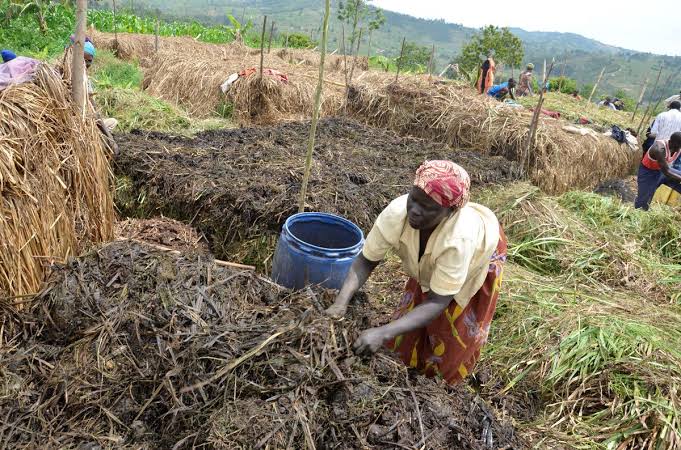
Rwanda urged to adopt dedicated law for organic farming
By The Inspirer.
The Rwanda Organic Agriculture Movement (ROAM) is calling for a dedicated law to regulate organic farming, saying it would help farmers access essential inputs and make it easier to get their produce certified for international markets.
The call was made during the third stakeholders’ consultation meeting that brought together farmers, development partners and government institutions involved in organic agriculture.
Organic farming is an agricultural system that avoids synthetic fertilisers and pesticides and instead relies on natural inputs, including materials derived from plants and livestock.
ROAM Executive Director Lise Chantal Dusabe said organic farming is becoming increasingly important despite the higher costs involved compared with conventional agriculture.
She said the sector has significant market potential both locally and internationally, but farmers continue to face challenges in accessing seeds, organic fertilisers, approved pesticides and other inputs needed for production.
Dusabe called for a specific legal framework that would regulate organic farming and support farmers in accessing the inputs they need.
“We want the government to continue supporting us and help establish a law governing organic agriculture. We want the law to make it easier for farmers who want to practice organic farming to access fertilisers, pesticides and other essential inputs so that they can increase production,” she said.
ROAM also highlighted the high cost of organic certification as another challenge limiting farmers’ access to international markets.
Dusabe said farmers seeking certification are required to pay about $10,000 annually, a cost she said is difficult for many producers to afford.
Muhire Gilbert, operations manager at Dukunde Ikawa Musasa Cooperative, said the certification cost is high, even though certified farmers can access better markets.
“The inspectors come from outside Rwanda, which makes the cost of obtaining certification high. We are calling for local inspectors to be established so that the cost can be reduced,” he said.
Jean Claude Izamuhaye, head of agriculture at the Rwanda Agriculture and Animal Resources Development Board (RAB), said organic farming can contribute to sustainable agriculture and strengthen the sector’s ability to respond to climate change.
He said organic agriculture is aligned with Rwanda’s priorities of increasing agricultural productivity, expanding markets and addressing the effects of climate change.
Izamuhaye added that the approach combines environmental conservation, traditional knowledge and science-based innovation.
He said organic agriculture is also aligned with the National Strategy for Transformation 2 (NST2) and the Strategic Plan for Agriculture Transformation 5 (PSTA5).
ROAM currently works with more than 12,000 farmers organised in cooperatives and smallholder groups.
Of these, 17 cooperatives have obtained certification allowing them to export organic produce to international markets, while two smallholder groups have obtained certification to sell their produce on the domestic market.
The certifications enable farmers to access markets that require produce to meet specific organic farming standards.
Organic agriculture began receiving greater attention in Rwanda in 2007, the same year ROAM was established.




Leave a Reply