
How valley tanks are transforming dairy farming in Eastern Province
By Elias Hakizimana.
Dairy farmers across Rwanda’s Eastern Province are reporting higher milk yields and healthier cattle as improved water infrastructure reduces the impact of recurring droughts that have long constrained livestock production.
In districts such as Nyagatare and Gatsibo, newly constructed and expanded valley tanks are helping farmers secure water for their animals throughout the year, cutting long treks in search of water and supporting a steady rise in milk production.
The interventions are part of the Rwanda Dairy Development Project Phase II (RDDP2), implemented by the Rwanda Agriculture and Animal Resources Development Board (RAB) with support from IFAD. The programme combines water infrastructure, dairy value chain support, and farmer training aimed at improving productivity and resilience.
 Cows grazing near improved water facilities, part of efforts to strengthen dairy farming in Rwanda’s Eastern Province.
From long treks to nearby water access
For dairy farmers like James Mutabazi in Matimba sector, Nyagatare district, water scarcity once dictated livestock survival.
“We used to lack water and take cows to Lake Akagera. Around 3,000 cows would come to drink here. A cow could reduce milk from 8 litres to 3 litres. Some cows would faint or die because they walked long distances,” he said.
He says the consolidation of several small damsheets into a single valley tank has improved reliability of water supply for livestock, especially during dry seasons.
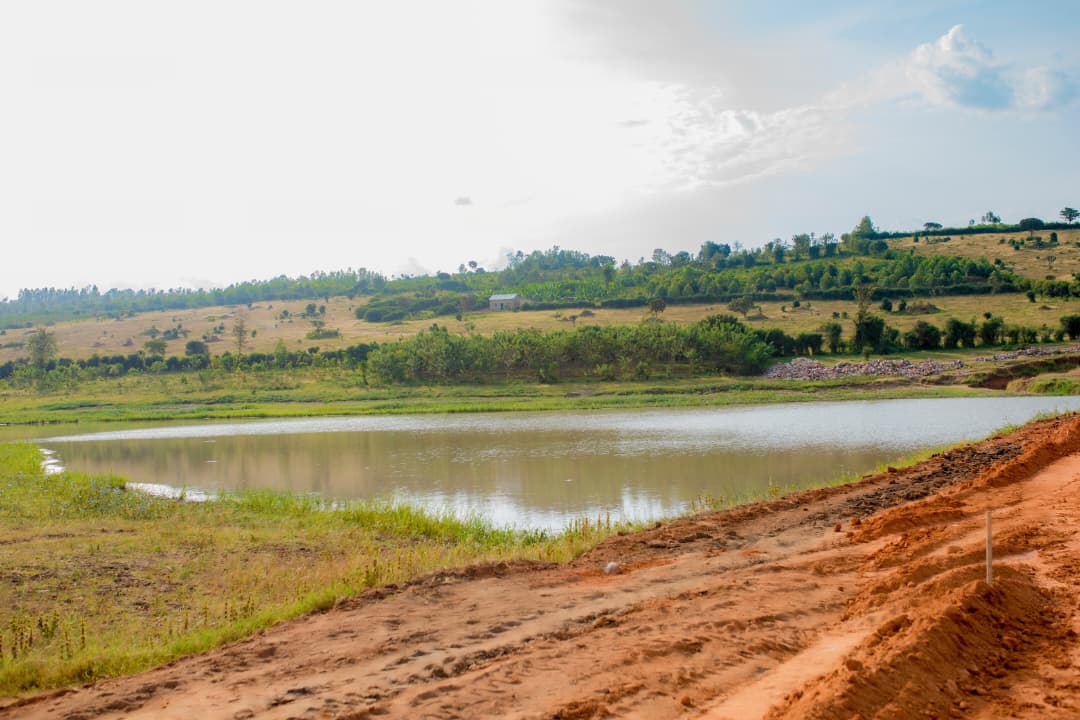
 A valley tank near completion in Nyagatare district.
Large reservoirs under construction and expansion
At the Bwera site, works on a major valley tank are nearing completion. Site engineer Wellars Ntawukuriryayo says the facility will hold 28,396.53 cubic metres of water once finished.
“We are finalising works and installing fencing. The project will be completed in about 40 days and will cost RWF 486 million,” he said.
In Rwiminazi, another reservoir is being upgraded from 31,000 to about 49,000 cubic metres. Site supervisor Jean de Dieu Bizimana says the expansion is designed to improve both livestock and domestic water access.
“We are also adding domestic water taps so people do not fetch water directly from the valley tank. The fence will protect both livestock and people,” he said, noting that the facility serves more than 20,000 cattle and is valued at over RWF 600 million.

Milk production and collection improving, but pressures remain
At MATWOKI Milk Collection Center, manager Gaspard Urutaboba says milk intake has increased as production stabilises.
“We collect about 6,300 litres per day in the dry season and up to 8,500 litres on other days,” he said.
The centre, established in 2005 and formally recognised in 2009, supports hundreds of farmers by linking them to markets and reducing post-harvest losses.
Urutaboba said the infrastructure has helped reduce milk spoilage, but added that production costs remain a challenge, particularly feed and labour expenses.
Farmers in the area also say the current price of around RWF 400 per litre is not sufficient compared to production costs, and have called for better pricing structures.

Higher yields and changing farming practices
Farmers say improved water access and training have contributed to noticeable changes in productivity.
Peter Muyambi from Rwiminazi village, Nyamatete cell, Rwimbogo sector says milk yields have improved significantly.
“Cows used to give one or two litres, but now they give 10 to 15 litres a day. A farmer with five cows can now get up to 50 litres daily,” he said.
He added that fodder training under RDDP2 has helped farmers maintain production throughout dry seasons.
“Before, cows used to starve during dry periods. Now we store fodder and feed them even in the dry season,” he said.
Farmers also note that fencing around valley tanks has reduced risks for both livestock and people, who previously fell into open water points.

District targets higher milk output through expanded support
Jean Leonard Sekanyange, Vice Mayor in charge of Finance and Economic Development in Gatsibo District, said RDDP2 has played a key role in improving both livestock productivity and household livelihoods across the district.
He said the project has distributed 150 dairy cows to farmers, with plans to pass on offspring to new beneficiaries, while also supporting fodder production and training 156 farmer facilitators who have helped train more than 3,000 farmers from 143 associations.
“The project has helped address one of our biggest challenges—fodder availability. Farmers around Rwimbogo, Kibondo and Ngarama milk collection centres have been supported to establish fodder plantations,” he said.

Sekanyange added that RDDP2 will soon renovate milk collection centres and provide subsidised chopper machines and damsheets to 50 farmers to improve feed and water management.
Gatsibo District currently produces about 60,000 litres of milk per day and is targeting 100,000 litres daily in the coming years. Officials are urging farmers to embrace dairy farming as a commercial enterprise by improving animal health, hygiene and fodder production, measures they believe will help drive the next phase of growth in the district’s dairy industry.
theinspirerpublications@gmail.com



Leave a Reply