
NUDOR leads national dialogue on strengthening disability-inclusive education data systems in Rwanda
BY PRINCE BORIS CYUBAHIRO
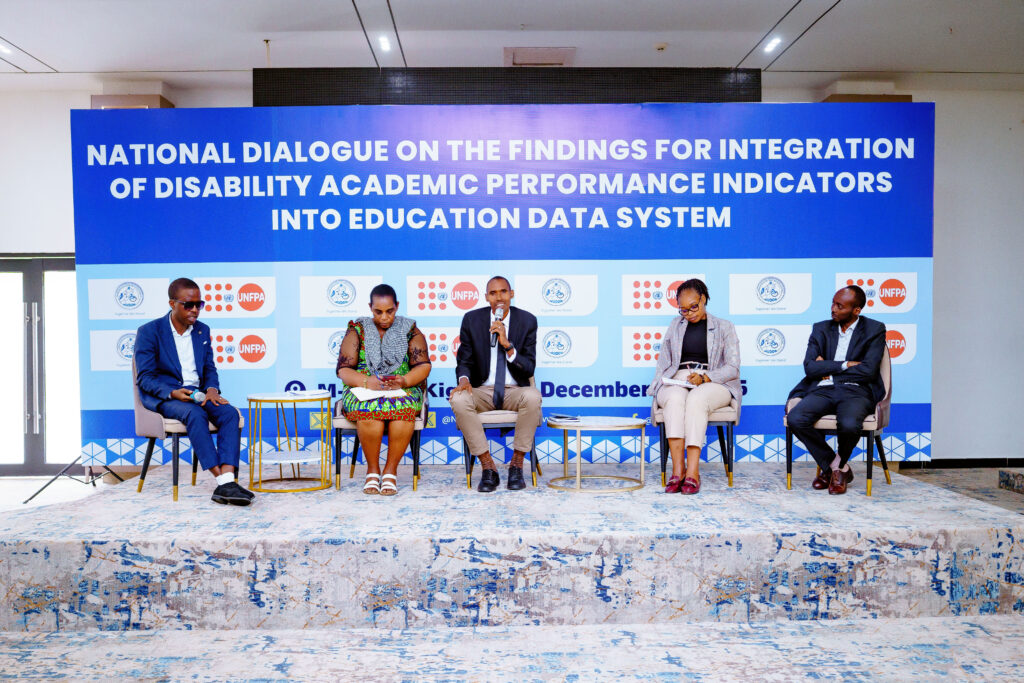
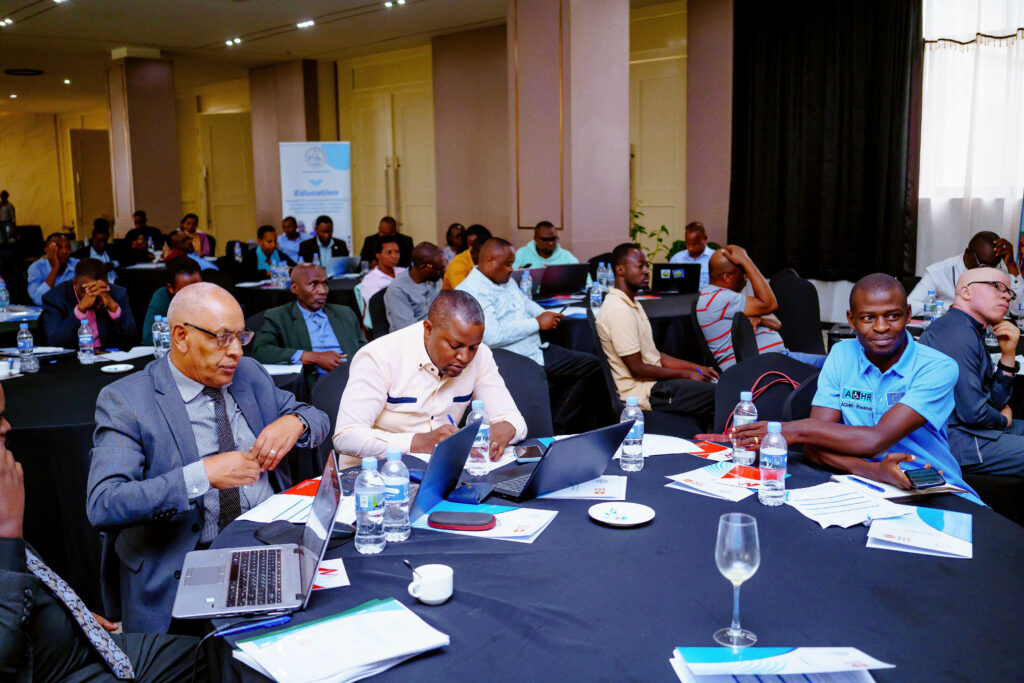
The National Union of Disability Organizations of Rwanda (NUDOR), through the UNFPA-supported KURA NAWE Program, convened a high-level national dialogue in Kigali to address persistent gaps in Rwanda’s education data systems related to learners with disabilities. The event brought together key government institutions—including REB, NISR, NCPD, Rwanda TVET Board, ICT representatives—alongside civil society, development partners, and organizations advancing assistive technology.
The dialogue aimed to present findings from a national assessment on how disability-inclusive academic indicators are integrated into the Education Management Information System (EMIS), and to raise awareness on the role of assistive technology, particularly within TVET schools, in improving learning outcomes for students with disabilities.
The assessment coordinated by NUDOR reveals that although Rwanda has made strong policy commitments to inclusive education, challenges remain in systematically capturing accurate and disability-disaggregated academic data. Indicators such as enrollment, attendance, retention, completion, and learning outcomes are inconsistently recorded across education levels.
Kamur Charles, the lead consultant behind the study, highlighted that the biggest barrier is the lack of reliable, harmonized data:
“Available numbers do not reflect the real situation. Schools and institutions struggle to identify learners with disabilities and to capture their support needs. Without accurate data, planning and resource allocation remain limited.”
Charles emphasized the need for disability-sensitive indicators to be standardized across MINEDUC, REB, NESA, RTB, HEC, and integrated throughout EMIS. He further noted that strengthening teacher capacity, providing assistive technologies, and increasing financial investment are essential for inclusive education to become a reality.
Representing NUDOR, Vice President Augustin Munyangeyo, a Deaf leader and RBC staff member, delivered a powerful message in sign language:
“This dialogue shows the challenges we still face. Children with disabilities must learn like all children, with equal opportunities. Policies exist, but implementation is still weak. We need decision-makers to take action so that inclusive education becomes practical, not just theoretical.”
He noted that the NCPD’s Disability Management Information System (DMIS) is a positive step forward, but without integration into school systems and strong accountability mechanisms, data gaps will persist. Munyangeyo also called for expanded access to sign language, tactile learning materials, and assistive devices, stressing that some schools “leave everything to God” when it comes to disability support—an attitude NUDOR hopes to change through continuous advocacy.

Representatives from Rwanda Assistive Technology Access (RATA) showcased locally developed digital solutions designed to help learners with disabilities perform at the same level as their peers.
Perlin Mujyambere, Head of HR, MEAL & Accessibility at RATA, explained:
“We create software, apps, and tools tailored to the Rwandan context—affordable, in Kinyarwanda, and designed to match the needs of people with disabilities.”
RATA currently runs two major projects focused on digital literacy for youth with disabilities and entrepreneurship support using computers and mobile phones. Outstanding trainees advance to coding bootcamps where they contribute to developing assistive apps.
Mujyambere appealed for stronger collaboration with MINEDUC and the ICT sector to scale up these innovations across schools.
TVET Schools Preparing to Embrace Inclusion
From the Rwanda TVET Board side, the dialogue highlighted how practical training institutions are preparing to welcome more learners with disabilities.
Barambanza Eldephonse, Principal of Kirehe TSS, noted:
“We currently have 12 learners with disabilities, but with support from NUDOR and local authorities, we are ready to receive nine additional students with various disabilities.”
He added that teachers have received foundational training on supporting learners with disabilities, and new disability-responsive curriculum adjustments are expected soon.
With participation from key government agencies—REB, NISR, NCPD, RTB, and ICT representatives—stakeholders reached consensus on the need for:
national standardization of disability-disaggregated academic indicators,
stronger integration of such indicators into EMIS,
improved teacher training and resource allocation,
expanded access to assistive technology,
and routine publication of disability-inclusive performance data.
This multi-sectoral alignment marks a significant step toward achieving SDG 4 on inclusive and equitable quality education.
Looking Ahead
NUDOR and partners closed the dialogue with a renewed commitment to ensure that every learner with a disability in Rwanda is counted, supported, and empowered to thrive. As the organization continues to drive advocacy, innovation, and collaboration, stakeholders expressed optimism that Rwanda’s education system is moving steadily toward becoming fully inclusive and data-driven.



Leave a Reply