
Tshisekedi draws red line on armed groups in DRC national dialogue
By Elias HAKIZIMANA
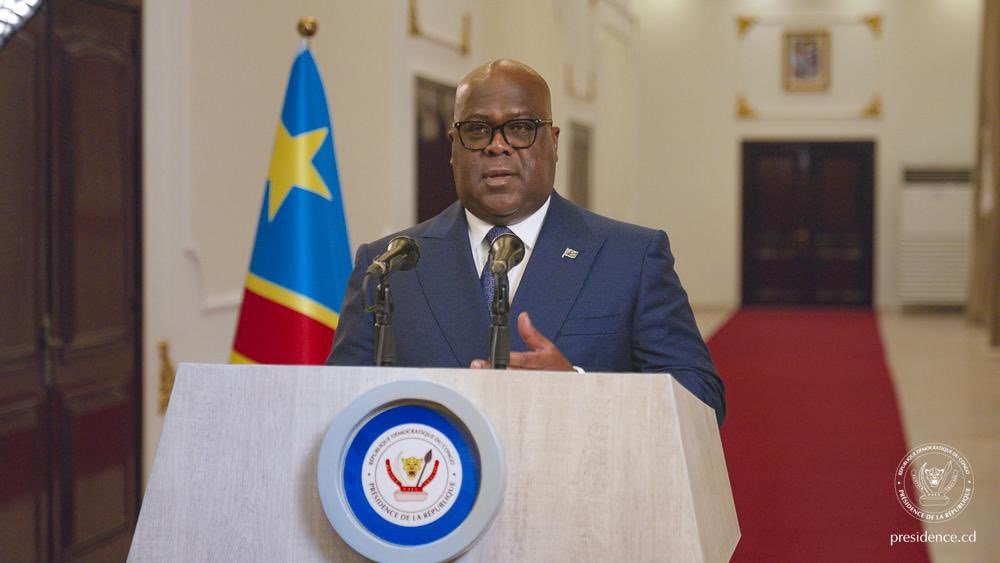
Democratic Republic of Congo President Félix Tshisekedi has drawn a clear line around participation in a new national dialogue, saying armed groups fighting the government will not be allowed to take part as political representatives.
Tshisekedi announced the position on Thursday, August 27, 2026, during a televised address to the Congolese people in which he launched the national dialogue process, designed to promote peace, national unity and reforms while addressing the country’s political and security challenges.
The dialogue will begin with consultations in all 26 provinces before culminating in a national forum in Kinshasa.
Tshisekedi said the process would not be used as a platform for negotiations with armed groups. Instead, he described it as an opportunity for citizens and representatives of different sectors of society to identify the challenges facing their communities and propose solutions.
He said individuals or groups that continue to challenge the constitutional order through armed force when the dialogue begins would not participate as representatives of political organisations.
The decision comes amid calls from sections of the Congolese opposition for the AFC/M23 alliance and former president Joseph Kabila to be included in the national dialogue. The AFC, the political wing associated with the M23 rebellion, and Kabila’s political platform have previously expressed reservations about the process.
Tshisekedi, however, said the national dialogue would not replace the separate peace process in Doha, Qatar, between the Congolese government and the AFC/M23 alliance.
He said the Doha process would remain the channel for addressing issues related to the armed conflict in eastern DRC.
The clarification comes as international efforts continue to address the conflict. A ceasefire monitoring mission began deploying in eastern DRC on August 24 under a Qatari-mediated peace agreement, marking the first field deployment under the agreement’s monitoring mechanism.
Dialogue to begin across 26 provinces
Tshisekedi said the national dialogue would begin in each of the DRC’s 26 provinces, bringing together local authorities, elected officials, politicians from different political sides, civil society organisations, religious leaders, traditional leaders, businesspeople, investors, academics, researchers and other representatives of society.
Women, young people, workers, people with disabilities, farmers, teachers, researchers, artists, health workers and people working in the informal sector will also be invited to contribute their views.
Each province will assess its specific challenges, including insecurity, land and customary disputes, community conflicts, weaknesses in governance, inequality and barriers to development.
The recommendations gathered at provincial level will then be consolidated into a single document that will form the basis of the national discussions in Kinshasa.
Tshisekedi said Kinshasa would not be the starting point of the process but its culmination, where ideas and recommendations collected from across the country would be brought together.
He said the entire dialogue process should not exceed three months.
However, no specific date has yet been announced for the start of the provincial consultations or for the final national forum in Kinshasa.
The national dialogue comes after months of calls from opposition groups, religious leaders and other political actors for broader talks to address the DRC’s deepening political and security challenges.



Leave a Reply