
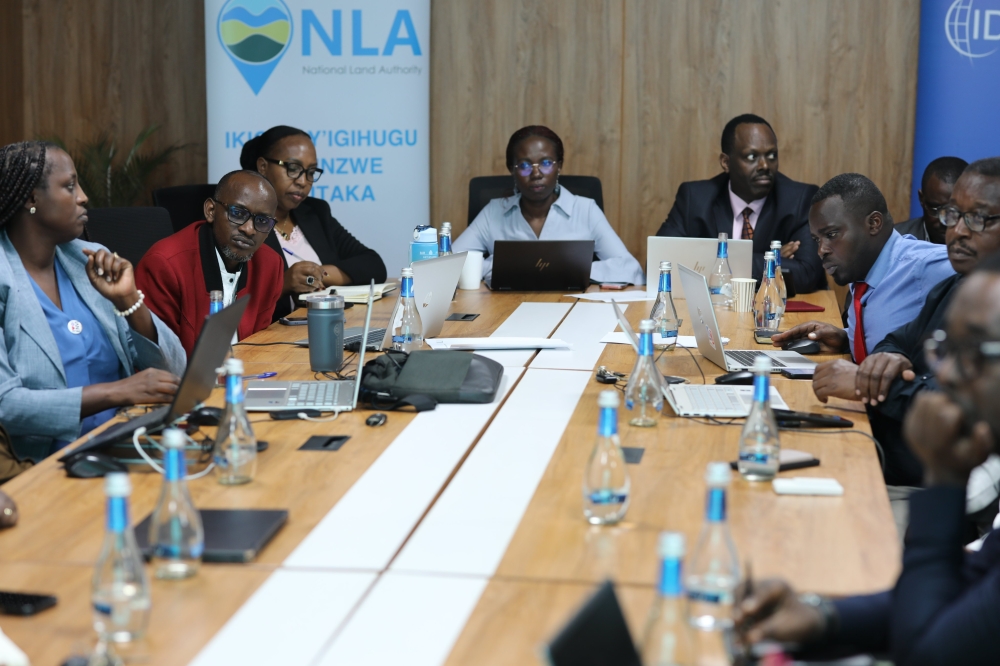
Rwanda Launches Digital Platform to Curb Land Disputes and Corruption
By The Inspirer.
The National Land Authority (NLA) has launched a digital platform that is set to revolutionize how land disputes are handled in Rwanda—ensuring faster, fairer, and more transparent resolution processes across the country.
Unveiled on June 20, the Land Disputes Management System (LDMS) replaces outdated, fragmented methods of filing land-related complaints, such as email submissions that often went untracked or ignored.
“Previously, people would submit land-related complaints via email, which often got forgotten among many others,” said Marie-Grâce Nishimwe, Director General of NLA and Chief Registrar of Land Titles.
“This new platform offers a dedicated, streamlined system to handle disputes related to land registration and boundaries on time. It is about transparency and giving people a reliable way to track and resolve issues related to their land.”
How the System Works
The LDMS enables citizens to file land complaints at the district level or within the City of Kigali. If dissatisfied with a decision, complainants can escalate the matter to the NLA.
However, if no appeal is made within 30 days, the district or city decision becomes final and enforceable.
Following pilot tests in Nyagatare, Bugesera, Musanze, and the City of Kigali, Nishimwe said the system is already functioning well and will be rolled out nationwide.
To support citizens unfamiliar with digital platforms, the NLA has deployed “digital ambassadors” in 16 districts, with a plan to expand to all 30. Each cell—the smallest administrative unit in Rwanda—will soon have an ambassador to assist people in accessing online land services.
“We’re working to ensure no one is left behind as this digital transformation must be inclusive,” Nishimwe said.
System Features and Impact
The LDMS comes with user-friendly features, including real-time case tracking, secure document uploads, and remote access to case status updates—boosting public confidence in the system.
Sylvain Muyombano, Head of the Land Administration Department, noted that land officers have been trained to assist with cases involving land parcels lacking a Unique Parcel Identifier (UPI), helping standardize data before it’s entered into the system.
“Some residents used to reopen resolved cases just because the official handling them had been replaced. Now, every case will be digitally recorded and followed through transparently,” Muyombano said.
A Tool Against Corruption
For Odette Yankurije, Deputy Ombudsman in charge of preventing injustice and corruption, the LDMS is not just a technical tool but a crucial step in the fight against favoritism and bribery.
“Digital systems reduce physical contact, and where there is no physical interaction, corruption finds no room,” Yankurije said. “This platform ensures timely service delivery and builds trust in public institutions. We also recommend extending training to Irembo agents, who often serve citizens at the frontline.”
Rising Demand, Inclusive Ownership
The LDMS comes at a time when Rwanda’s population is projected to grow from 13.2 million in 2022 to about 16.3 million by 2032, increasing demand for land and requiring more efficient dispute resolution mechanisms.
With 11.9 million land parcels registered in Rwanda, land ownership remains dynamic and inclusive, with 49 percent of parcels jointly owned by spouses or business partners, 19 percent solely owned by women (equivalent to 2.2 million parcels), and 11.6 percent solely owned by men (1.3 million parcels). State entities hold approximately 2.2 million parcels, while other categories of ownership include business companies with 34,656 parcels, cooperatives with 3,355 parcels, and foreign nationals owning 40,164 parcels.
As the digital transformation of land management deepens, the government aims to ensure that all Rwandans—regardless of location or tech-savviness—can access their land rights transparently and equitably.




Leave a Reply