
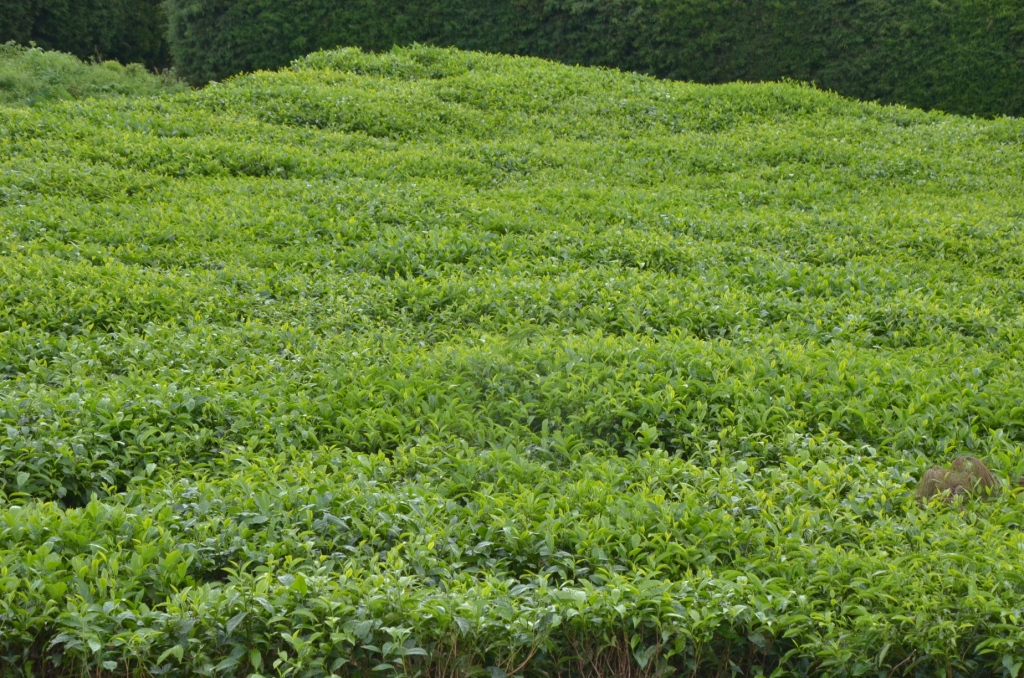
40 Million New Tea Seedlings to Be Planted to Boost Export Production
By The Inspirer.
The National Agricultural Export Development Board (NAEB) has announced plans to plant 40 million tea seedlings across Rwanda, both on new land and as replacements for older plants, to increase the country’s tea production.
Tea is one of Rwanda’s major cash crops, generating over $114 million in revenue during the 2023/2024 fiscal year from 38,467 tons of processed tea. As part of the five-year agricultural acceleration plan (PSTA 5), set to conclude in 2029, Rwanda aims to reach $175 million in revenue from 58,600 tons of processed tea.
To achieve this goal, NAEB is implementing a government-backed program to revamp tea farming, supported by the PSAC Project, which focuses on aiding small-scale farmers who export crops by helping them boost both quantity and quality of their produce.
The PSAC Project operates in the Western Province’s Karongi, Nyamasheke, Rutsiro, and Nyabihu districts, in addition to Nyaruguru in the Southern Province and Rulindo in the Northern Province. Over the next four years, the project will focus on replacing aging and underperforming tea plants and expanding cultivation to new land, aiming to increase both the volume and quality of Rwandan tea exports.
Through the PSAC Project, farmers will receive nearly 40 million seedlings for free, which will be planted over 2,410 hectares. In the first year, seedlings will be planted on 910 hectares, including 600 hectares of new tea fields and 310 hectares where old plants will be replaced.
NAEB reports that preparations are underway for the first year of the initiative, with 8,538,000 seedlings ready and a target of 19,934,000 seedlings by October 2025, when the planting is set to begin.
To support farmers in achieving higher yields and quality more quickly, tea farmers within the PSAC Project areas, through their cooperatives, will also receive 2,260,000 agroforestry trees to be planted across 2,042 hectares of tea fields. These trees will help improve soil fertility, retain moisture, provide shade, and prevent erosion.
Farmers will additionally be provided with vehicles to transport their produce to factories, digital scales for weighing tea leaves, and data storage systems for production records. Continuous training will also be offered through farmer field schools to help farmers improve their practices.
Alexis Nkurunziza, Head of Traditional Crop Development at NAEB, stated that these reforms will increase tea production in Rwanda while improving the livelihoods of citizens. “This reform aims to boost tea production, which will elevate the overall living standards of tea farmers, as well as the youth and women organized in groups to prepare the seedlings to be planted over the next four years,” he said.
Currently, Rwanda has over 50,000 tea farmers organized into 23 cooperatives across the country.
theinspirerpublications@gmail.com





Leave a Reply