
Breaking Barriers: Women Excel in Technical Engineering, Defy Stereotypes
By Elias Hakizimana.
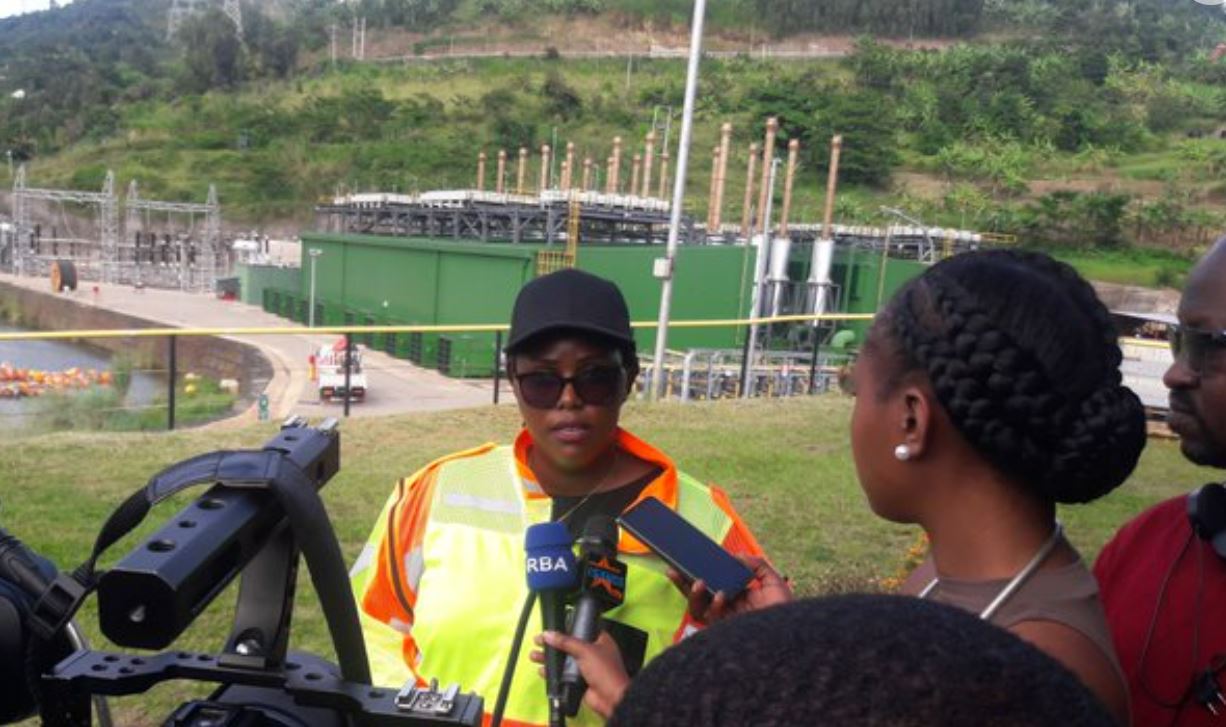
Women are proving their mettle in technical engineering roles just as effectively as their male counterparts, as evidenced by the testimony of Solange Munezero, a Process and EHS Manager at SHEMA POWER LAKE KIVU.
Munezero, a mother of two, oversees operations at a private company tasked with generating 50 megawatts of electricity from methane gas, under contract with the Rwandan government.
Operating in Rubavu district, the company boasts a pivotal role in Rwanda’s energy landscape.
Joining the company in 2018, Munezero brought with her a background in mechanical engineering. Initially, she didn’t expect to find herself working predominantly alongside men. However, her experience at SHEMA POWER LAKE KIVU has been one of support and inclusivity.
She acknowledges the care she received as a female employee, particularly during her maternity leave, which allowed her to balance her career with motherhood seamlessly.
Despite the common apprehension among women towards technical professions, Munezero encourages them not to be deterred. Drawing from her own journey, she emphasizes the importance of curiosity, asking questions, and maintaining confidence.
Her success story challenges stereotypes and serves as a beacon for aspiring female engineers.
Munezero’s role demands both power and persistence as she navigates the complexities of her job. Her motivation stems from a desire to contribute to national development, a sentiment shared by many women breaking barriers in male-dominated fields.
Message to girls and women
“My message to girls and women is simple: don’t be afraid. Engineering is a fantastic career choice. I believe I can serve as a testament to this, having thrived in my role since I began as a process and chemical engineer in 2018. I encourage women and girls to nurture their curiosity, ask questions, and embrace confidence,” Munezero affirms.

In Rwanda, efforts to promote gender equality in the workplace are underway. Initiatives like the “Gender Equality Seal Certification,” spearheaded by the Gender Monitoring Office (GMO) in collaboration with UNDP, UN Women, and the Private Sector Federation (PSF) through Rwanda Standards Board (RSB), aim to foster a culture of gender equality and inclusivity. Participating companies, both public and private, are encouraged to embrace these principles for the betterment of society.
Munezero’s story is emblematic of the transformative power of gender equality initiatives. As the sole expert in mechanical engineering at her firm, she underscores the value that women bring to the table.
Her perspective on gender equality emphasizes equal opportunities for both genders, instilled in her from childhood by supportive parents.
Maximilien Byilingiro, General Manager of SHEMA POWER LAKE KIVU, reflects on the impact of Munezero’s appointment. He recalls her entry into a predominantly male environment and her subsequent success, challenging stereotypes along the way.
Byilingiro acknowledges the need for greater female representation within the company and outlines measures to achieve this, including outreach programs aimed at inspiring young women to pursue careers in engineering.

“I was surprised when Solange joined us. In the male-dominated field of engineering, her presence stood out. At SHEMA POWER LAKE KIVU, where most were foreigners, we Rwandans, especially women, were few. To match the performance of our foreign counterparts, we adapted. Munezero emerged as the standout female performer. She even got married during our time here and continues to excel,” Byilingiro reflects.
Despite efforts to recruit more female engineers, SHEMA POWER LAKE KIVU still only boasts a 14 percent female workforce. The low number of female applicants in recruitment exams contributes to this disparity.
“We typically see only 2 out of 10 candidates being female. We hope to see this number increase to at least 50 percent or more. Gender balance fosters diverse perspectives and enhances collaboration in the workplace,” Byilingiro remarks.
Efforts to bridge the gender gap extend beyond recruitment strategies
Emmanuel Gatera, Manager National Standards Division at RSB highlights the importance of the Gender Equality Seal Certification in shaping equal opportunities and capacity-building for both genders.
This certification serves as a benchmark for companies striving to create inclusive work environments, aligning with Rwanda’s broader policy framework on gender equality.
“As Rwanda continues its journey towards gender equality, initiatives like the Gender Equality Seal Certification offer a roadmap for progress. By fostering collaboration between government, private sector, and civil society, these efforts aim to create a more equitable society where individuals are judged by their abilities rather than their gender.” Gatera says.
theinspirerpublications@gmail.com




Leave a Reply