
Nyagatare: Dairy produce doubled in 5 years
By Elias HAKIZIMANA.
Dairy farmers from different sectors in Nyagatare say the milk produce doubled five years ago as new holistic interventions have been put in place to boost this Agriculture sub-sector.
Testimonies present the efforts of the Rwanda Diary Development Project (RDDP) implemented by Rwanda Agricultural and Animal Resources Board, through the Single Project Implementation Unit (RAB/SPIU) under the International Fund for Agriculture Development (IFAD) that has invested Rwf 65 billion to boost dairy production countrywide, having its big part in Nyagatare from 11 remaining districts.
Livingstone Abingoma, a model dairy farmer from Karama village, Karama cell, Karangazi sector in Nyagatare district has 21 cows, including 4 lactating cows that give 50 liters of milk per morning every day from 23 Liters recently.
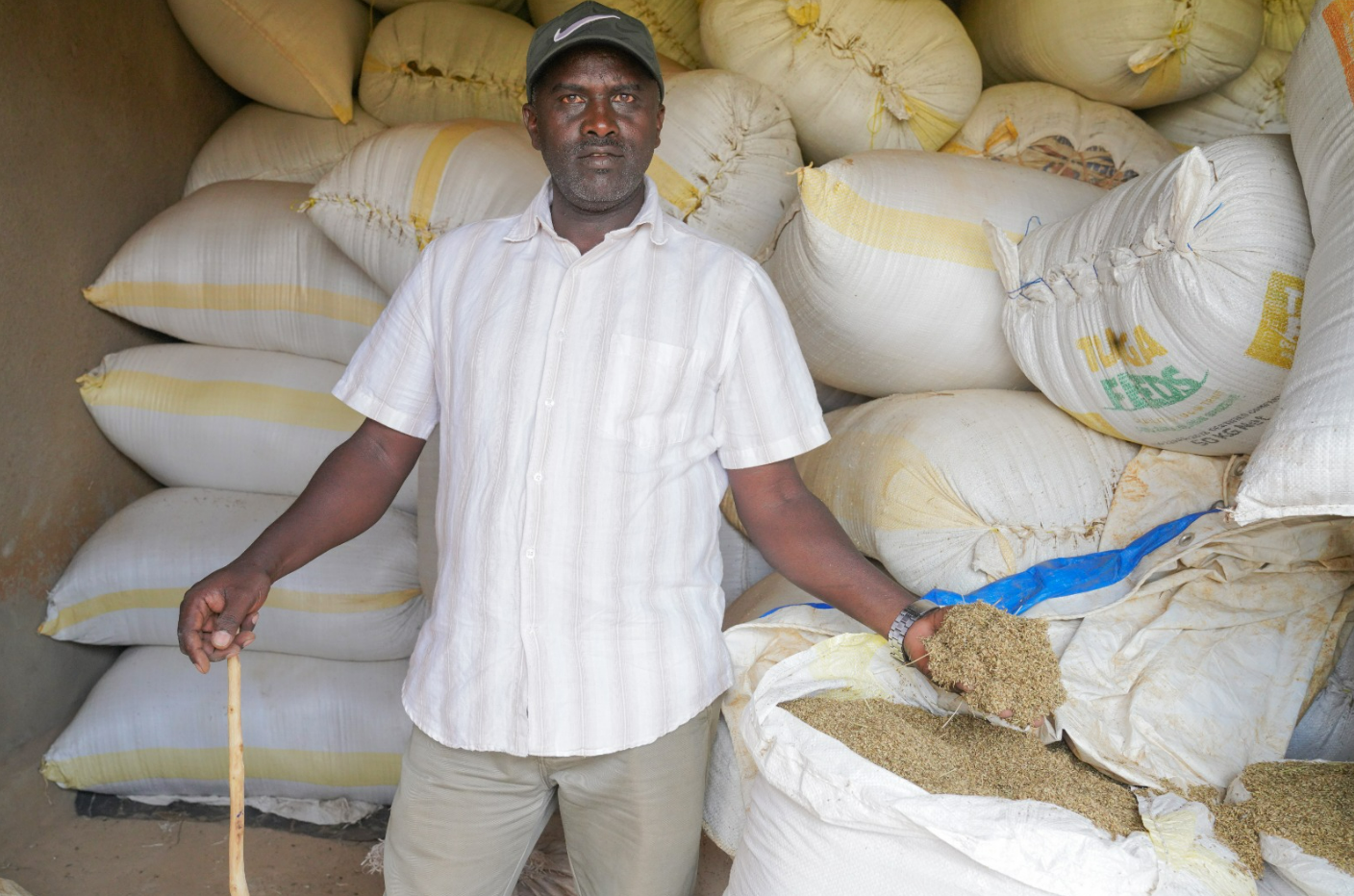
He says that before the RDDP project provided him with training via Livestock Farmer Field School (LFFS) and different seed varieties of grasses, plus knowledge and materials to keep water for cows, he was raising organic cows that could only generate 2 to 2.5 liters of milk each.
“Before the interventions of the project, the milk produce could vary between 12 to 15 liters in the morning and 8 liters in the evening, after learning from the mistakes through LFFS programme, planting 4 nutritious varieties of grasses and having boreholes to keep water for cows, plus grass storage skills, my cows now generate 50 liters every day,” Abingoma says.
Improving livelihood
This farmer adds that his livestock project improved livelihood for his family as it helps him to pay school fees for three children at the University of Kigali, and other three children in secondary schools.
“At the beginning I did not have even a bicycle, but I managed to buy an AG 100 motorcycle brand and a double cabin car to ease transport of milk at the Milk Collection Center (MCC).” He adds.
Abingoma has 8 hectares land size, of which 4 ha occupies Livestock activities, 1 ha for family accommodation and 3 ha for Agriculture activities to feed the family.

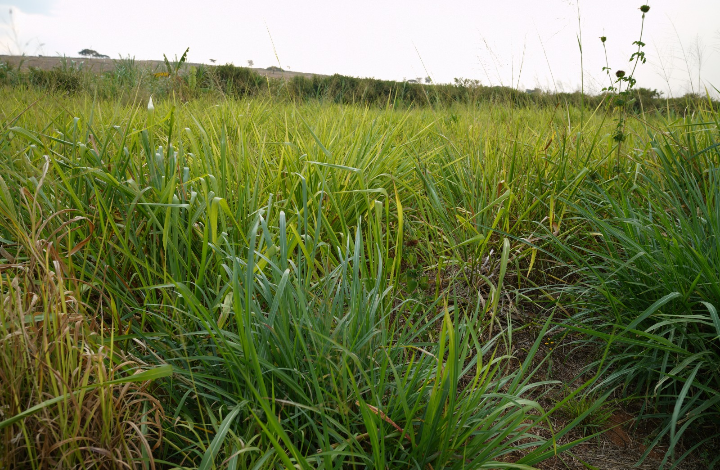
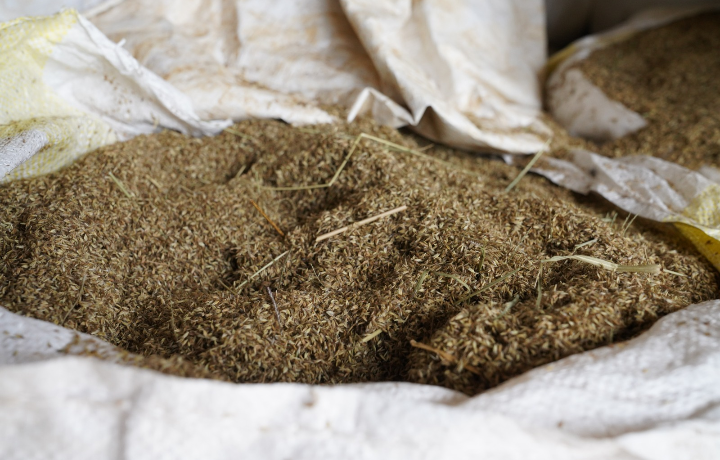
He grows 4 varieties of grasses including Kakamega, Mucuna, Lablab and Cororis gayana. He says he helped other farmers to replicate the best practices of the projects under the LFFS program.
Abingoma has ordered for other dairy cows and plans to produce over 200 liters of milk per day in the next couple of years.
Apart from milk produce, he can also sell the steams and ingeri of grasses, plus sec chopped grasses that also generate over Rwf 3 million.
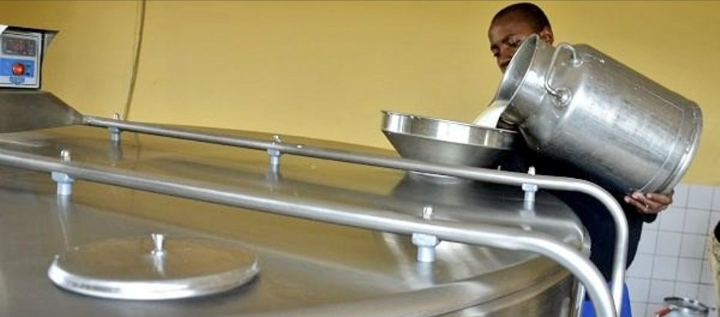
The project through its investment in milk collection and processing infrastructure has booted a competitive and sustainable dairy value chain and climate proof existing and new infrastructures such as drainage systems, tiling of floors to ease cleaning process and hygiene, and increased number of rainwater harvestings facilities.
Water for cows near farmers
Steven Rugema, a farmer from Karangazi sector says the milk produce increased because cows no longer make long journeys to seek for water.
“Before, we could make 8 to 10 kilometers from Kamati to Rwabiharamba borehole to drink water, some could die from the stress. 10 lactating cows could provide 20 liters of milk, which has increased to 100 liters now,” Rugema says.
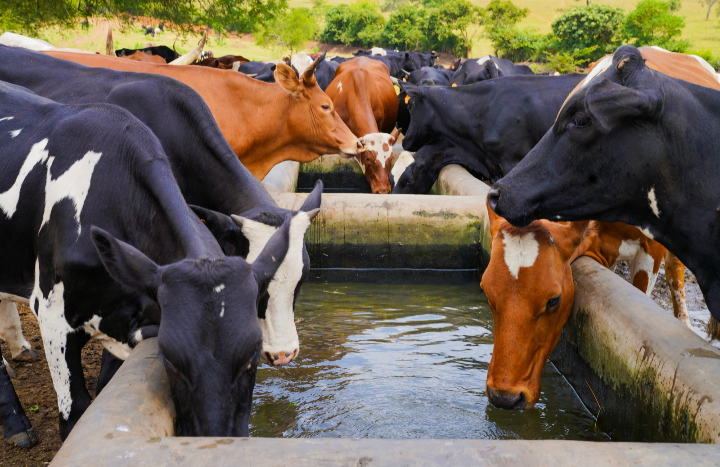
George Gahinde, another farmer from Karangazi reiterates that long distance to get to the boreholes of water could affect dairy produce, noting that the produce has increased from 40 to between 80 and 100 liters of milk over the last five years.
Seth Kayijuka, a farmer and Social Affairs in-charge of Kamati cell in Karangazi sector says that RDDP interventions boosted dairy produce and put in place a good infrastructure maintenance to preserve the achievements.
According to Alex NDAGIJIMANA, RDDP Operations Manager, the project helped to renovate 64 Milk Collection Centers (MCCs) including 16 MCCs in Nyagatare; and to enable them store and treat milk with cooling system by connecting them to electricity.
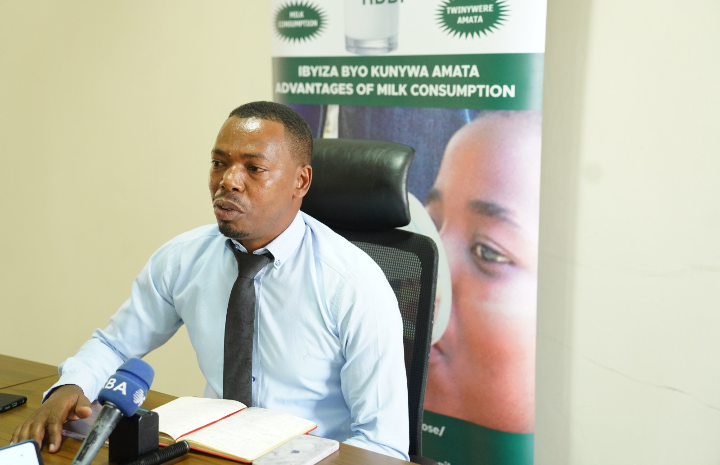
“Around 7 years of the project implementation, we have trained farmers on best livestock farming practices to get enough and quality milk, we provided them with improved seeds of grasses and tried their productivity through demonstration plots with the support of over 765 trained farmer volunteers,” he says,
The RDDP was initiated in 2017 and is set to close by December 2023. Its first closing section aimed at increasing dairy produce and the next step will focus on the use of ICT.
theinspirerpublications@gmail.com
Follow us @theinspirerpubl


Leave a Reply