

Elderly persons call for Government to establish international conventions on their rights
By Elias HAKIZIMANA.
Older persons under NSINDAGIZA Organization call for the Government of Rwanda and other Governments across Africa and the globe to set up the international conventions on the rights of aged people.
The call was made on Thursday, March 2, 2023 in Nyarugenge District, Kigali city by members of NSINDAGIZA and retired medical experts as well as other older people during a special round table meeting with government officials, UN Agencies, Civil Society and representatives of older persons who shared ideas on the Right to Health and Access to Health Services and Social Inclusion among other topics.
The meeting objective was to identify the barriers older people face towards enjoying their right to health, discuss about the role of older people, UN agencies, CSOs, Governments and NHRIs in the process to ensure quality services for all, and advocate for the UN Convention.

The move also coincided with the week-long campaign dubbed: ‘Age with Rights Global Rally Campaign 2023’. The Global Rally, which is considered a key part of the Age with Rights campaign and second Global Rally in 2023 will is taking place over the course of the week from 27th February to 5th March 2023 ahead the 13th meeting of the Open-ended Working Group of the Basel Convention (OEWG-13) due to take place from 3rd to 6th April 2023 in New York.
The OEWG is one of the subsidiary bodies of the Basel Convention and, among other things, assists the Basel Convention Conference of the Parties (COP) in developing and keeping under continuous review, the implementation of the Convention’s work plan, specific operational policies, and decisions taken by the Conference.
Speaking at the meeting, Elie Mugabowishema, president of NSINDAGIZA Organization said that lack of international conventions on the rights of older persons accelerates ignorance of support to these people, yet they need care and support from the communities.

“We are here to tell the government, elderly people, CSOs, media, private sector, academia and UN Agencies to work jointly to establish the international conventions on the rights of older persons. Rwanda and other governments need to understand the role of this convention,” Mugabowishema said.
Older persons appreciate that some policies that give them rights to be taken care of have been established in many countries including Rwanda, but caution the implementation.
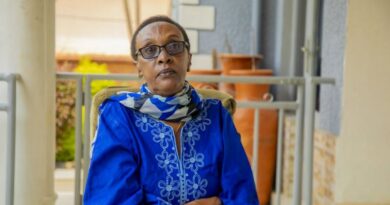
Aurélie Gahongayire, Commissioner at National Commission of Human Rights (NCHR) says that the Government of Rwanda has made a tremendous step by setting a policy for older persons, reflecting their rights to healthcare, and laws that protect them.

“We will continue to follow up on the implementation efforts of this policy and its contents. Last year 2022, our government signed the African charter on the rights of older persons, with the articles relating on health and welfare. But, implementation of either the existing policy or other agreements requires a long journey, policy voting takes a process for an analysis and inputs by different entities and people,” Gahongayire said.
Boniface Rucagu, member of Rwanda Elders Advisory Forum advises Rwandans to not wait for the international convention to be established, rather, to cater for older persons as valuable grandparents.

“We should not wait for the international convention on the rights of older persons to be, because elderly people are ours, and we should not expect to get lessons from elsewhere. We should help them, take care of them and help them well in their aging periods as provided by the Rwandan culture,” Rucagu told The Inspirer.
He added that for a couple of decades, older persons used to be respected, valued, loved and helped.
“After this round table meeting, we are going to approach concerned ministries and ask them if we should wait for the convention to cater for our people,” Rucagu added.

Health of the elderly persons
Joyce Murenzi, a lecturer at the University of Rwanda’s College of Medicine and Health Sciences said that an older person needs to be assisted and informed about his or her illness by a healthcare provider, but remains a victim of lack of enough medical personnel who do not have time to give efficient service to everyone from the queue.
“Besides the government’s intervention to increase the number of students we teach, there is a need of a special rule to give priority to older persons to be served before others,” She advised.

An older person is defined by the United Nations as a person who is over 60 years of age. However, families and communities often use other socio-cultural referents to define age, including family status (grandparents), physical appearance, or age-related health conditions.
According to the World Health Organization (WHO), the number of people aged 60 years and older was 1 billion in 2019, this number will increase to 1.4 billion by 2030 and 2.1 billion by 2050.
theinspirerpublications@gmail.com




Leave a Reply