

Local food and hygiene products producers decry costly packaging, certification
By Elias Hakizimana.
Local entrepreneurs who add value to food commodities including young entrepreneurs who are participating at Rwanda International Trade Fair (#RITF23) have raised that costly packaging and certification process are still hampering them to expand their production capacity and access to international markets.
They mention lack of enough capital, expensive raw materials and costly process to get a HACCP Standard certificate as the main threats to their businesses.
They say due to such challenges, they fail to increase their production capacity and take their products to international markets.
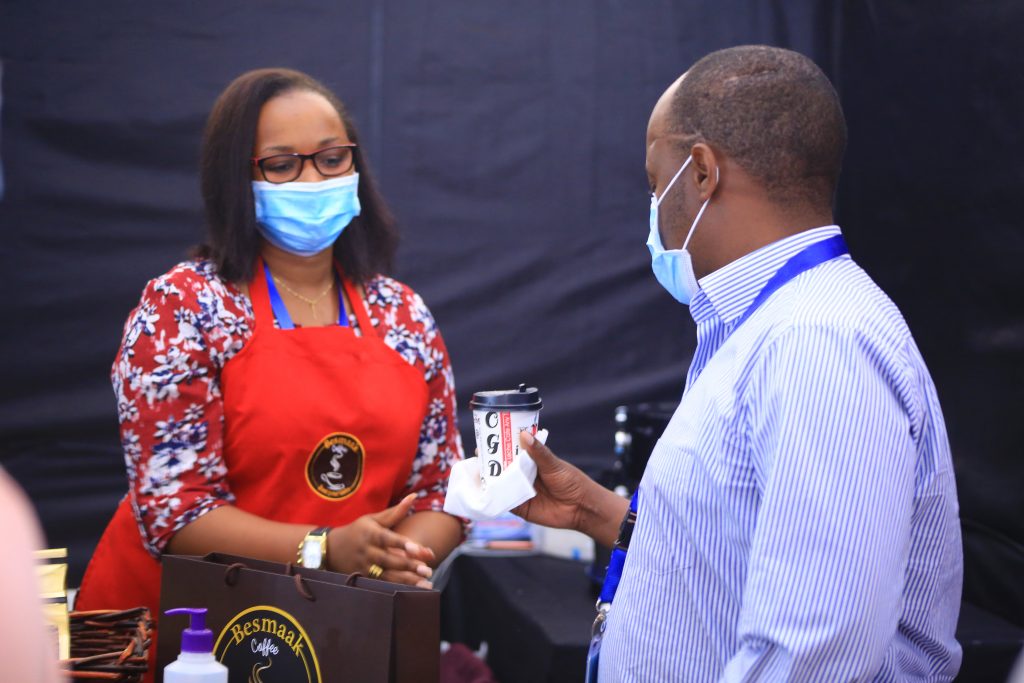
Nadege Uwamahoro, is the Managing Director of BRAIMPIRE company that produces Besmaak coffee since four years ago.
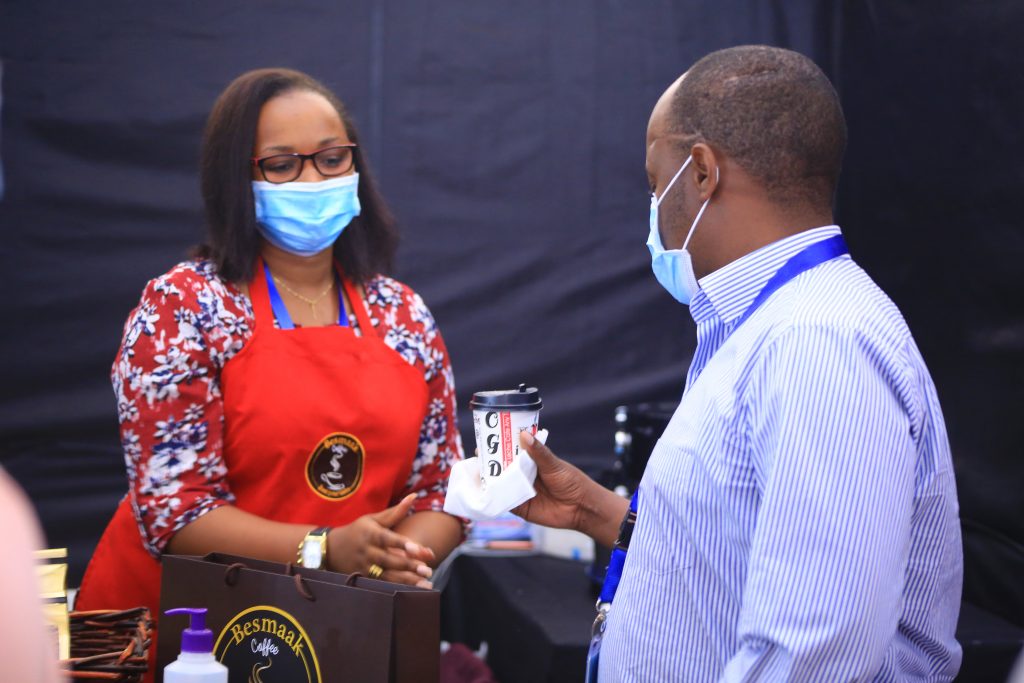
She said that the first challenge is lack of access to international markets as the process, time as well as the cost to get certificates of standards are still challenging them.
“We have challenges to access to international markets such as Europe, Asia and USA to showcase our products as startup companies. We still have challenges to get high level standards certification as it requires investing a lot of money and time to wait. We would request MINICOM, RSB and the government to find a way to advocate for a grant in place to help us tackle all those hindrances.” She said.
BINA Group is another company that produces nutritious porridge flour from locally grown cereals.
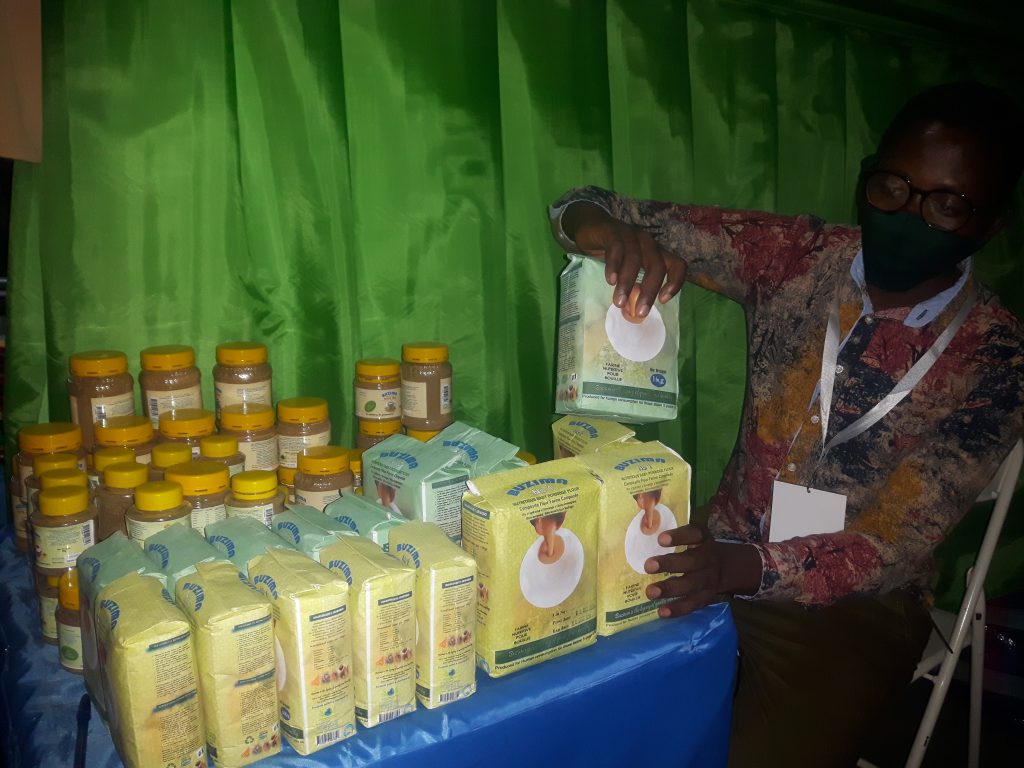
The company that started in 2018 also produces herbal tea.
Alphonse Nshimiyimana, CEO and Managing Director of BINA Group Ltd says they have not even got the local Standardization certificate (S-Mark) but they are in the process to get it.
“We are in Zamukanubuziranenge/basic standard progress but we still face the challenge of quality packaging materials due to financial constraints which leads us to fail to comply with standards guidelines. Rwanda Standards Board (RSB) promised to give us certificates of production while we still wait for the S-Mark” Nshimiyimana said.
This company that has a factory in Ruyenzi cell, Runda sector in Kamonyi District lacks standard machines to increase production, adequate production skills, efficient building infrastructure as well as vehicles for transportation . They work in three districts of Kigali City plus Kamonyi and Muhanga Districts.
Their production capacity per month is 3 tones.
Furaha Utamuriza, marketing, sales and distribution manager of Green Treasure Ltd that processes chili branded ‘Primo’ from Kimisagara sector in Nyarugenge District also raised an issue of packaging materials which are expensive.
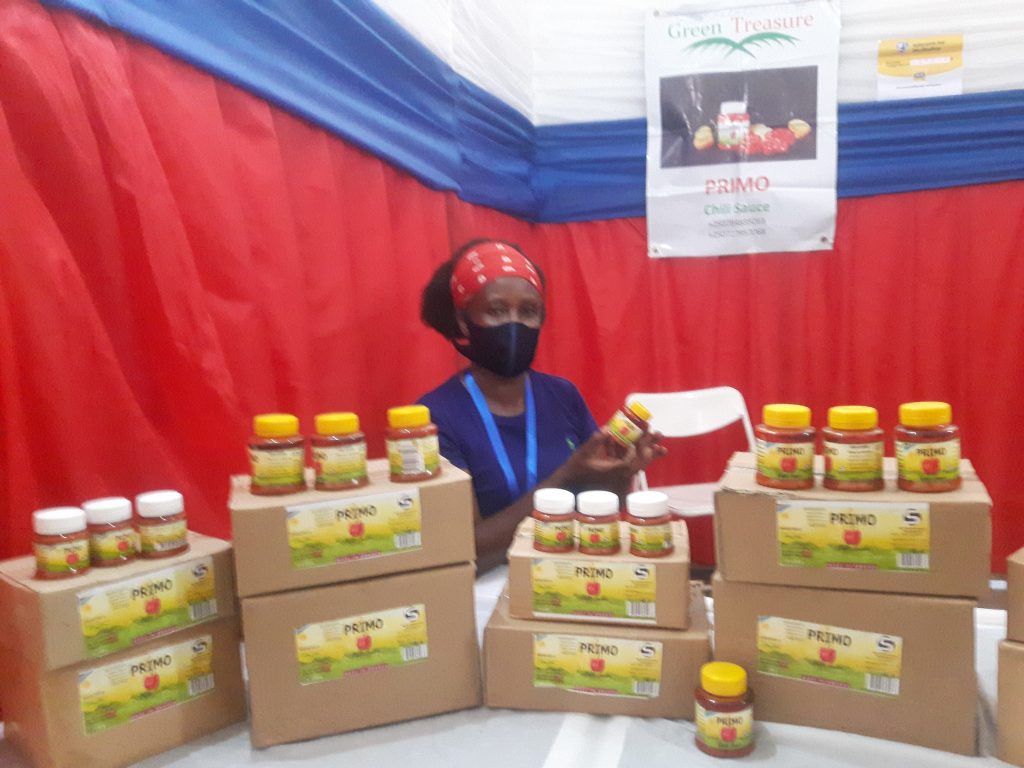
She said that it became difficult to find quality bottles in Rwanda for packing end-product.
“We have three years producing this chili product and we used to import quality bottles from Kenya. Things became worse since the Covid-19 pandemic entered our country because we could not move to Kenya to import bottles. We request the Ministry of trade to help us get quality local manufactured packaging materials without going outside the country.” Utamuriza said.
Apart from food commodity manufacturers, other exhibitors who produce hygiene materials and cosmetics also said they still experience a challenge of high cost of imported raw materials and long journey to get the S-Mark.
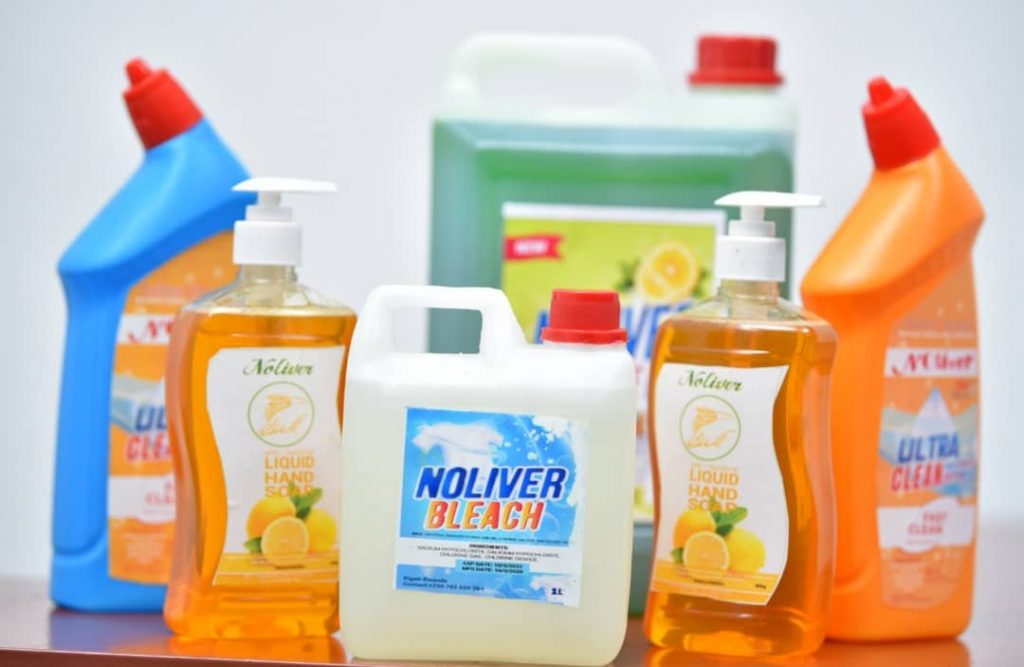
“We have been producing liquid soaps, toilet cleaners, shampoos, liquid hand soaps and bleach for two years ago. Many people say they cannot buy our products because we do not have S-Mark. We started the process of having it but it takes a long time. We request RSB to help us ease the process to get it.” Said Marie Laurence Umuremyi, sells and marketing of NOLIVER Hygienic Company from Kicukiro District.
During a special and organized visit to young entrepreneurs in the current RITF, Regis Umugiraneza, Chief Executive Officer of CARL Group company that produce bread from potatoes and the Vice-Chairperson of the Chamber for Young Entrepreneurs in the Private Sector federation (PSF) that they have raised some challenges young entrepreneurs face, reiterating lack of enough capital to increase production capacity, lack of S-Mark for some of them, lack of skills and information from service providers including RSB, MINICOM, RDB, Made in Rwanda, etc.

“We are going to connect these manufacturers with RSB to ease and fast track the process of offering S-Mark so as they take their products at the international markets. As CARL Group, our Vita Bread has S-Mark but we still have a long journey to go like launching other products and improving the quality of service.” Umugiraneza noted.
Speaking to The Inspirer, Raymond Murenzi, Director General of RSB said that they have learnt that many manufacturers know the rationale behind complying with standards, which is one major step.
“We have remarked that most of them have financial constraints and do not have information on how to get standard services, we continue to use our program called ‘zamukanubuziranenge’ to help them especially youth, women, persons with disabilities.” Murenzi said.
“Various products were certified and are at the markets. We are going to prepare training for them and put them in a zamukanubuziranenge program, we also learnt that they have financial constraints to access those services and we allowed them to pay in installments so as to manage to get the needed standards.” He added.
Louis Antoine Muhire, project manager of the Made in Rwanda secretariat in the ministry of trade and industry (MINICOM) said that they help local manufacturers to get to the needed local and international standards, linking them to markets and training them.
“Since the secretariat was established from the 2018 policy, from 2015 made in Rwanda campaign, it solved many issues facing local manufacturers, there is a hope to have more development as today we can build a hundred percent house, we have locally-made cement, wires, lamps, and everything, which was not possible five years ago.” Muhire said.



Leave a Reply