
The secret behind poultry farming: how two young men are minting millions from chicken business
By Elias Hakizimana
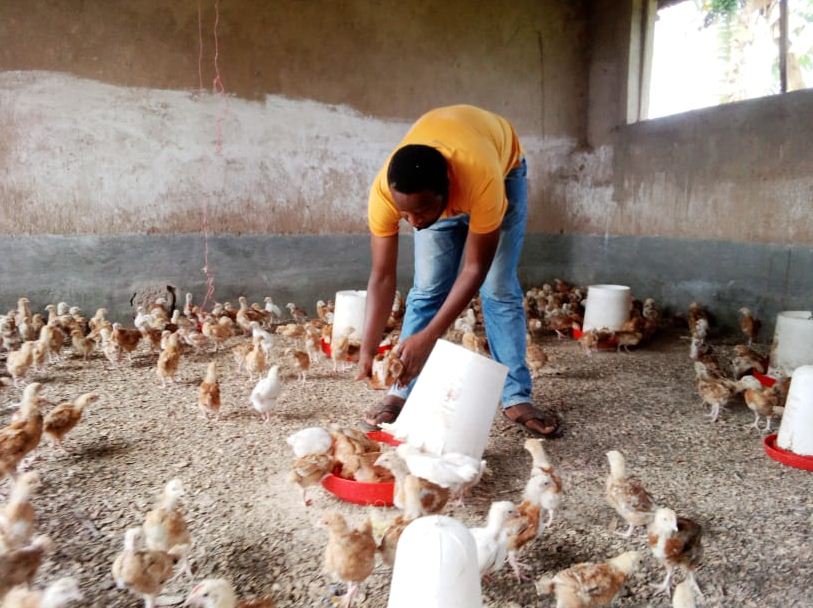
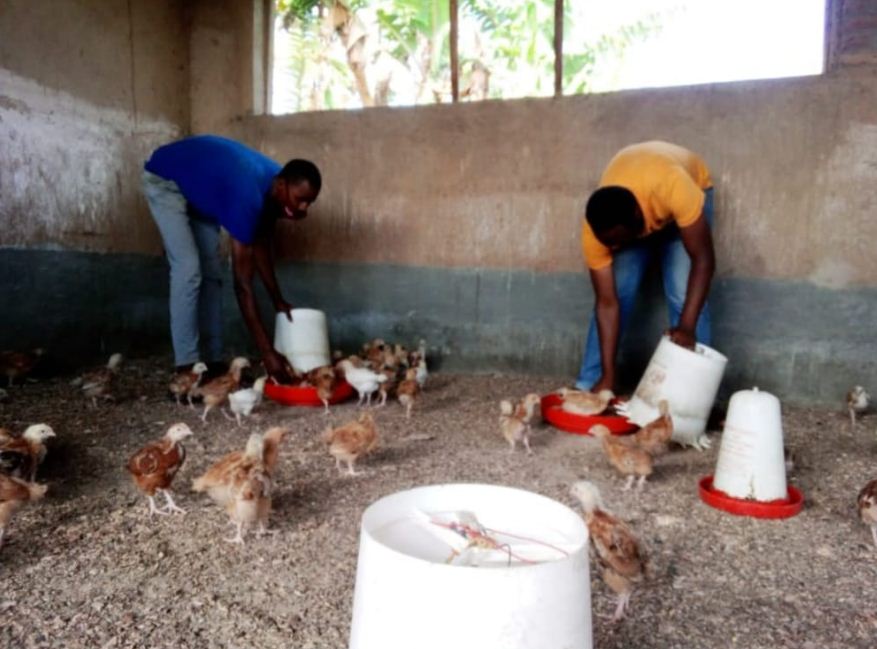
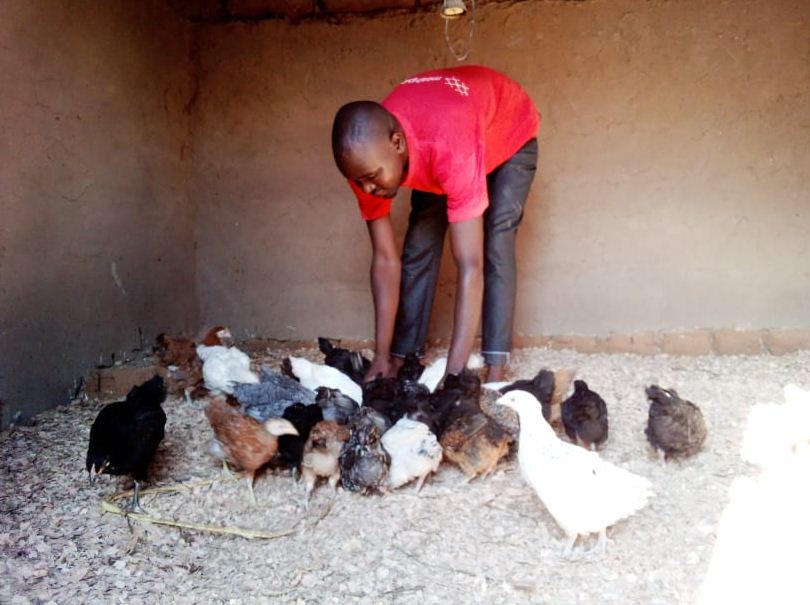
It’s Sunday, at sunset, Eric Hakizimana and Jean Pierre Hategekimana are feeding their chicks inside a chicken coop in Nyakayenzi cell, Ngeruka sector in Bugesera District, 70 kilometers from Kigali.
The rain has let up, the sun shines again for twilight. The chicks enjoy the feed, jumping and cheeping around Hakizimana and Hategekimana who are always keen to attending to their farmed birds as they need to look after their business: poultry farming—which they consider ‘big job’ since they started reaping benefits from it.
The two young men, Hakizimana, 29 and Hategekimana, 28 started the poultry business in December 2015 after they finished secondary school.
They started with 330 chickens, and their farm has grown to over 900 chickens which they produce using modern technology of hatching.
And, they also engaged in selling chicks to people interested in chicken farming, which helped them expnad their business and increase their income.
“We have a hatching machine with the capacity to produce 3,000 chicks in 21 days. Our aim is to expand the business and give opportunity to the citizens to grow hens. This will help them to fight malnutrition because they will get eggs easily.” Hakizimana said.
Since 2017 when they gained a big hatching machine under the support of Food and Agriculture Organization (FAO), they have distributed over 300,000 chickens to the citizens worth Rwf600 million as they sell one month-old chick at Rwf2,000.
According to Eric Hakizimana, this business makes them an annual turnover of Rwf1.8 million.
“Poultry farming is a big job, the secret is that you can start with any money with a small number of chicks, between Rwf10,000 and Rwf50,000 you can own your business of poultry. You need to first feel it as your passion and job. You need to give it much focus as it pays you well.” Hakizimana noted.
Youth motive
Hakizimana said that their business has inspired many young people from the neighborhood and the majority of his clients are youth.
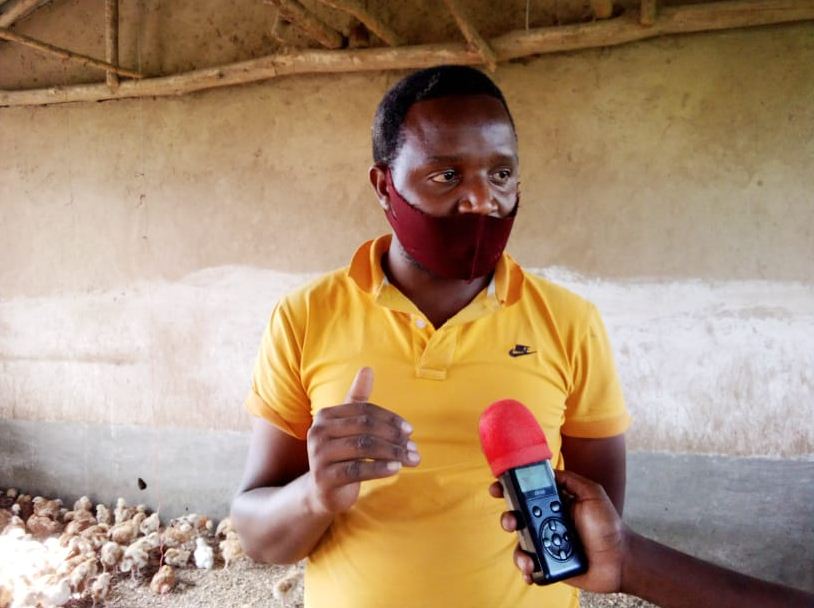
“We first mobilize youth on the impact of growing hens, we tell them the best of poultry farming as a job. We know that many people do not value hens as they do for cows and other big cattle. So far, among the 300,000 chicks sold, half of clients were youth.” He said.
Hens are grown everywhere and especially in rural communities. They live in a small space and feed on a variety of food.
Bugesera district is a very encouraging area for poultry basing on its geographical and climatic status.
Chickens are quite hardy and can tolerate temperatures below freezing, but they prefer a warmer climate.
“Chickens are easy to feed and the results are found in a very small period. They start to pond eggs in only five months for those of eggs. The ones for meat, in three months they give a produce.” Hakizimana said.
Chicken feeds are mixed from a variety of cereals including maize, soybeans, and an additional ingredient of small fishes.
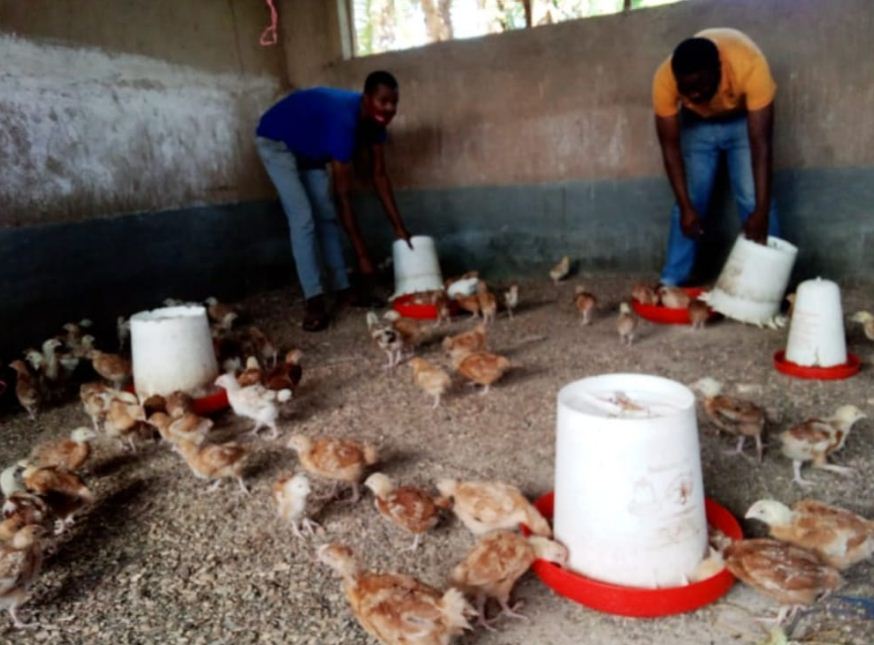
During the lockdown, after Coronavirus emerged in Rwanda, Hakizimana said it was a struggle to feed their chickens because foodstuffs were expensive.
The two young men, Eric and Jean Pierre, thank the government of Rwanda for the support to poultry farmers by putting the subsidies in chicken feeds’ factories.
“We buy chicken feed with a reduced cost from the factories because the government puts in the subsidies.” They said.
However, these young men lost over Rwf1million during Covid-19 after an incident that burnt their hatching machine which was full of eggs.
Livelihoods improved
“We now manage to provide for our families instead of begging them, I advise youth to invest in poultry as it promotes economic development. Chickens give manure fertilizers that cost Rwf3,500 to Rwf4,000 per 1 kilogram.” Jean Pierre Hategekimana said.
“I managed to buy a plot and I built a house. I have a wife and one child.” Hakizimana said.
Building capacity for rural community
Evariste Habimana, 32, is a neighbor to the poultry farm. He bought 150 chickens from E&P poultry farm and this business helped him to buy two farms for agriculture.
“I have now 33 chickens and I sold others to tackle other issues for household development. I thank Eric and Jean Pierre for the idea, we used to see chickens on Television but we could not find them easily. My children eat eggs and all members of the family are smart.” Habimana noted.
He wants to build a big chicken coop to increase the number of chickens but he lacks financial capacity to buy materials for construction. “I have a plot, when I get help to buy construction materials, I can build a bid house for hens.” He said.
E&P Poultry Farmers Limited gives training services in regard to poultry farming to either people who are currently in the profession or ones who are starting.
The duo Call for support
“Many businesses were given recovery funds by the government to secure their activities affected by Covid-19; we also need the funds to help us move on well.” Hakizimana said.
They said that most of the businesses that were given funds by the government are those registered in Rwanda Development Board. (RDB). A month ago, they registered their business under E&P Poultry farmers Limited.
“They might have given this recovery fund to all the businesses without looking at the registration issue because Covid-19 collapsed most of human activities.” Jean Pierre Hategekimana said.




Leave a Reply