
ISOC Rwanda launches nationwide online safety training targeting women entrepreneurs, refugees
By Elias HAKIZIMANA.
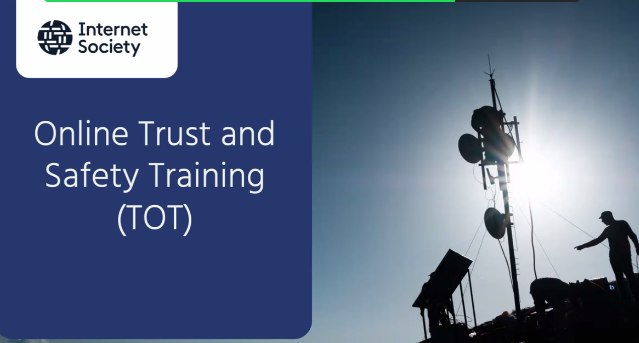
The Internet Society Rwanda Chapter (ISOC Rwanda) has launched a three-day Training of Trainers (TOT) programme aimed at strengthening online trust and safety skills among women entrepreneurs and refugees, as internet use and digital financial transactions continue to rise across Rwanda.
The training, which started virtually on Wednesday, May 13, 2026, will continue with two physical sessions in Kigali on May 14 and 15. The programme seeks to equip community trainers with practical knowledge to help vulnerable groups safely navigate digital platforms, avoid online fraud and protect personal data.
Speaking during the opening session, ISOC Rwanda Chairperson, Emmanuel Mfitumukiza, said increased internet connectivity has created both opportunities and growing cybersecurity risks, particularly for communities relying on mobile money, social media and online platforms for business and communication.
“A lot of people are being connected to the digital space. People are using mobile money, mobile applications and social media platforms to achieve their daily goals, but this also creates risks and challenges,” he said.
Mfitumukiza noted that while digital platforms have improved access to communication, learning and online business opportunities, they have also exposed many users to misinformation, fraud and cyber-related crimes.
He explained that the programme aims to build practical digital safety skills among grassroots communities, particularly women entrepreneurs who frequently use internet banking and online transactions.
According to ISOC Rwanda, the initiative builds on a pilot training conducted in Nyagatare District in October 2025 involving women-led organisations and small business operators from sectors including agriculture and hospitality.
Under the current programme, 10 community trainers are being prepared to roll out awareness campaigns targeting at least 500 women entrepreneurs and refugees before July 30, 2026.
The training modules cover online trust and safety, online fraud prevention, misinformation detection, account and device protection, safe social media use, cybersecurity awareness and Rwanda’s data privacy laws.
During one of the technical sessions, expert trainer Sadra Irasubiza warned participants about the growing threat of mobile money fraud and phishing scams targeting internet users.
“People don’t know how to verify who the sender is. That is why many lose their money because they immediately believe messages claiming to come from MTN or banks,” he said.
Irasubiza urged participants to verify transaction histories, account balances and message authenticity before responding to suspicious requests or transferring money.
“You have to verify first before trusting. Check your balance, check the transaction history and confirm whether the money was really sent,” he emphasized.
He also cautioned participants against using public Wi-Fi networks to access sensitive accounts and warned about fake websites and suspicious links designed to steal users’ information.
“When browsing, you have to verify URLs because scammers can slightly change domain names to trap users,” he explained.
Participants raised concerns about password management and account protection, particularly the challenge of remembering multiple passwords across platforms. In response, Irasubiza advised the use of password managers while discouraging the use of identical passwords for different accounts.
Concluding the session, Mfitumukiza encouraged trainers to simplify digital safety lessons so communities can easily relate them to everyday experiences.
“Don’t make it like a science, make it simple. People relate to things that have relevance in their lives,” he told participants, while urging them to become champions of safer internet use within their communities.
theinspirerpublications@gmail.com


Leave a Reply