

“We have not yet enjoyed the fruits of liberation,” claim journalists from private media houses
By Elias Hakizimana.
Various citizens in various life corners in Rwanda are celebrating achievements they say were realised thanks to the liberation of Rwanda, 25 years ago.
However, journalists in general argue that they are ‘worst losers’ of liberation as their holistic development has not been fostered enough.
On July 1st, 2019, they, through their associations that were established to advocate for them got an occasion to meet and they discussed press freedom and the liberation of the media 25 years later. During such a gathering, they exposed some pieces of evidence that their freedom and financial development are still questionable.

However, some achievements like self-regulation of the press and capacity building training were given an emphasis, they argued, assigning Rwanda Media Commission (RMC) and Media High Council (MHC) to further the assumption of these responsibilities.
It was also seen that the current press has contributed a lot of efforts in rebuilding the country after the genocide perpetrated against the Tutsi in 1994 by acting differently from the then media that used to report propaganda of hate that led to the genocide against the Tutsi.
Journalists blame their representatives that are heading their associations on failure to fully advocate for significant freedom and financial support as the big part of local Advertisements of the public and private sector are given to the government’s media houses including the Rwanda Broadcasting Agency (RBA) on top.
John Williams Ntwali, one of the self-employed journalists shared his views about the extent to which journalists benefited from the liberation and the majority agreed with him that they are the worst losers compared to the level at which other sectors, including the private sector, were supported by the government to fast track their well-being, yet, the media is also among the private sector.
“We know that all countries that have undergone liberation struggles went through four categories including the Best Winners who were not free and became free by liberation, the Winners who were free and continued to be free, Qualified Losers who were free and later deprived of freedom, and Worst Losers who were not free and continued to lose that freedom, though, when we examine liberation in media after 25 years, we can see it in two categories: ‘Best winners and Worst losers,” Ntwali said.
“How can we enjoy the liberation with the present poverty? Journalism was left behind and we cannot compare ourselves with other businesses and you know that besides advocacy and information, we need also to make money, yet we do not access market opportunities when it comes to advertisements, they are all given to the government’s media houses,” another journalist said.
Other issues that are considered an impediment to the development of media in Rwanda include the fact that journalism can be done by any person, not necessarily one who studied journalism.
This concern makes people question the meaning of journalism in the country, and the essence or significance of the School of Journalism and Communication at the University of Rwanda, or enrolling in any journalism and communication courses at any university.

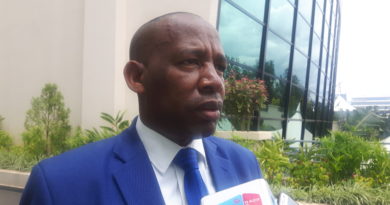
Gonzaga Muganwa, the Executive Secretary of Rwanda Journalists’ Association (ARJ) said many of achievements were made but journalists are still hampered by lack of financial capacity.
In terms of freedom, he said that journalists try to be free compared to the rest of citizens as they are public informants who use to meet with the public figures.
To challenge the journalists, Peacemaker Mbungiramihigo, the Executive Secretary of MHC said that media is free in thinking, in services and in ethics and behaviors.
Aldo Havugimana, Director of Radio Rwanda reminded journalists that their role is paramount in striving for liberation before looking at the government’s intervention.
The discussions that were organised by Media Impacting Communities (MIC) brought important disputes and were concluded with journalists’ curiosity to ask more questions in regard to the subject of press freedom, development, and liberation.
theinspirerpublications@gmail.com




Leave a Reply