

Rwanda’s Universities need to enforce digital literacy for employment readiness
By Elias Hakizimana.
Digital literacy among Rwanda’s employees stands at 8.4 percent with the gap of 92 percent, officials revealed.
To bridge this gap, the government through the Ministry of ICT and Innovation, the Ministry of Public Service and Labour (MIFOTRA) and local Universities need to train 85,000 public employees with required maximum package of digital skills to enable them do their work properly according to officials. Armies and teachers are not included among these employees.
Only one University of Tourism, Technology and Business Studies (UTB) has started to equip students with ICT skills in Partnership with the International Computer Driving Licence (ICDL) since 2019, other Universities need also to have the similar platform.
Speaking during the Stakeholder’s Breakfast meeting on Digital Literacy on July 10, 2019 in Kigali, Lambert Ntagwabira, Senior Technologist in charge of capacity and skills development in the Ministry of ICT and Innovation (MINICT) said that the government expects that more than 70% graduates have digital skills.
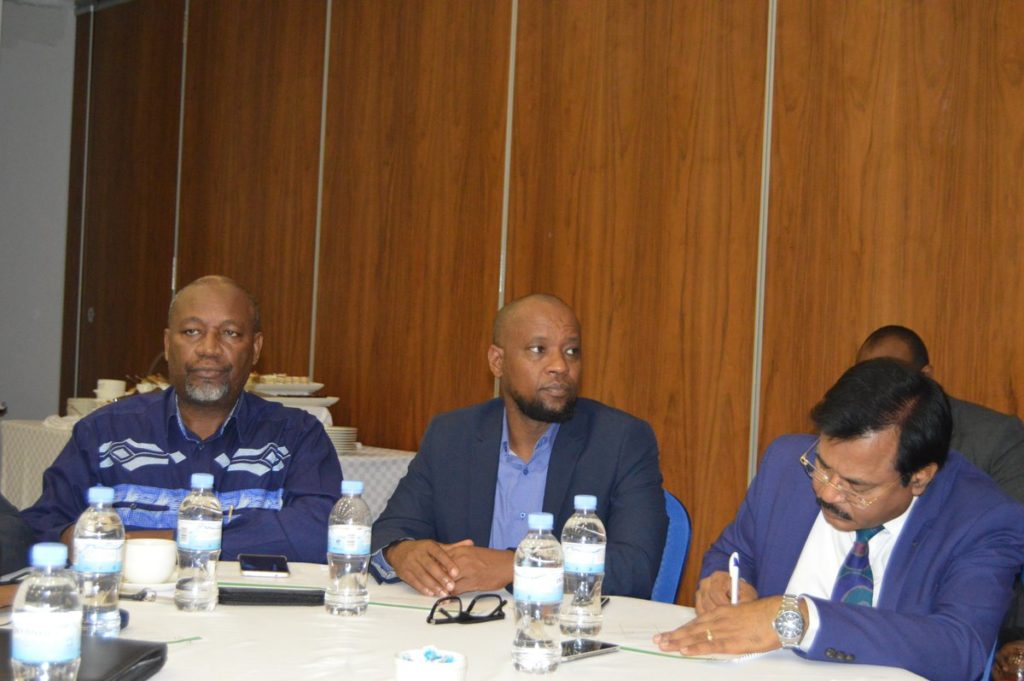
“We have to harmonize digital learning system to ensure that digital skills are fully covered through ICDL. We need to align the skills with the labour market needs. We are making the strategies to make ICT skills boosted in order to bridge all the gaps we are discussing here,” Ntagwabira said.
Andela was given as an example of part of digital skills booster among higher learning institutions.
Of 85,000 public employees who still have digital skills gap, over 2,000 employees have finished courses according to Ntagwabira.
The government policy on boosting digital skills target to train 60% citizens of over 15 years by 2024. They will also train government employees in partnership with ICDL and Rwanda Management Institute (RMI) to be able train 85,000 employees and experts who will be able to do digital jobs outside Rwanda.
He said that the government also has a plan to produce Robot machines and has drones that were introduced so far, which are not found today in any higher learning institution.
Faustin Mwambali, the in charge of job promotion in MIFOTRA said that “we have to think on how technology and artificial intelligence change the way we are doing today. But we think on how is going to affect the way we work today, technology has created 12 % of jobs and 70% of new demand for jobs, digital skills enforcement is the opportunity to curb the challenges we have today, and as government we have a target to create a million of digital jobs.” He said.
He embarked on the role of digital skills as the source of employment. “when we need a million of jobs, we need productive services, we need the skills of which we shall have jobs, I believe that digital jobs will continue to lead the growth of employment for generations to generations, we need digital skills that respond to the global demands,” he added.
Dr Callixte Kabera, UTB vice chancellor said that there is a need of more collaborative effort for ICT innovation to make sure that the gap is addressed.
“As UTB, we have committed to equip all graduates from the certificate to bachelor’s degree with ICDL. This has changed the way of traditional ICT teaching; we need to be on track to make sure we are serving the needs of the labour market. This is the need of all Rwandans, there is a need of not only focusing on the capital city Kigali but also looking at the rest of the country,” he said.
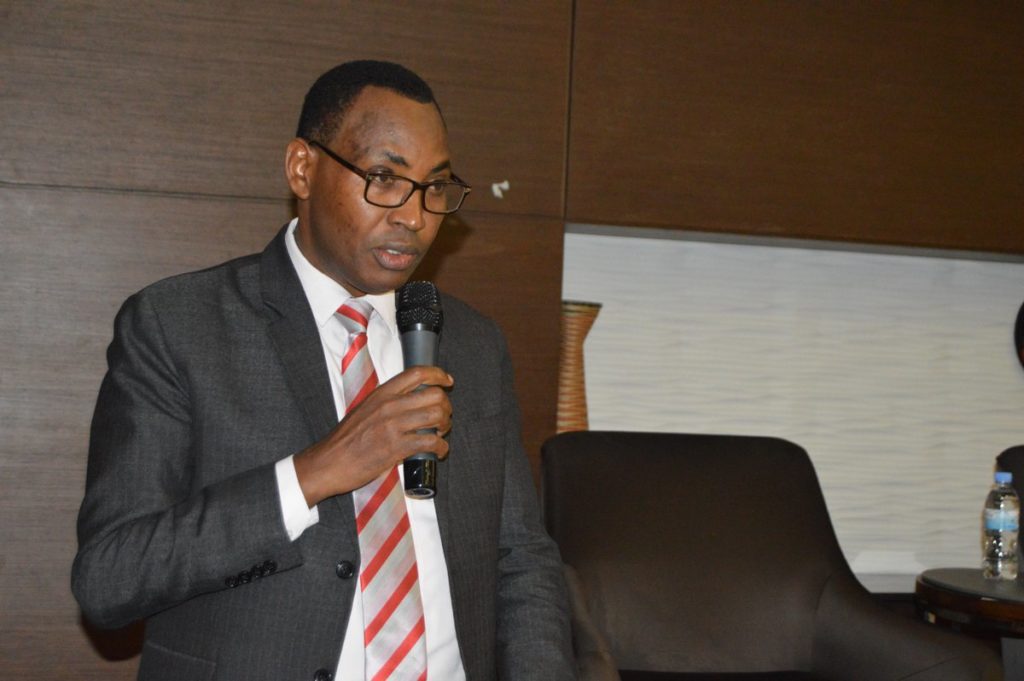
“It is my belief that ICDL adoption is a good opportunity to make them more ready and competitive on the labor market. This process will enable Rwanda to embark confidently on a knowledge-based economy and implementation of the National Digital Talent policy to fast track the uptake of technology and digitalization used in the country and spread in industries all over the world.” Kabera added.
1,600 graduates from UTB have ICDL certificates, the ministry of ICT is looking for further strategies to help more people acquire such a knowledge and will not leave any Rwandan behind.
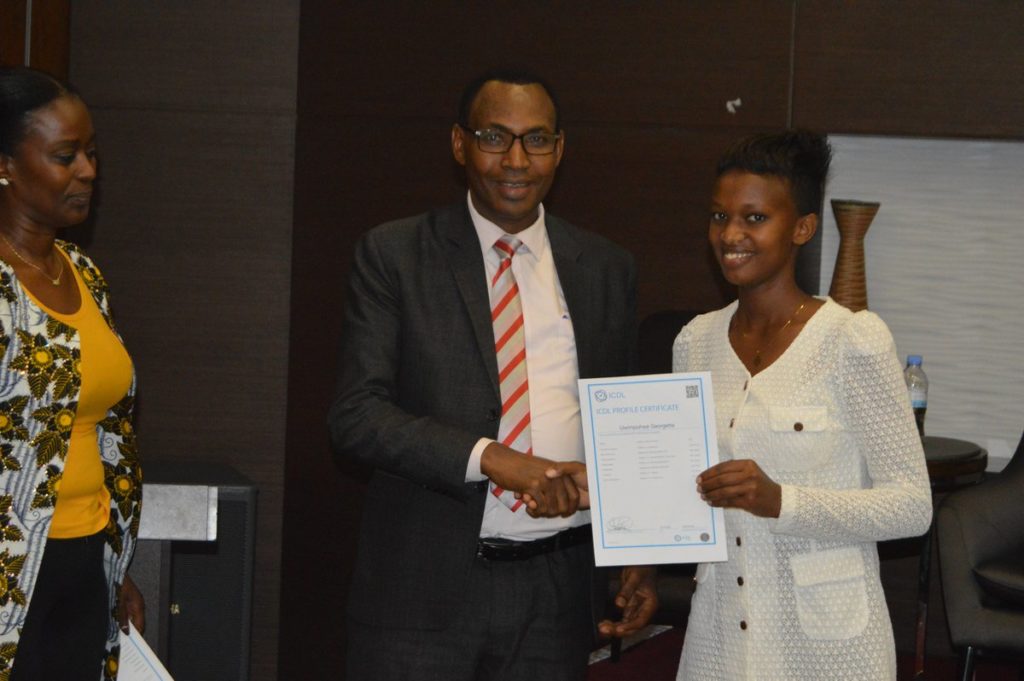
The cost of courses was $115 per seven modules and was reduced to $65. MINICT wish that this reduces to $40 in coming days. The training period is two weeks for a person who learns quickly while other people can use 3 to 4 weeks to have the maximum required skills.
Innocent Asiimwe, Digital Cluster Coordination and Community Development in Rwanda Information Society Authority (RISA) said that RISA with MINICT work together to train digital ambassadors in spreading ICT countrywide. He said the literacy will be boosted from primary to higher learning institutions.
It is expected that all national services will be digitized by 2024. He said that RISA is planning to establish ICT service access point in all 2,148 cells in the country to help citizen in remote areas have access to digital skills
Over 13,000 people were observed to use professional digital literacy in their daily activities as per last year 2018 MIFOTRA survey.
theinspirerpublications@gmail.com




Leave a Reply