
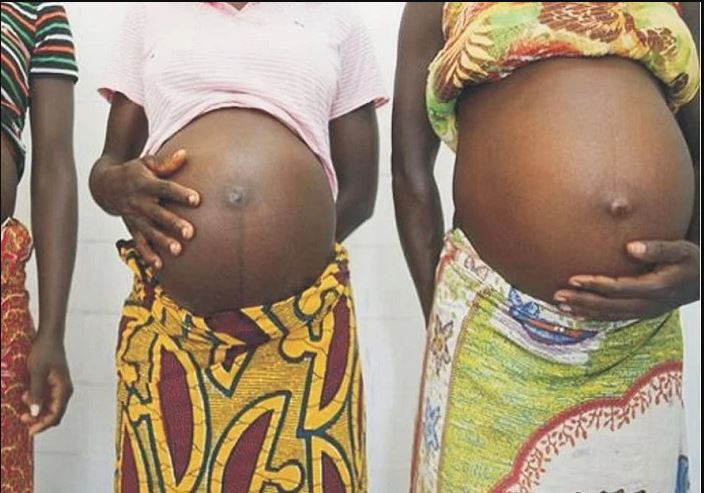
Rwanda: When safe abortion will be decentralized at health center and clinic level?
By Elias HAKIZIMANA.
An abortion is considered safe when if it is done with a method recommended by the World Health Organization and appropriate to the pregnancy duration, and if the person providing or supporting the abortion is trained.
If either of these conditions is not met, the abortion is unsafe. Safe abortion is legal in Rwanda according to the 2018 revised law on abortion.
The government of Rwanda motivated by concerned civil society organizations’ conducted advocacy programs has removed some barriers to access to safe abortion for adolescents aged under 18 where it was mandatory to present the code order by the court.
However, safe abortion is still performed at district hospitals and polyclinics by professional medic doctors, posing a question to vulnerable girls and women from the remote areas to access that service as they are required to make long journey and sometimes ending up by missing the service due to faith and mindset of service providers.
Health and legal activists are calling the government of Rwanda to effectively revise this law and allow trained nurses and midwives at health centers country wide to help girls and women who need safe abortion service without taking the journey and spend time at districts’ hospitals.
Great Lakes Initiative for Human Rights and Development (GLIHD), the giant activist on laws and sexual reproductive health in Rwanda raised this concern a couple of years and some changes were applicable in law amendment as per 2018 abortion law that removed the requirement of court code order for girls and women who sought the service by then. This court code order was replaced by signing consent form.
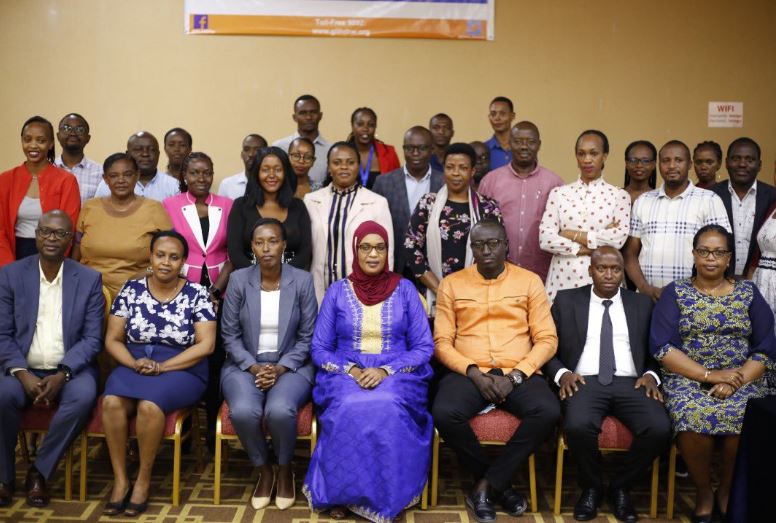
Speaking during a high level meeting on access to Sexual Reproductive Health Rights in Kigali on May 12, 2022, Umulisa Husna Vestine, GLIHD Deputy Director said that the law is currently clear but still its implementation is questionable as it
“The challenges we have are hindering successful implementation of safe abortion law. The law allows a girl who is raped, faced incest, or a woman who experienced any of the five exemptions of this law who was impregnated to do safe abortion, but service providers deny them that service basing on culture, mindset. We request service providers to implement this law purely as it is without emotions and posing difficult conditions to beneficiaries.” Umulisa said.
She added that another challenge is that safe abortion services are far from Rwandans at districts mostly owned by churches that cannot deliver this service.
“In Bugesera for example, the district hospital is owned by the church, the service provider here denies to help beneficiaries of the law due to the church orders. So, we are confused of this controversial laws of the country and the church. We request the government to help us and make safe abortion services available, accessible and affordable to Rwandans at the grassroots’ health centers and clinics.” Umulisa added.
Despites the five exemptions provided in the law, abortion in Rwanda is illegal. Safe abortion is performed before 22 weeks (5 months). For the girl of under 18 years of age, the consent form is signed by her parent or herself can sign when the parent denies.
So far, country wide in all 30 districts, at least 1042 nurses and midwives were trained on safe abortion according to Dr Muganda john, gynecologist and expert in sexual reproductive health.
“Safe abortion is not a favor for the service seeker, but a right provided by the law.” Dr Muganda noted.
Dr. Felix Sayinzoga, the in charge of maternal and child health at Rwanda Biomedical Centre (RBC) said that any person regardless of his/her religious faith and mindset could not be denied healthcare service. He said that healthcare services including safe abortion will gradually be decentralized following Rwanda’s health sector development.
“It is a long journey, we cannot tell citizens to go to seek services where they won’t find them. Our current plans include capacitating heath sector at the grassroots levels, so, we believe that this will be possible in the near future but now there is no possibility for that due to current capacity of our health sector. There is not enough materials, skills gap for practitioners at health centers to perform safe abortion, plus law restrictions that only allow district hospitals to process this service.” Sayinzoga said.
Currently, with some positive change in the current abortion law, girls and women who approach hospitals were increased, thanks to the efforts made by Civil Society Organizations.
Statistics
2 to 3 teenage girls are impregnated every hour in Rwanda according to the research.
In 2019, only 35 hospitals in the country were allowed to perform safe abortion after the 2018 law were revisited and only 48 medic doctors were trained to give this service according to Dr. Francois Xavier Hakizimana who used to help girls who are sexually violated at Isange One Stop Center.
One in 500,000 women can die doing unsafe abortion. Fortunately, Rwanda has not yet registered any case of death since they started delivering this service according to Dr. Hakizimana. However, unsafe abortion kills many girls and women worldwide.
theinspirerpublications@gmail.com





Leave a Reply