
Rwanda Senate raises concerns over misuse of public funds, waste and irregular payments
By The Inspirer.
Rwanda’s Senate has raised concerns over continued weaknesses in the management of public finances and assets, warning that despite improvements in accountability, public institutions are still wasting hundreds of millions of francs, making payments without proper documentation and paying contractors more than the amounts agreed.
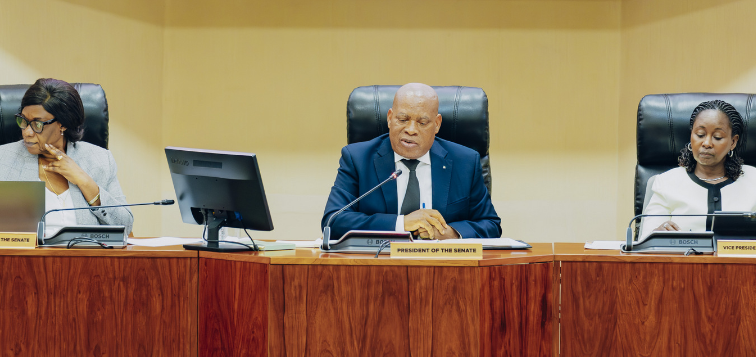
The concerns were presented by the Senate Committee on Economy and Finance during a plenary session reviewing the Auditor General’s report for the financial year ended June 30, 2025. During the period, the Office of the Auditor General audited public expenditure amounting to RWF 8 trillion.
Committee Chairperson Senator Fulgence Nsengiyumva acknowledged progress in the number of public institutions receiving unqualified audit opinions, reflecting improvements in accounting records, compliance with laws and regulations, and the proper use of public resources.
The proportion of institutions receiving unqualified opinions on their financial statements rose from 94% to 97%. Compliance with laws and regulations improved from 75% to 83%, while performance in the proper use of public resources increased from 66% to 79%.
However, Nsengiyumva said weaknesses persist, particularly in ensuring that public funds are spent for their intended purposes.
In the financial year under review, RWF 39.11 million was spent without supporting documents explaining the expenditure, down from RWF 136.68 million in the previous year.
“Although the amount has decreased, no money should be spent without supporting documentation,” he said.
The report also found that wasteful expenditure stood at RWF 474.65 million, compared with RWF 1.9 billion in the previous financial year, representing a 75% reduction.
Nsengiyumva said the reduction was welcome but stressed that the continued loss of nearly RWF 475 million remained a concern.
Public institutions overpay contractors
The Auditor General’s report also identified more than RWF 86 million in excess payments to contractors during the year ended June 2025.
Although the amount had fallen from RWF 3 billion in the previous year, Nsengiyumva said such payments pointed to persistent weaknesses in public financial management.
He questioned why public institutions continued to pay contractors amounts exceeding what had been agreed, despite the progress recorded in reducing the problem.
WASAC Group has gone five years without an unqualified audit opinion
Nsengiyumva said some state-owned enterprises and other public institutions had improved their performance, with several moving from poor audit ratings to more acceptable levels, while others had attained unqualified opinions.
However, he singled out WASAC Group, noting that it had failed to obtain an unqualified audit opinion for five consecutive years.
He said the continued audit concerns at the water and sanitation utility required corrective measures.
The committee also identified delays in implementing donor-funded projects as a recurring challenge across public institutions, including the Rwanda Transport Development Agency (RTDA) and the Rwanda Development Board (RDB).
Nsengiyumva explained that such delays often resulted from late preparation of feasibility studies, lengthy procurement processes and delays in relocating residents affected by projects.
He said some development partners signed financing agreements before the necessary feasibility studies had been completed, slowing down implementation.
The committee further raised concerns over delays in the execution of contracts between government institutions and private contractors.
Another issue involved advance payments made to contractors before they had been shown the sites where they were expected to carry out the work. One example cited was RWF 15 billion paid to a contractor before work had started.
The report also highlighted cases in which projects began before affected residents had received the required compensation, contrary to legal requirements governing expropriation in the public interest.
Senate President François-Xavier Kalinda said the upper chamber would continue following up on the issues raised by the Auditor General and monitor whether the recommendations were implemented.
He said the report would be referred to the relevant Senate committees, each of which would examine matters falling within its mandate and follow up on the required action.


Leave a Reply