
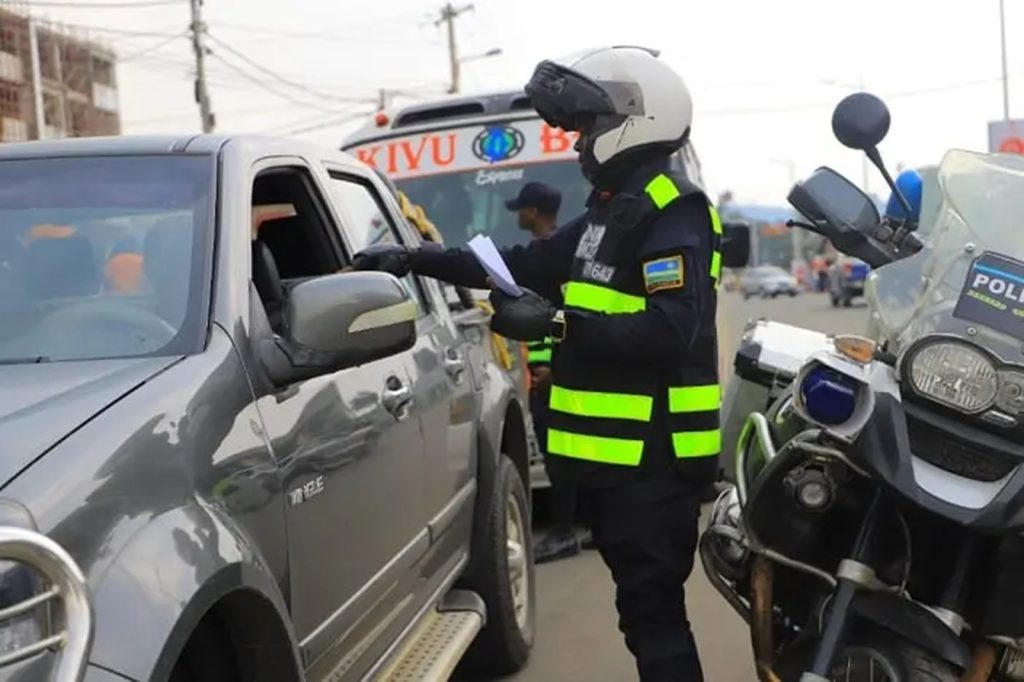
Rwanda introduces strict fines and jail terms for traffic violations under new road law
By The Inspirer.
Rwanda’s new road traffic law is set to tighten enforcement on drivers, with penalties that could see offenders face fines up to Rwf700,000 or imprisonment, as authorities aim to strengthen road safety across the country.
Under the law, drivers who refuse to stop when directed by a police officer face fines ranging from Rwf400,000 to Rwf700,000, or three to six months in prison, according to Article 19.
Published in the Official Gazette on March 10, 2026, Law No. 014/2026 of March 6 replaces the 1987 road code and is expected to be fully implemented in April once a Ministerial Order detailing its application is issued.
The law empowers the Rwanda National Police’s Road Safety Unit to enforce traffic rules and sanction violators. It covers offenses including driving under the influence, operating vehicles without proper documentation, and other behaviors that threaten public safety.
Article 37 specifies that a driver of a passenger vehicle who exceeds the legal blood alcohol limit, once confirmed by a court, faces fines between Rwf100,000 and Rwf400,000, or three to six months in prison.
Drivers operating tourist, student, or cargo vehicles over 3.5 tonnes under the influence face fines of Rwf150,000 to Rwf300,000 or up to 10 days in jail. Drivers with blood alcohol levels at least twice the legal limit could be fined between Rwf200,000 and Rwf500,000 and face three to six months in prison, or one of these penalties.
The law also introduces a technology-driven monitoring system using driver behavior points, which will be established through a Ministerial Order expected in April 2026.
Refusing to undergo alcohol testing while driving under the influence will result in fines from Rwf300,000 to Rwf600,000 and imprisonment of three to six months. Drivers of vehicles they do not own who refuse testing risk fines of Rwf400,000 to Rwf600,000 or up to 10 days in prison.
Article 42 provides a 12-month window for anyone who sold or transferred a vehicle prior to the law’s implementation to complete the registration process (mutation).
Alfred Byiringiro, Chief Technical Advisor for Transport at the Ministry of Infrastructure (MININFRA), told the media that the Ministerial Order is nearly complete. “We expect the law to be fully operational by mid-April 2026,” he said.
Byiringiro stressed the importance of registering vehicles and complying with road regulations, noting that unregistered vehicles have previously contributed to criminal activity and enforcement challenges.
While fines are clearly defined, some provisions will only take effect after the Ministerial Order is issued, signaling a major shift in Rwanda’s approach to road safety enforcement.




Leave a Reply