
Rwanda calls on global community to stay alert against genocide
By Rachid Bugirimfura.
Rwanda has urged the international community to remain vigilant against hatred and discrimination, warning that genocide does not occur by chance but follows a deliberate and preventable process if early warning signs are acted upon.
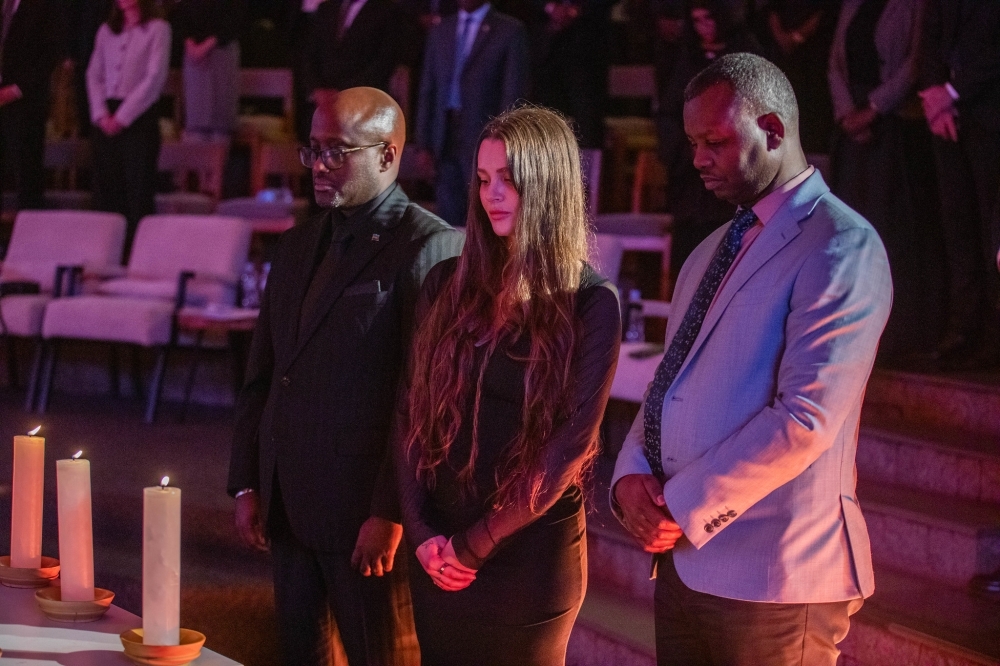
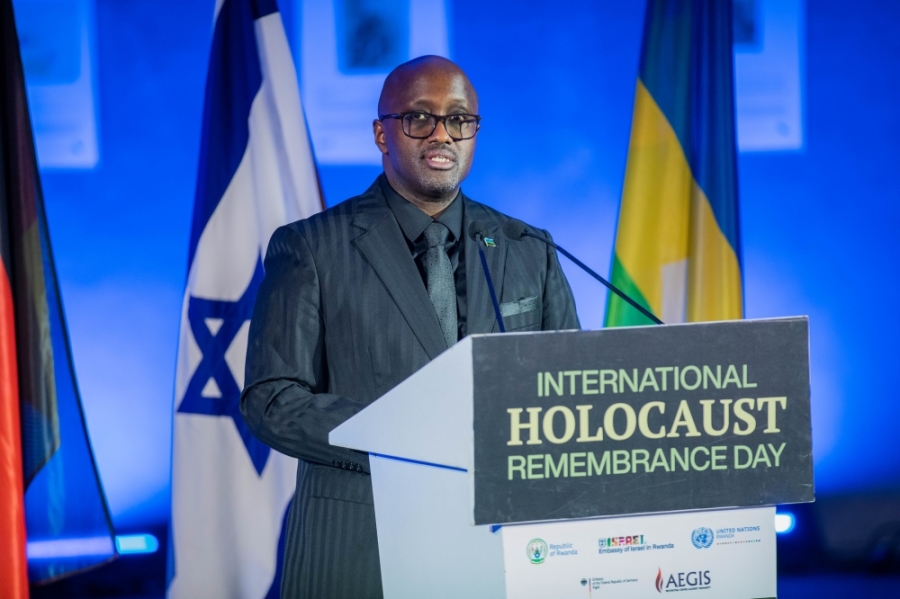
The call was made on Tuesday, January 27, 2026, by the minister of foreign affairs and international cooperation, ambassador Olivier Nduhungirehe, during the commemoration of the international Holocaust remembrance day, which also marked 81 years since the liberation of the Auschwitz-Birkenau concentration camp, the largest Nazi camp used to detain and exterminate people.
The event was held at the Kigali genocide memorial in Gisozi and brought together diplomats, representatives of international organisations operating in Rwanda, members of the Jewish community living in Rwanda and their friends, as well as senior government officials.
The Holocaust, orchestrated by Nazi Germany during the second world war between 1939 and 1945, claimed the lives of more than six million Jews, nearly two-thirds of the Jewish population in Europe at the time.
Addressing participants, ambassador Nduhungirehe said genocide is a process that unfolds in identifiable stages.
“Genocide does not just happen. It is a planned process that moves through clear stages, including dividing people into groups, labelling them, dehumanising them and ultimately leading to mass killing. Understanding this process is critical to preventing it,” he said.
Drawing parallels between the Holocaust and the 1994 genocide against the Tutsi, the minister said Rwanda commemorates the Holocaust not only as part of the international community, but as a country that has itself experienced genocide.
He expressed concern over the growing rise of antisemitism and other forms of identity-based hatred worldwide, noting that indifference, misinformation and hate speech continue to erode the lessons of history.
The minister also pointed to ongoing violence and persecution in the eastern Democratic Republic of Congo, where communities are targeted based on identity, while the international community largely remains silent.
“Today, we continue to witness wars and persecution based on identity. Just about 200 kilometres from this memorial, in Congo, a group of people is being subjected to hate speech and persecution simply because of who they are,” he said.
Ambassador Nduhungirehe called on the international community to act collectively against ideologies rooted in hatred and discrimination, warning that failure to do so could pave the way for genocide.
“This requires strong international cooperation, quality education, and full support for international justice and accountability mechanisms. Failure in these areas allows such crimes to persist,” he added.
Israel’s ambassador to Rwanda, Einat Weiss, said the Holocaust did not begin with gas chambers but with words, lies and systematic exclusion.
“Genocide did not start with killing. It began with hatred, lies and discrimination that stripped Jews of their dignity and portrayed them as enemies long before the violence began,” she said.
Despite the establishment of international laws and institutions aimed at preventing genocide and crimes against humanity, antisemitism continues to rise globally, particularly among young people, Weiss warned.
“We are witnessing a disturbing increase in antisemitism worldwide — on the streets, in universities and on social media. Holocaust denial and distortion are also increasing,” she said.
Germany’s ambassador to Rwanda, Heike Uta Dettmann, reaffirmed her country’s commitment to confronting antisemitism, describing it as a continuous responsibility that requires collective action.
“We are seeing a frightening rise in antisemitism, not only in Germany but globally. This is a disgrace,” she said, adding that remembrance must be passed on to future generations.
The United Nations resident coordinator in Rwanda, Ozonia Ojielo, said the Holocaust resulted from a toxic combination of extremist ideology, political instability, abuse of power and the failure to uphold human dignity and the rule of law.
“This should remind us how genocide can emerge when hatred is normalised, power goes unchecked and human dignity is violated,” he said.
Ojielo underscored the importance of educating young people, noting that remembrance remains one of the most effective tools for preventing future atrocities.
“Remembrance is a shield for protecting the future. Young people must be equipped with knowledge, empathy and critical thinking skills to understand why these atrocities occurred and to help build a different world,” he said.




Leave a Reply