
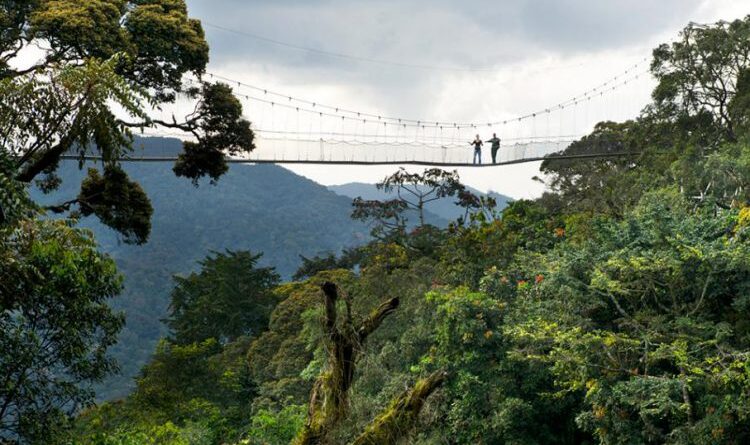
Over 6,000 snares removed from Nyungwe National Park in 2025
By The Inspirer.
More than 6,000 snares were removed from Nyungwe National Park in 2025 as conservation authorities intensified efforts to combat illegal hunting and other human activities threatening one of Rwanda’s key biodiversity reserves.
Officials said the devices, mainly used for poaching wild animals, remain a serious threat to wildlife and the park’s long-term ecological integrity, although the latest figures show a decline compared to previous years.
Park management indicated that the snares are typically set by poachers operating in groups, who enter the forest carrying large quantities of wire traps that are quickly deployed across different areas of the park.
Conservation officials noted that the number of snares recovered has significantly decreased compared to 2022, when more than 11,000 were collected, attributing the improvement to strengthened surveillance, increased patrols and enhanced enforcement measures.
They added that park rangers routinely remove snares before they cause harm to wildlife and, in some cases, use recovered materials for sensitisation campaigns aimed at raising awareness about the impact of poaching.
Despite progress in reducing illegal hunting, Nyungwe continues to face other environmental pressures, including illegal honey harvesting practices that sometimes involve fire, tree cutting for fuel and shelter, waste dumping, and occasional mineral extraction activities in surrounding areas.
Wildlife safety is also affected by road traffic along the Kigali–Huye–Nyamasheke–Rusizi corridor, where some animals are killed after being struck by vehicles near the park boundaries.
Former poachers who have joined conservation initiatives say poverty remains a key driver of illegal activities, noting that snare-based hunting has traditionally targeted species such as bush pigs and other small mammals for meat and trade.
Community members who have transitioned into alternative livelihoods argue that expanding income-generating opportunities is key to reducing pressure on protected areas.
Park authorities say more than 300 permanent staff and over 700 casual workers are currently engaged in conservation activities, with additional employment programmes underway.
A new initiative expected to create more than 1,500 jobs is also being developed, alongside cooperatives involving more than 1,500 people engaged in activities such as fish farming, poultry, mushroom production, beekeeping and tourism services.
Legal experts working with the park have called for stronger legal frameworks and more proportionate sentencing for environmental crimes, arguing that some offences could be addressed through corrective measures to improve enforcement efficiency and deterrence.
They also suggest that public court hearings for environmental offences could help strengthen accountability and community awareness.
Local authorities in districts surrounding Nyungwe say proximity to the park presents economic opportunities and have pledged continued cooperation with conservation agencies to protect biodiversity and curb illegal activities.





Leave a Reply