

Model markets transform rural women’s livelihoods in Gisagara and Ngoma
By Elias HAKIZIMANA.
When Clémentine Mushimiyimana, a mother of seven from Shyanda Cell in Save Sector, Gisagara District, looks back at her past, she recalls a life of uncertainty and dependency. She once sold vegetables on the bare ground, earning little and often going home empty-handed.
“In the past, I could not even afford salt or buy a piece of kitenge fabric,” she said. “My financial situation was bad, and I felt hopeless. But through the Rural Women Economic Empowerment (RWEE) programme, I began to see a future for myself.”
The Joint Programme on Accelerating Progress towards Rural Women’s Economic Empowerment (JP-RWEE), a partnership among UN Women, FAO, IFAD, and WFP brought women like Mushimiyimana together, offering training in financial literacy, gender equality, and cooperative management.
The programme didn’t stop at skills development. It helped establish model markets that provide safe and structured spaces for women to trade, save, and grow their income, transforming what was once informal roadside trading into dignified entrepreneurship.

From selling on the ground to owning the market
In Shyanda, women now proudly trade in a newly built RWEE market, which they call a “market of dreams.” Here, members of Twitezimbere Shyanda Cooperative sell vegetables, fruits, and cereals under permanent stalls protected from sun and rain.
“They gave us a market to sell what we grow, including vegetables, maize, and other foodstuffs,” Mushimiyimana said. “I also received a water tank to irrigate my vegetables. I now grow eggplants, green pepper, and maize. I plan to sell my pigs and bull to buy a cow worth about Rwf 1 million to provide milk for my children.”
With support from the programme, Mushimiyimana diversified her income sources from farming to livestock. Her cooperative operates a Village Savings and Loan Association (VSLA) where each member contributes Rwf 5,700 as a share. The group aims to buy a maize-grinding machine to boost the local economy.
“My life has changed completely,” she said with a smile. “I can pay my children’s school fees and buy uniforms. I now believe in myself.”

A place for every trade
A few stalls away, Leontine Uwitonze, a young single mother of two from Ryakabuye Village, works steadily at her sewing machine. Once forced to rent cramped spaces in neighbors’ houses, she now owns a permanent workstation inside the Shyanda market.
“This market helped me a lot to boost my income,” she said. “Before, clients struggled to find me, but now everyone knows where I work. Thanks to JP-RWEE, I have stable customers and can save money through our cooperative.”
Uwitonze dreams big to own her house, raise her children with dignity, and buy another sewing machine to expand her business.
“Being in a cooperative is vital,” she said. “I can borrow money from our savings to buy kitenge fabric and sew clothes for my clients. We also share experience and encourage one another.”

Cooperative power and community vision
Claudine Mukagatsimbanyi, president of Twitezimbere Shyanda Cooperative and a mother of five, recalls how difficult life was for rural women juggling domestic chores with endless labor yet remaining poor.
“We were lucky to be grouped together and trained,” she said. “Now we are no longer pessimistic. The market gives us a stable place to sell bananas, sweet potatoes, and vegetables. My wish is that every woman in this cooperative achieves financial independence.”
The cooperative, which began with 600 members, now has 400 active participants, mostly women dedicated to long-term sustainability rather than short-term gain.
“We bought a plot and built this market ourselves, inspired by the JP-RWEE education,” Mukagatsimbanyi said. “We now cultivate over three hectares of beans on land donated by the sector. Our next step is to ensure every member has food at home during every harvest season. We also plan to cover Mutuelle de Santé for our members by next year.”

From Gisagara to Ngoma: A shared success
The model market success in Gisagara mirrors a similar story in Ngoma District’s Jarama Sector, where the Tuzamurane Kigoma Cooperative with 140 members (122 women and 18 men) is reaping the benefits of structured trading.
“Our small trade was weak before; we used to sell on the ground, exposed to rain,” said Immaculée Nyirabizeyimana, a member of the cooperative. “Thanks to JP-RWEE, we now trade from a clean and safe market space.”
Nyirabizeyimana saves Rwf 2,000 weekly and earns about Rwf 130,000 annually in dividends. She grows and sells tomatoes, vegetables, and fruits; evidence of how structured trading and savings culture are transforming livelihoods.
Partnerships that empower
Elvis Nkundanyirazo, JP-RWEE Focal Person at IFAD Rwanda, commended the synergy among the four implementing UN agencies — FAO, WFP, IFAD, and UN Women, saying their combined efforts ensure the programme reaches women in practical and measurable ways.

“The model markets are not just infrastructure projects,” Nkundanyirazo said. “They represent spaces of empowerment, dignity, and opportunity for rural women who once traded under trees or by the roadside.”
According to Mapambano Nyiridandi Cyriaque, Vice Mayor of Ngoma District in charge of Finance and Economic Development, the impact of JP-RWEE initiatives in reducing poverty and empowering women is invaluable.
“Most development projects we implement in partnership with agencies like JP-RWEE focus on inclusive growth,” he said. “In Ngoma, poverty reduction is tangible; from over 30,000 citizens below the poverty line, only about 9,000 remain, and 95% of them are graduating from poverty. The model market in Jarama is among the initiatives driving this success.”

A new chapter for rural women
From Shyanda to Jarama, model markets under JP-RWEE are proving to be more than trading centers. They are symbols of transformation, places where women reclaim their confidence, dignity, and economic power.
“I used to fear myself,” said Mushimiyimana softly, gazing across the bustling market stalls. “But now, I stand tall among other businesswomen. We are working, earning, and dreaming together.”
About JP-RWEE
The Joint Programme on Accelerating Progress towards Rural Women’s Economic Empowerment (JP-RWEE) is a global initiative implemented jointly by FAO, IFAD, UN Women, and WFP, in collaboration with the Government of Rwanda. The programme supports rural women to achieve food security, increase income, strengthen leadership, and participate actively in economic decision-making; contributing to Vision 2050 and the Sustainable Development Goals (SDGs), particularly SDG 1 (No Poverty), SDG 2 (Zero Hunger), and SDG 5 (Gender Equality).

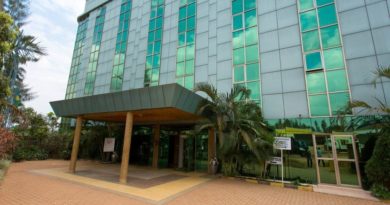
 A view of the model market in Ngoma District’s Jarama Sector, where members of the Tuzamurane Kigoma Cooperative are reaping the benefits of structured trading under the JP-RWEE programme.
  theinspirerpublications@gmail.com



Leave a Reply