

Inside TAJYIRE’s structural shift as it builds Rwanda’s organized electronics and innovation ecosystem
By The Inspirer.
Kigali, January 27, 2026 —What is unfolding at TAJYIRE Group is not a gradual adjustment or a standalone intervention. It represents a structural shift in how electronics trade, skills development, and applied innovation are being organized and scaled in Rwanda.
From a Building to an Ecosystem
By taking over Matheus House, TAJYIRE did not simply occupy a building. It redefined its purpose.
What was once a fragmented and informal electronics trading space has been transformed into one of the largest organized electronics marketplaces in the country, physically accommodating more than 1,000 electronics sellers operating under a coordinated structure.
This transformation is already active and visible. On a daily basis, transactions take place, repairs are carried out, products move through supply chains, and practical skills are exchanged.

The marketplace functions as a real economy rather than a pilot initiative or showroom, generating income while sustaining livelihoods and reinforcing trust in a formalized trading environment.
Under the leadership of Lambert Gahungu, Founder and Chief Executive Officer of TAJYIRE Group, the reorganization of Matheus House has been positioned as the foundation of a broader national ambition focused on formalizing trade, industrializing practical skills, and turning youth participation into long-term economic power.
The physical marketplace: The heart of TAJYIRE
Unlike many innovation initiatives that begin in digital spaces, TAJYIRE’s model is anchored in physical operations.
Matheus House today functions as a fully operational electronics marketplace and a commercial home to more than 1,200 sellers, representing a real economy rather than a conceptual intervention.

Every day, transactions happen. Repairs are done. Products move. Skills are exchanged. This marketplace is not symbolic; it is the economic engine that funds, feeds, and validates the wider ecosystem.
From this base, the TAJYIRE SYSTEM, currently under development, is expected to extend this physical foundation into a structured platform capable of supporting more than 5,000 youth-led operating businesses within three years, without disconnecting them from the real market environment that ensures commercial viability.
According to the group, this continuity is central to its model.

Learning inside the real economy
Learning has also been deliberately embedded within this same operational setting. Inside Matheus House, TAJYIRE established its Training Center guided by a simple principle: people learn faster when they learn inside the system they will work in.
Trainees acquire skills while surrounded by active sellers, technicians, customers, and suppliers, effectively narrowing the gap between education and employment.
The objective is to train more than 10,000 young people over five years, focusing on hands-on, income-generating skills and producing operators, creators, and business owners rather than certificate holders.
This approach has recently gained further institutional backing through a Memorandum of Understanding signed with Rwanda We Want NGO, opening pathways for thousands of young people to access structured and market-aligned skills development.
The collaboration positions TAJYIRE not as a private training initiative, but as a national workforce partner.

Where Rwandan solutions are built
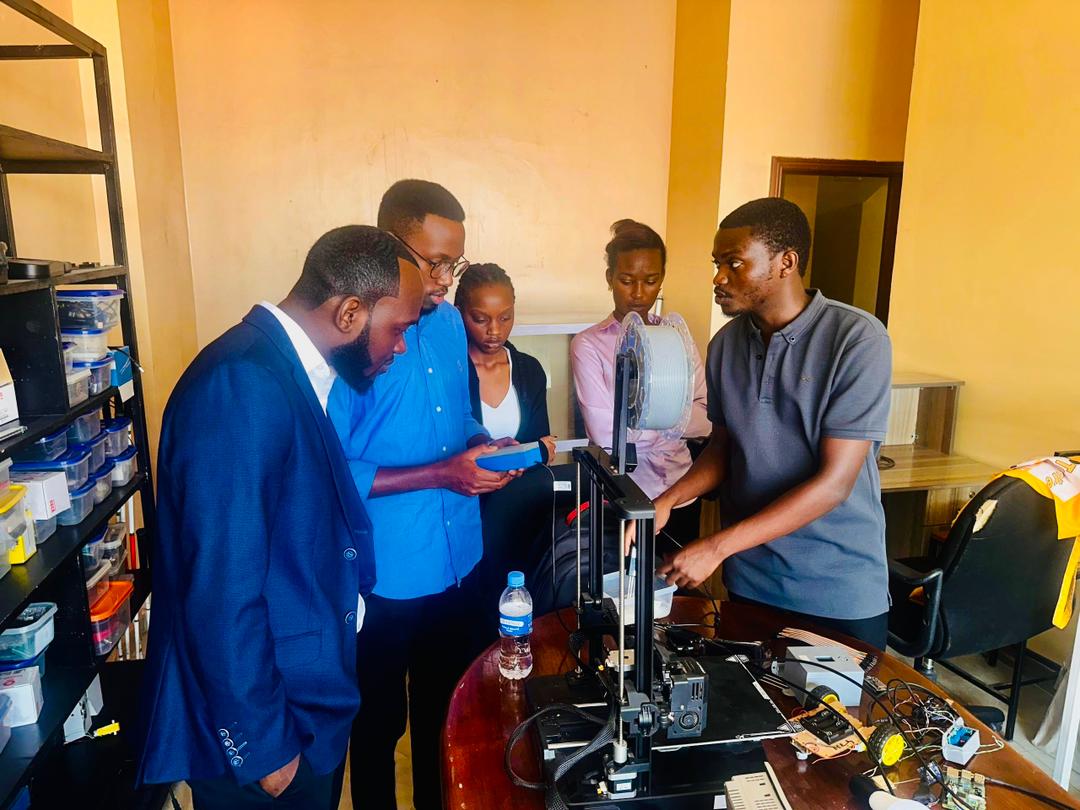
Beyond organizing trade and embedding learning, TAJYIRE has already moved into building practical technological solutions. Internally developed and operational prototypes include a Soil Meter and Intelligent Irrigation System capable of analyzing soil moisture levels, NPK content, and other key indicators to guide agricultural decision-making.
The group has also developed an Intelligent Air Quality Monitoring System designed to measure pollution indicators and support public health awareness and urban planning, alongside an Automatic Night Light Controlling System aimed at reducing energy waste while improving safety and reliability.
These systems are already functional, reflecting a shift from ideas to applied solutions.
Beyond these prototypes, TAJYIRE’s technological direction includes robotics development, IoT-based systems, embedded software, and AI-supported automation. Officials say the objective is not to chase trends, but to build technologies that solve local and regional problems while meeting global standards.

Leadership and national confidence
Milliam Niyonshuti, Chief Operating Officer of TAJYIRE Group/Electronics, described the current phase as a decisive shift in the organization’s trajectory.
“The opening of the TAJYIRE R&D Department represents a turning point,” Niyonshuti said. “We are moving from organizing markets to engineering solutions — built by Rwandans, for Rwanda, and beyond.”
National confidence in the initiative has also been reinforced through partnerships.
Kayumba Yannick, Acting Executive Director of Rwanda We Want NGO, said the collaboration reflects more than institutional cooperation.
“What TAJYIRE is launching with RWW goes beyond a company milestone,” he said. “It is extraordinary at a national level — connecting skills, innovation, and opportunity in a way that directly benefits our youth and our economy.”

Building Kigali through systems
Through this integrated approach, TAJYIRE has evolved beyond the traditional definition of a marketplace or a standalone training initiative. It now operates as a coordinated ecosystem that is physical, operational, and expanding, designed to convert youth potential into national economic strength.
As part of this continued and chronological expansion, TAJYIRE Group is expected to officially launch its Research and Development Department (R&D) on 26 February 2026, marking not an endpoint, but a declaration that Rwanda is not waiting for innovation — it is building it.
More photos:




 theinspirerpubloications@gmail.com



Leave a Reply