
Green Tech vs. Green Land: How Lithium Mining is Draining Chile’s Salt Flats
By BBC News (Edited).
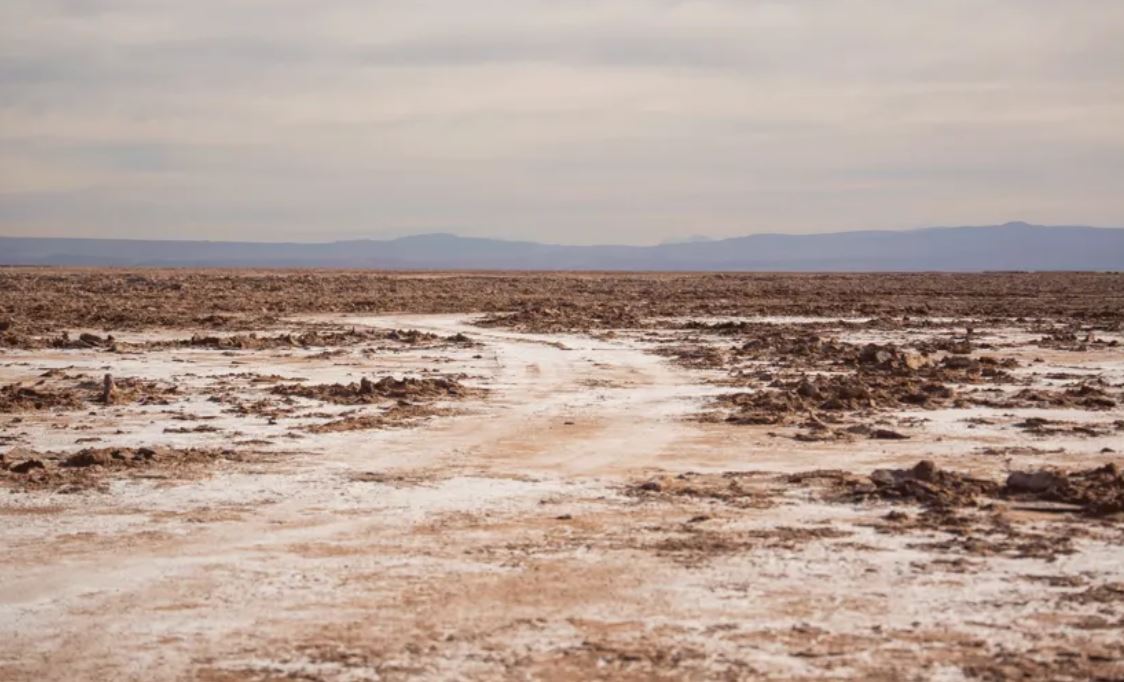
Raquel Celina Rodriguez steps carefully across the cracked, brittle surface of the Vega de Tilopozo, once a thriving wetland in Chile’s Atacama Desert. “Before, the Vega was all green,” she recalls. “You couldn’t see the animals through the grass. Now everything is dry.”
For generations, her family grazed sheep on these high plains. But with the changing climate and vanishing rainfall, their hardship deepened. Then came what Raquel simply calls “them”: lithium companies.
The Atacama Desert holds some of the world’s richest reserves of lithium, a silvery-white metal key to the batteries powering electric vehicles, solar storage systems, and smartphones. But as the global demand for green technologies grows, so do concerns about the environmental costs in one of the driest places on Earth.
According to the International Energy Agency, global lithium consumption surged from 95,000 tonnes in 2021 to over 205,000 tonnes in 2024 — and could exceed 900,000 tonnes by 2040.
While this supports the world’s clean energy ambitions, locals in the Atacama say their ecosystems are paying the price.
Flora, Flamingos, and a Fading Desert
Chile, the world’s second-largest lithium producer after Australia, announced an ambitious National Lithium Strategy in 2023, aiming to boost output significantly. One of the major steps includes a joint venture between mining giant SQM and the state-owned Codelco, recently greenlit to extract at least 2.5 million metric tonnes of lithium metal equivalent annually until 2060.
But this expansion comes at a cost.
“The lagoons here are smaller now,” says biologist Faviola Gonzalez, who works in the Los Flamencos National Reserve. “We’ve seen a decrease in the reproduction of flamingos.”
She attributes the change to lithium mining’s disruption of microorganisms that flamingos depend on — part of a collapsing food web. Water from ancient underground sources is being drawn out faster than it can be replenished.
A 2022 report by the Natural Resources Defense Council found that in areas mined by SQM, nearly a third of native carob trees had already died by 2013. Meanwhile, James J. A. Blair, a professor at California State Polytechnic University, warned that lithium mining “may decrease freshwater availability for flora and fauna as well as humans.”
“We Are the Experiment”
Though mining is inherently damaging, experts argue that companies could mitigate harm — if they worked more closely with communities.
Karen Smith Stegen, a political science professor in Germany, told the BBC, “What mining companies should have done from the very beginning was involve these communities.”
SQM says it is trying to address concerns. Valentín Barrera, the company’s Deputy Manager of Sustainability, said they are piloting new direct lithium extraction technologies that avoid evaporation ponds and water recapture systems. “We aim to reduce current brine extraction by at least 50%,” Barrera told the BBC.
Still, locals remain skeptical. “The Salar de Atacama is like an experiment,” says Faviola. “We don’t know how the salt flats will resist this reinjection of water.”
“I’d Prefer No Money”
For people like Sara Plaza, the change is heartbreaking. “The salt flats produce lithium, but one day it will end. And what will the people do? Without water, without agriculture?”
She believes the companies have already taken too much. “The companies give the community a little money, but I’d prefer no money. I’d prefer to live off nature and have water to live.”
Sergio Cubillos, leader of the Peine community, echoes the frustration. “There is climate change, yes. But the main impact here has been extractive mining.” He notes the community has had to overhaul its water and electrical systems to cope with shortages.
He insists any solution must come with community consultation, not just top-down decisions from Santiago. “If the government wants to fight climate change, they must include the indigenous people who have lived here for millennia.”
The Chilean government says indigenous communities have been consulted over the SQM-Codelco venture and that production increases will incorporate cleaner technology.
“Our Carbon Footprint is Smaller — But It’s Our Water That’s Taken”
For many in the Atacama, the injustice is clear: they are paying the environmental price for a greener world that may not include them.
“We all must reduce emissions,” says Faviola. “But in Europe and the U.S., people consume far more energy. Electric cars will be for them — not us.”
“Our carbon footprint is much smaller,” she adds. “But it’s our water that’s being taken. Our sacred birds that are disappearing.”
As Chile becomes a central player in the green energy transition, the residents of its lithium-rich deserts are left asking: At what cost?
Source: Edited from BBC News – “How the rise of green tech is feeding another environmental crisis”
Read original story at bbc.com




Leave a Reply